There's something almost poetic about the wheat you choose. It sounds dramatic, I know — but run your fingers through a bag of Red Fife flour next to a bag of commercial bread flour and you'll feel the difference before you even mix. Heritage grains carry history in their flavor, and when you bake with them, you're not just making bread. You're tasting terroir.
I first baked with heritage wheat by accident — a bag of Red Fife sitting on my pantry shelf from a farmer's market visit I'd completely forgotten about. The loaf that came out of the oven was nothing like what I was used to. Darker crumb, richer aroma, and this warm, cinnamon-adjacent sweetness that made me pull it from the cooling rack before it was truly ready. That was the beginning of a whole new chapter in my sourdough life.
This guide walks you through everything I've learned about baking with heritage and ancient wheats — which grains to start with, how to blend them for reliable results, and what to expect when you step outside the familiar territory of commercial bread flour.
Why Heritage Grains Matter
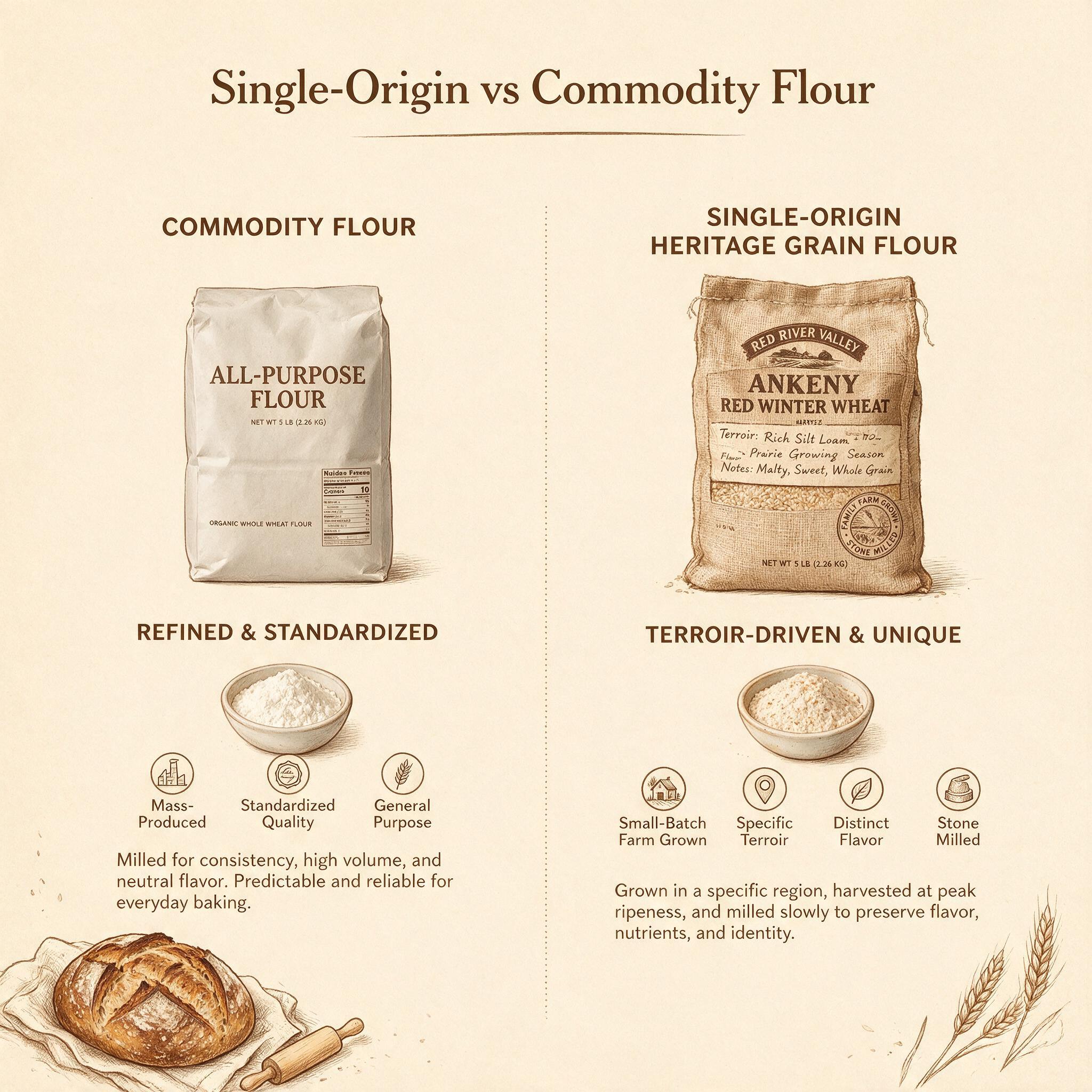
Heritage (or heirloom) wheat varieties predate the Green Revolution's dwarf wheat strains from the mid-20th century. They've been cultivated — sometimes unchanged for centuries — in specific regions, adapting to local growing conditions over generations. The result is grain that carries distinct flavor profiles you won't find in modern supermarket flour: buttery sweetness, warm spice notes, earthy depth.
Beyond flavor, heritage grains offer nutritional benefits. Many have more accessible protein profiles and retain bran layers that commercial milling removes. Stone-milled versions of these flours are especially rich because the softer bran stays intact during grinding — something we'll touch on when we talk about handling.

But heritage wheat isn't just a flavor experiment. It's a connection to agricultural history, regional growing traditions, and the kind of bread that tastes like it came from somewhere specific rather than manufactured in bulk. If you've ever wondered what sourdough could taste like beyond the familiar, this is where you start looking.
Understanding Your Heritage Grains
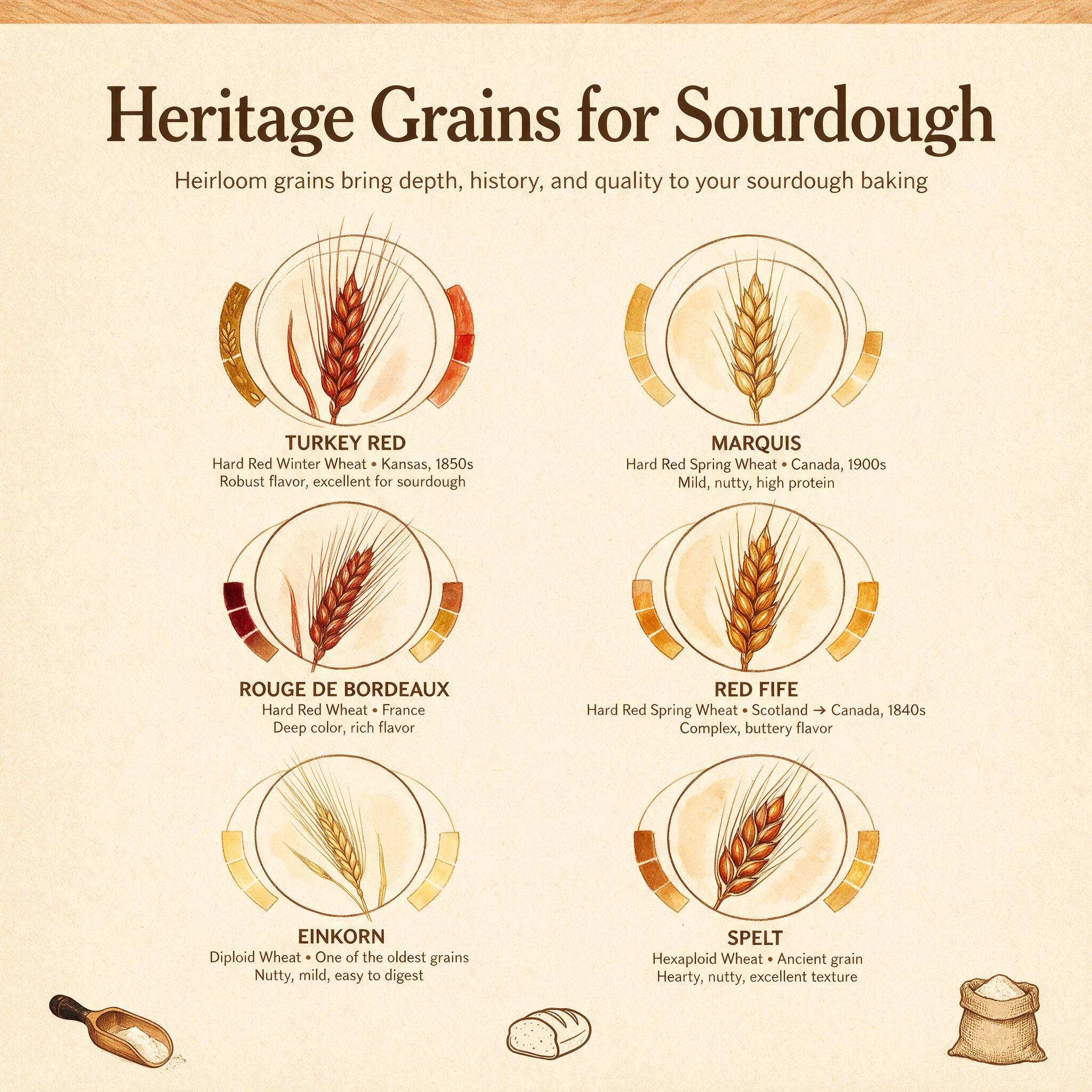
Not all heritage wheats behave the same way. Each variety has its own personality — and understanding those personalities before you bake is half the battle. Here are the ones I've worked with most and what makes each one special.
Red Fife — The Beginner's Heritage Grain
Red Fife is a Canadian heritage hard red winter wheat that dates back to the 1840s. It's widely considered one of the first wheat varieties grown in Canada, and it's still thriving today.
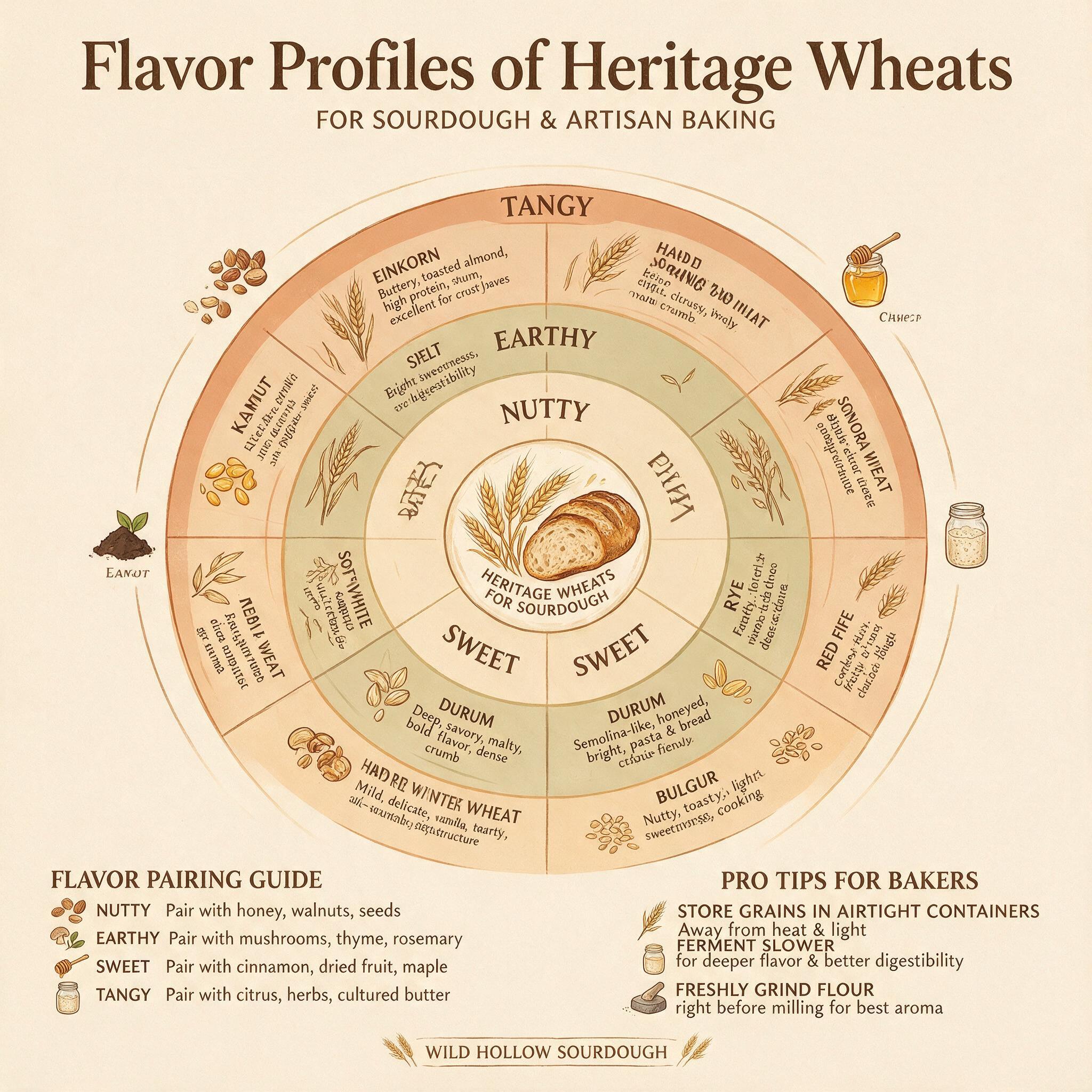
The flavor is where Red Fife really shines. Bakers consistently describe warm "baking spice" notes — think cinnamon, clove, and a gentle sweetness that develops during fermentation. The aroma of whole Red Fife dough is distinct from commercial wheat; there's something almost nutty about the bran itself.
Gluten-wise, Red Fife sits in a comfortable middle ground. It has moderate gluten strength — more reliable than spelt but less than modern bread flour. This makes it forgiving enough for beginners while still offering enough structure for decent oven spring when blended properly.
Best blend ratio: 25–30% Red Fife with 70–75% bread flour to start. You can push higher (up to about 60%) if you want a heartier loaf, but expect the crumb to tighten and the shape to flatten somewhat above that point.
White Sonora — The Drought-Resistant Heritage Wheat
White Sonora is one of the oldest surviving wheat varieties in North America, originally cultivated by the Seri people in what is now northern Mexico and southern Arizona. It's remarkably drought-resistant — a trait that's becoming increasingly valuable as climate patterns shift.
The flour has a buttery, slightly sweet flavor profile comparable to Kamut but milder and more approachable. White Sonora absorbs water well and behaves somewhat like a medium-protein flour, which makes it predictable in the bowl. It produces excellent flavor without making your dough too slack — one of the reasons I consider it the most beginner-friendly heritage wheat available.
You can find White Sonora both as a whole grain flour and as a white (dehulled) version. The dehulled version gives you the flavor without the bran's extra absorbency, which is great if you want to ease into heritage grains without adjusting your hydration too much.
Best blend ratio: 30% White Sonora with 70% bread flour. This is my go-to starting point when I want to experiment with heritage wheat for the first time.
Kamut / Khorasan — The Buttery Ancient Wheat
Kamut (also called Khorasan wheat) is an ancient wheat variety with 28 chromosomes — double that of modern bread wheat. Despite its high protein content, it doesn't develop particularly strong gluten networks. It can absorb a surprising amount of water but doesn't hold the resulting structure as well as you might expect.
The flavor payoff is significant: Kamut has this rich, buttery sweetness that makes even simple sourdough loaves taste luxurious. The flour itself has a naturally golden color, and your crumb will reflect that — warm amber tones rather than the pale ivory of modern wheat breads.
Kamut's high absorption makes it excellent for learning water management with heritage grains. You'll quickly develop an intuition for how much water different flours can hold before they start feeling slack.
Best blend ratio: 30–50% Kamut with 50–70% bread flour. I personally prefer around 40% — enough to taste the character without sacrificing too much structure.
Spelt — The Fragile Ancient Wheat
Spelt is one of the oldest cultivated wheats, and it has a lower gluten strength than modern wheat that really shows in the dough. It feels wetter and tackier at equivalent hydration levels, and its gluten stretches but doesn't hold tension as well as you're used to.
The flavor is nutty and slightly sweet with a distinctive aromatic quality — some bakers describe it as almost hazelnut-like. The bran layer on spelt is softer than modern wheat, which means it incorporates more easily during milling and contributes to that characteristic spelt aroma.
Spelt demands gentler handling: fewer folds, shorter mix times, less aggressive shaping. But the flavor reward makes it worth the extra care. It also excels in enriched doughs — think spelt brioche or sweet spelt rolls — where its tenderness is a feature rather than a limitation.
Best blend ratio: 25–40% spelt for bread loaves, up to 100% for flatbreads and crackers. If you're new to heritage grains, try spelt at 30% first.
Turkey Red and Rouge de Bordeaux — The Earthy Cousins
These two heritage hard red winter wheats are closely related in character and baking behavior. Turkey Red has slightly more grassy notes than Red Fife or Rouge de Bordeaux, while Rouge de Bordeaux feels a touch dryer and tighter at the same hydration level (around 76%, based on Breadtopia's testing). Both have moderate gluten strength and can be substituted for each other with minimal adjustment in your recipe.
These are best left for intermediate bakers who want to explore earthier, more robust flavor profiles once they've built confidence with Red Fife or White Sonora.
The Golden Rule: Always Blend (At First)
The single most important thing I've learned about heritage grains is this: don't use them alone for artisan-style loaves — not until you understand how they behave, anyway. Heritage wheats have weaker gluten networks than modern bread flour, which means doughs made from 100% heritage grain will expand less during bulk fermentation, spread more during baking, and produce a denser crumb.
That's not a flaw — it's just different. A dense crumb with rich flavor is wonderful in its own right (think of the best rustic European country loaves). But if you're used to tall, open-crumb sourdough and want that experience with heritage grain, blending is your path there.
Here's my practical framework for blending:
- •Beginners: Start at 20–30% heritage flour, 70–80% bread flour
- •Intermediate bakers: Move to 30–50% heritage flour, 50–70% bread flour
- •Experienced bakers: You can go up to 60–100%, but expect flatter loaves and tighter crumb at the higher percentages
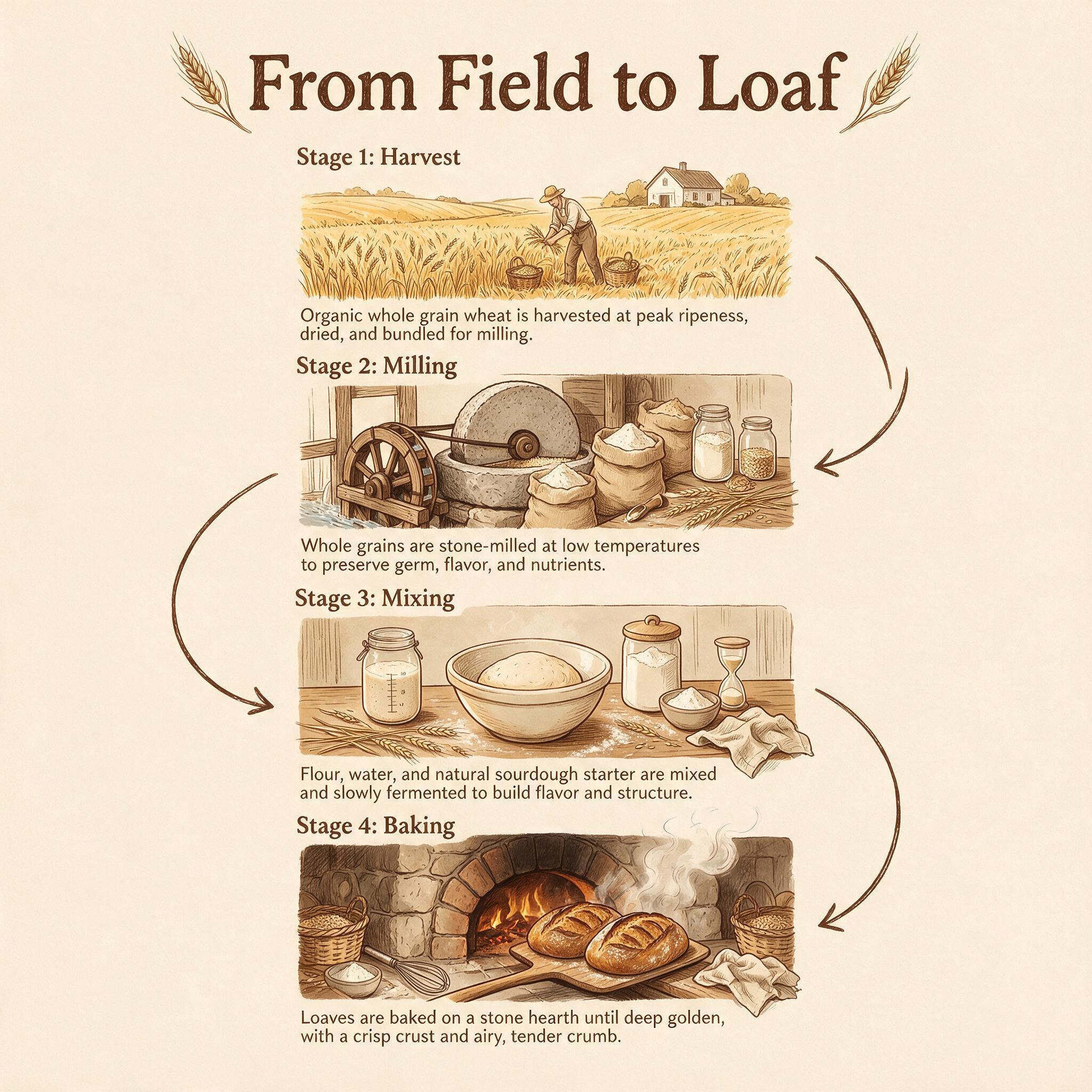
This isn't a rule you never break — it's a starting point. Once you know how your heritage grain behaves, you'll have a much better sense of where its limits are in your kitchen.
Adjusting Your Hydration
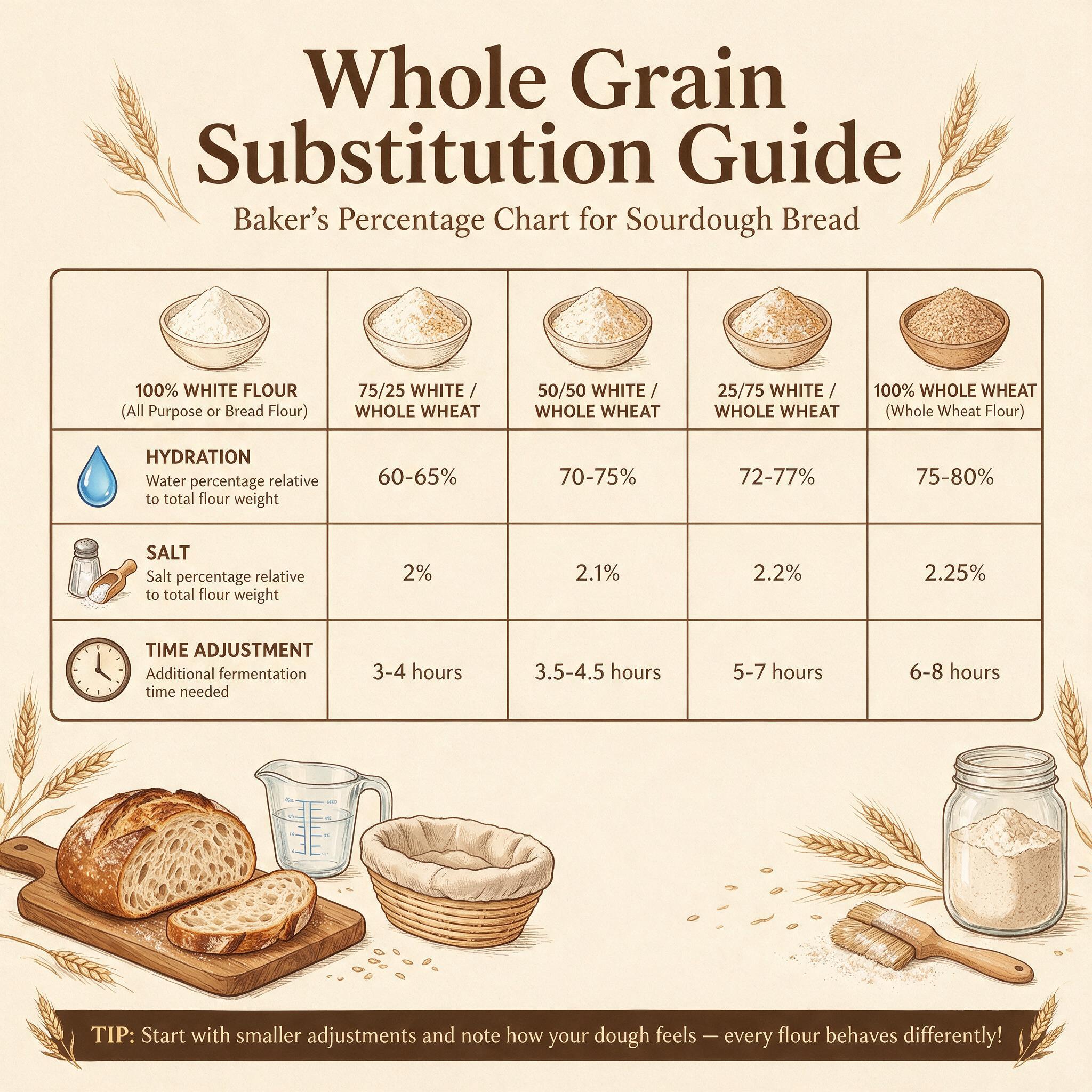
Heritage grains absorb different amounts of water than modern bread flour. This is one of the most common reasons heritage grain doughs feel "wrong" on your first bake — and it's also the easiest thing to fix once you know what to look for.
Here's how each variety typically behaves:
Kamut/Khorasan: High absorption. It takes on significant water but doesn't hold its gluten structure as well, so you'll end up with a dough that feels wet even when properly hydrated. Start at your standard recipe hydration and be prepared to add more — Kamut often wants more than you think.
Spelt: Feels wetter or tackier at equivalent hydration compared to modern flour. You may actually need slightly less water than your standard recipe calls for, because the softer bran absorbs quickly and makes the dough feel slicker. Start with your normal hydration and pull back if it's too slack right after mixing.
Red Fife, Turkey Red, Rouge de Bordeaux: Absorbency varies by harvest year and growing location (terroir). There's no single answer — start at your standard hydration, then adjust based on how the dough feels during mixing. A 2–3% adjustment either way is usually sufficient.
White Sonora: Behaves similarly to Kamut in terms of absorption — good water uptake with moderate gluten structure. Start conservative and build up if needed.
The Practical Rule
Start at your standard hydration, observe how the dough feels during mixing (not right after, but after you've given it a minute to rest), and adjust in 2–3% increments. Your eyes and hands are better guides than any percentage written on a bag of flour.
A Quick Note on the Slurry Test
Before committing an entire batch of dough to a new heritage flour, I recommend doing what Breadtopia calls a "slurry test." It takes five minutes and saves you from surprises:
- Take about 20 grams of your new heritage flour
- Add water gradually while mixing until you have a small, thick paste — like a mini dough
- Work it between your fingers. How does it feel? Wet or dry? Slack or tight?
- Compare that feel to a slurry made with bread flour you know well
- Give it 10–15 minutes and check again — how does the texture change over time?
This gives you a reliable preview of how the new flour will behave before you scale up to a full loaf. I do this whenever I try a new mill's version of Red Fife or Turkey Red, because absorbency can vary significantly between mills even for the same grain variety.

Recipes to Start With
Beginner-Friendly Heritage Blend (Red Fife + Kamut)
This is a gentle introduction that gives you meaningful heritage flavor without demanding technique adjustments:
Ingredients:
- •200g whole grain Red Fife flour (10%)
- •200g ancient whole grain Kamut flour (10%)
- •600g bread flour (60% — this is your structural backbone)
- •Water at roughly 30% hydration relative to heritage flours, or about 75% of total flour weight
- •Your active sourdough starter and salt as usual
Mix, autolyse for 30 minutes if you want a gentler start, then proceed with bulk fermentation, folds, shaping, and proofing as you normally would. The high bread flour percentage means this dough behaves very much like your standard loaf — just with richer flavor underneath.
Intermediate Heritage Blend (50/50)
Once you're comfortable, try equal parts heritage red wheat and Kamut:
Ingredients:
- •200g Red Fife or Turkey Red whole grain flour
- •200g Kamut or Khorasan whole grain flour
- •300g water (75% hydration relative to total flour)
- •30–60g active sourdough starter
- •8g salt
This blend is where things get interesting. At a consistent 75°F kitchen temperature, expect roughly 5.5 hours of bulk fermentation with three rounds of stretch-and-folds. If your kitchen runs warmer — say 79°F or above — you might only need one round of folds

Heritage grain doughs respond dramatically to temperature changes, so pay attention to how yours behaves rather than watching the clock too closely.
Troubleshooting Common Issues
Your Dough Feels Too Slack
This is the most common first impression when baking with heritage grains, especially spelt and Kamut. The fix isn't always less water — sometimes it's simply giving the dough more time to rest during autolyse so the gluten can start developing before you add salt and starter. If your dough feels wet right after mixing but firms up noticeably after 30 minutes of rest, that's normal heritage grain behavior.
Your Loaf Flattens During Baking
Heritage grain loaves naturally spread more than modern wheat loaves because the gluten network is weaker. This isn't a failure — it's just how these grains behave. If you want more height next time, try:
- •Reducing your heritage percentage by 10%
- •Adding an extra round of stretch-and-folds during bulk fermentation
- •Ensuring your starter was fully active and peak-risen before building your levain
The Crumb Is Too Dense or Closed
This usually means one of three things: the dough wasn't fermented long enough, you over-handled it during shaping, or your heritage percentage is too high for your skill level. Heritage grain doughs often need longer bulk fermentation than modern wheat — not because they ferment slower, but because their weaker gluten networks benefit from extra gas production before shaping. Trust visual cues (the dough should look puffy and spread noticeably) over the clock.
Your Bread Tastes Bland
This can happen when using too high a percentage of white heritage flour (like dehulled White Sonora) blended with refined bread flour. The solution is either to increase your whole grain heritage percentage or extend your cold proof by a few hours — more fermentation time = more sourness and flavor development. I personally find that an extra hour in the fridge makes a noticeable difference.
Frequently Asked Questions
Can I bake 100% heritage grain sourdough?
Yes, but expect a flat loaf with dense crumb. This is delicious bread — just different from what you're used to. Think of it as a rustic country loaf rather than an airy artisan boule. Start at 60–80% heritage if you want some height alongside the density.
Do I need to adjust my starter for heritage grains?
Not necessarily, but whole grain heritage flours can give your starter an extra boost of nutrients and enzymes. Some bakers prefer feeding their starter a few hours before baking using a small amount of the same heritage flour — this helps the levain adapt to the new grain's fermentation characteristics.
Can I use these grains for flatbreads or crackers?
Absolutely. Spelt, in particular, is fantastic for flatbreads because its lower gluten strength means tender results without excessive chew. Kamut makes wonderful crackers. Heritage grains shine in applications where you don't need oven spring.
How long does heritage grain bread stay fresh?
Similar to standard sourdough — about 3–4 days at room temperature in a breathable container. Some bakers report that whole grain heritage loaves go stale slightly faster due to higher bran content and oil content, so wrap or slice for freezing if you won't eat it within a few days.
What's the difference between "ancient" and "heritage" wheat?
"Ancient" generally refers to wheats that have undergone relatively little genetic change over thousands of years (einkorn being the oldest at 14 chromosomes). "Heritage" describes landrace varieties adapted to specific regions over centuries. The categories overlap significantly — most ancient wheats are also heritage grains, and vice versa. For baking purposes, the distinction matters less than knowing how your particular flour behaves in dough.

Closing Thoughts
Sourdough with heritage grains is deeply personal — what works beautifully in my kitchen might need tweaking in yours, especially when you factor in seasonal humidity, different millers, or even a new batch of starter that's running a touch warmer than usual. That variability isn't a problem; it's the whole point. You're not baking from a factory formula. You're working with living ingredients shaped by soil, climate, and centuries of cultivation.
My advice? Start small. Pick one heritage grain — White Sonora or Red Fife are my top recommendations for beginners — and blend it at 25–30% into your next loaf. Pay attention to how the dough feels during mixing. Note how long bulk fermentation takes compared to your usual bread flour. Taste the finished product with nothing on it — no butter, no jam, just warm bread.
Then bake again. And again. Each loaf teaches you something new about that grain, and eventually you'll develop an intuition for heritage wheat dough that's just as reliable as what you've built with modern flour. Happy baking!