There's something almost magical about sourdough discard bagels — you take that jar of unfed starter sitting in your fridge, usually destined for the compost bin, and transform it into a chewy, glossy, deeply flavorful bagel. No waste. No waste at all. Just flour, water, salt, time, and a little bit of living culture doing exactly what it was born to do.
I learned about sourdough discard bagels early in my baking journey — maybe two months in, when I had a jar of starter that kept growing faster than I could use it for bread. My first attempt looked like a puck more than a bagel. Dense. Pale. Delicious anyway, sliced thick and slathered with butter. But by my fifth or sixth try, I nailed the boil-and-bake process, and those discard bagels became a weekend ritual. They're forgiving enough for beginners but interesting enough that experienced bakers keep coming back.
This guide covers everything: two complete methods (fast-track with yeast, all-day without), shaping techniques, the boil bath secrets, flavor variations, and troubleshooting so your next batch comes out glossy and chewy every time.
Why Sourdough Discard Bagels Matter
Most sourdough recipes call for an active starter — one that's been fed recently and is bubbling with fresh yeast activity. But discard? That's the leftover stuff between feedings. It's still alive, still fermented, still full of flavor — it just doesn't have enough rising power on its own to leaven a big loaf.
Bagels are perfect for this situation because they're already a dense bread by nature. A bagel isn't supposed to puff up like a focaccia. That chewy, tight crumb is the whole point. So sourdough discard — which lacks the vigor to lift light doughs but delivers serious tang — fits bagels like a glove.
Beyond being a brilliant way to use your starter, these bagels offer something store-bought ones never can: depth of flavor. The lactic and acetic acids that build up in unfed starter give bagels a subtle sourness you just can't get from commercial yeast alone. And the boil-and-bake process? That's where the magic happens — gelatinized surface starches, a glossy mahogany crust, and an interior chew that holds up to cream cheese, lox, or just warm butter.
Two Methods: Pick Your Pace
Method One: Discard Plus Instant Yeast (The Fast Track)
Total time: 2½ to 3 hours
Best for: Weekday baking when you want bagels without planning your whole day around them
This method uses sourdough discard for flavor and instant yeast for lift. The starter contributes tang; the yeast does the rising work. It's honest, it's fast, and it produces genuinely excellent results. You won't be disappointed.
The process in brief: Mix the dough → rest for 60 minutes (bulk ferment) → shape into bagels → proof for 30–45 minutes → boil → bake at 425°F for 20–25 minutes. Simple rhythm, reliable results.
Method Two: Pure Sourdough Discard (No Yeast at All)
Total time: 6 to 12+ hours, depending on your starter and kitchen temperature
Best for: Weekend baking projects where you want maximum sour flavor
This method relies entirely on the residual yeast activity in your discard. No commercial yeast anywhere. The trade-off is time — fermentation takes longer and is less predictable — but the payoff is a noticeably tangier bagel with deeper complexity. Some bakers prefer this approach for weekend sessions when they have the hours to let things develop naturally.
The process in brief: Mix only with discard → bulk ferment several hours (until dough has visibly spread) → shape → proof until doubled → boil → bake. The longer fermentation develops more sour character but requires patience and a strong, healthy starter.
Method Three: Sweet Levain (Artisan Approach)
There's also a third approach worth knowing about — Maurizio Leo at The Perfect Loaf developed what he calls a "sweet levain" method where a small amount of added sugar skews fermentation toward yeast activity rather than acidity. The result is a bagel with minimal sourness but incredible oven spring, blistered crust from an overnight cold retard, and deep flavor from barley malt in the boil bath. It's a three-day process with mostly passive time — start Friday morning, bake Saturday evening. Great if you want something between the fast method and the all-sourdough approach.
For this guide, I'll focus on Method One (discard plus yeast) as the primary recipe since it's the most accessible, but I'll note where Method Two differs throughout.
The Recipe: Sourdough Discard Bagels (Fast Track)
Here's a batch that makes six bagels — enough for a weekend morning and something to freeze for later.
Ingredients
- •150g sourdough discard (unfed starter, refrigerated)
- •360g bread flour (12–14% protein), plus extra for dusting
- •240g cool water (around 68°F / 20°C)
- •7g instant yeast (one standard packet)
- •9g fine sea salt
- •4g diastatic malt powder (optional but recommended — helps with oven spring and crust color)
For the boil bath:
- •8 cups water
- •2 tablespoons baking soda
- •1–2 tablespoons brown sugar or barley malt syrup
For toppings (choose one or two):
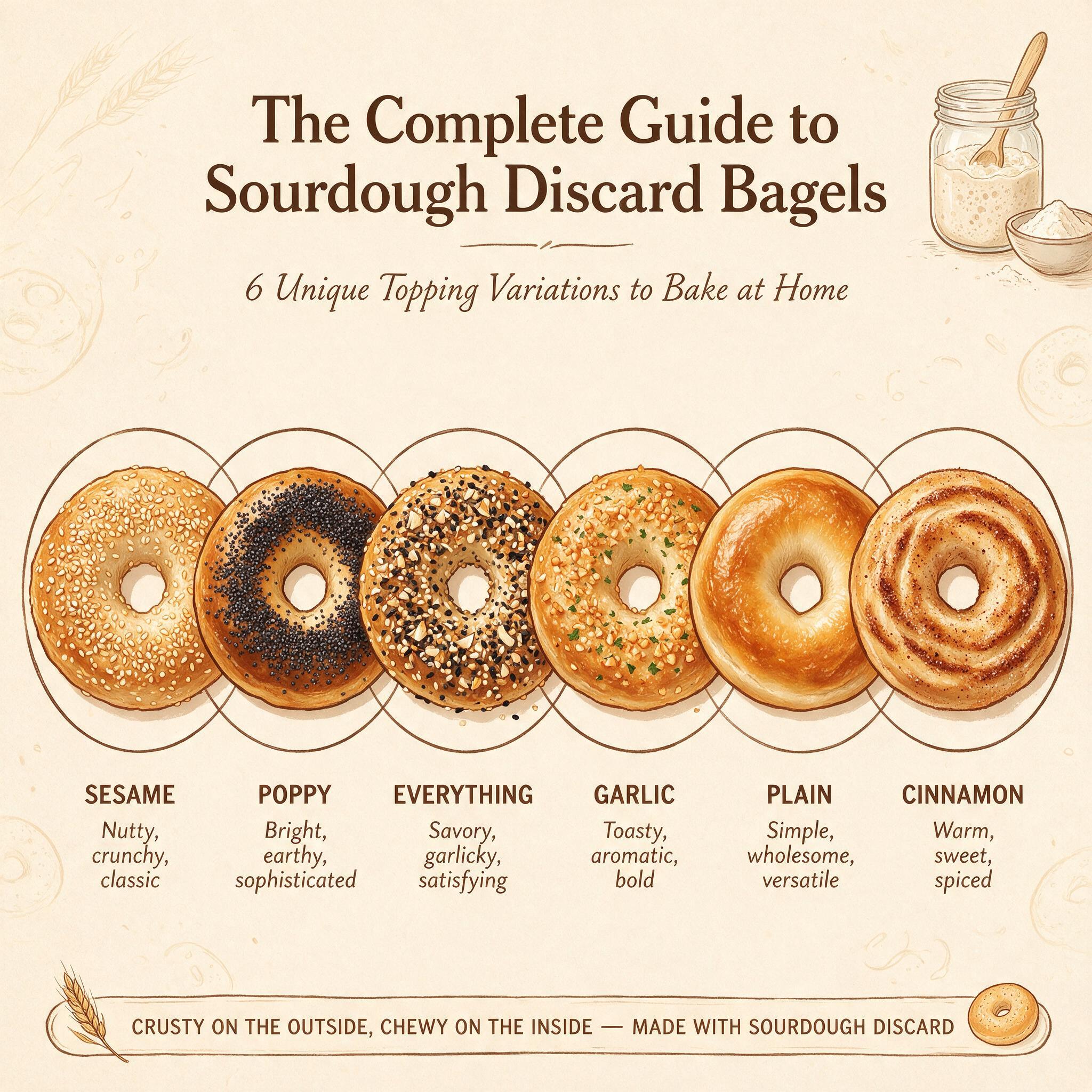
- •Everything bagel seasoning (sesame seeds, poppy seeds, dried garlic, dried onion, flaky salt)
- •White sesame seeds alone
- •Cinnamon sugar (¼ cup sugar + 1 tablespoon cinnamon)
- •Dried cranberry and orange zest (mixed into dough before shaping)
Step by Step: Making the Bagels
Mixing the Dough
Start by combining your discard, water, and flour in a large mixing bowl. If you're using diastatic malt powder, add it now — just one percent of your flour weight is all you need. Mix until everything comes together into a shaggy mass with no dry spots. Let it rest for 10 minutes. This brief autolyse lets the flour hydrate fully before kneading, which means less work on your part and better gluten development overall.
After that rest, add the instant yeast and salt. If you're using a stand mixer, switch to the dough hook and mix on low-medium speed for 7–10 minutes. The dough should come together into a smooth ball that pulls cleanly away from the bowl sides. If kneading by hand, turn it onto a lightly floured surface and knead for 8–10 minutes until smooth and elastic.
Why bread flour? Bagels need high protein — somewhere between 12% and 14%. That protein forms gluten, which gives bagels their signature chew. All-purpose flour will work in a pinch (you'll get a softer chew), but bread flour is worth seeking out. If you only have AP flour, add two tablespoons of vital wheat gluten to the dough to compensate.
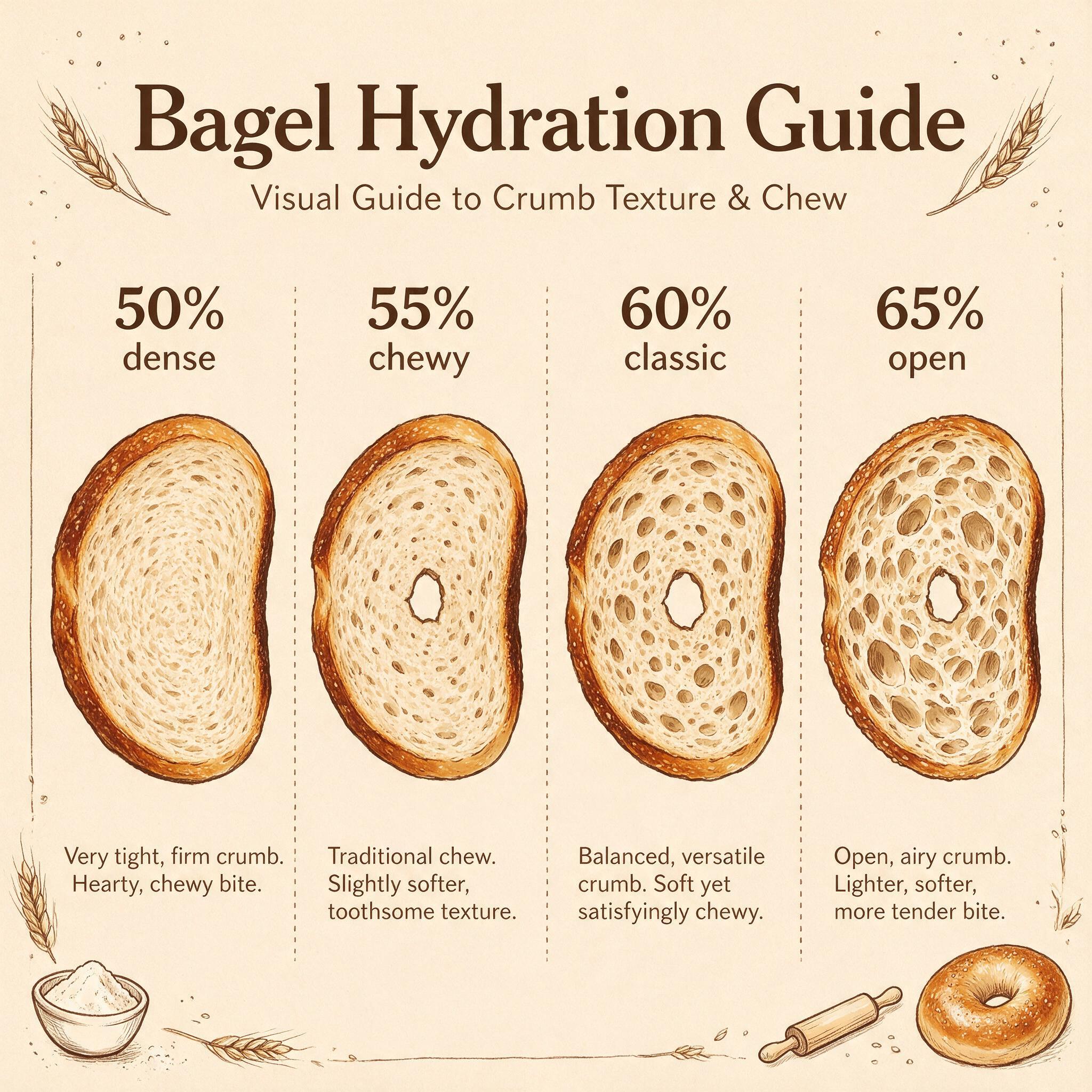
The finished dough should feel firm — bagel hydration sits around 52–58%, which is noticeably stiffer than most sourdough breads. That stiffness isn't a flaw; it's essential for structure. A bagel dough should hold its shape when shaped, not slump like a wet ciabatta.
The Windowpane Test
Before moving on to bulk fermentation, do the windowpane test. Pinch off a small piece of dough — about the size of a walnut — and gently stretch it between your fingers. You want to see it thin enough that you can hold it up to light and see through it without it tearing. If it tears before reaching translucency, knead for another 2–3 minutes and test again. Proper gluten development at this stage is the foundation of everything that follows.
Bulk Fermentation — Let It Rest
Transfer the dough to a lightly oiled bowl, cover with plastic wrap or a damp towel, and let it rest for about 60 minutes at room temperature. This isn't going to be a dramatic rise like you'd see in a high-hydration sourdough loaf. Bagel dough is dense — expect maybe 20–30% volume increase. That's normal.
What you're looking for during bulk: the dough should feel slightly softer than when it started, and if you press a finger gently into it, the indentation should hold its shape rather than bouncing back completely. This tells you the yeast has begun working and the gluten network is relaxing — both good signs before shaping.
A note on kitchen temperature: If your kitchen runs warm (above 78°F / 26°C), this bulk may finish in 45 minutes. If it's cool (below 70°F / 21°C), give it a full hour or even 90 minutes. The dough is your guide, not the clock.
Shaping — Two Methods
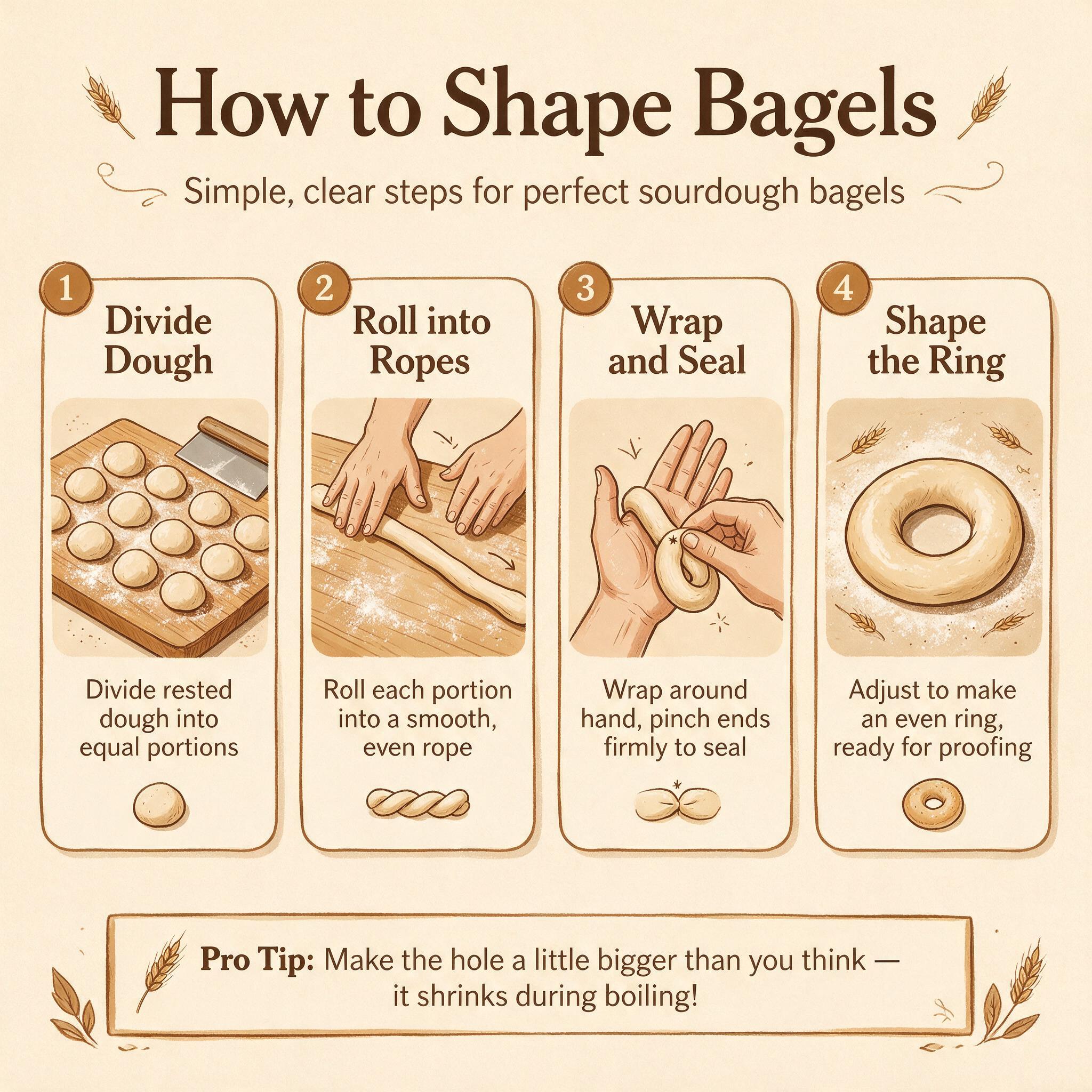
Divide the dough into six equal pieces using a scale. Each piece should be around 120–130g. Weighing ensures uniform bagels that cook evenly — eyeballing works but produces inconsistent results.
Roll each piece into a tight ball by tucking the edges underneath on a clean surface. Let them rest for 5 minutes, covered with a towel. This relaxation makes shaping much easier.
Now you have two options:
Method A — The Poke Method (recommended for beginners): Take one ball and poke your index finger straight through the center. Then gently stretch the hole to about 2–2.5 inches in diameter. Use your fingers to widen the ring, rotating as you go. If the dough tears, just pinch it closed — bagels are forgiving at this stage. This method is faster and less likely to fall apart during boiling.
Method B — The Rope Method: Roll a piece into an 8-inch rope. Wrap the rope around your fist (use your dominant hand), leaving about 2 inches of rope extending past your knuckles. Overlap the ends over the back of your other hand, then pinch them together tightly to seal. Tuck the seam underneath. This is more traditional but can come apart during boiling if your hydration runs high or the seal isn't tight enough.
Place shaped bagels on a parchment-lined baking sheet, spaced at least 3 inches apart. Cover loosely with plastic and let them proof for 30–45 minutes. They shouldn't double — just puff up noticeably and feel slightly lighter when you touch them. If they've doubled significantly, they may spread during boiling.
Overnight option: Shape your bagels Friday evening, refrigerate them uncovered on the sheet (or cover loosely with plastic), and boil-and-bake Saturday morning. The cold retard develops more complex flavor — this is where Method Two really shines. Just bring them to room temperature for about 20 minutes before boiling if you've proofed overnight in the fridge.
The Float Test
Before dropping bagels into the boil bath, do a quick float test: gently place one shaped bagel in a bowl of water. If it floats, it's properly proofed and ready to boil. If it sinks, give it another 10–15 minutes and try again. This is your best indicator that the yeast has done its job and your bagels will hold their shape during boiling rather than spreading flat.
The Boil — Where Bagels Become Bagels
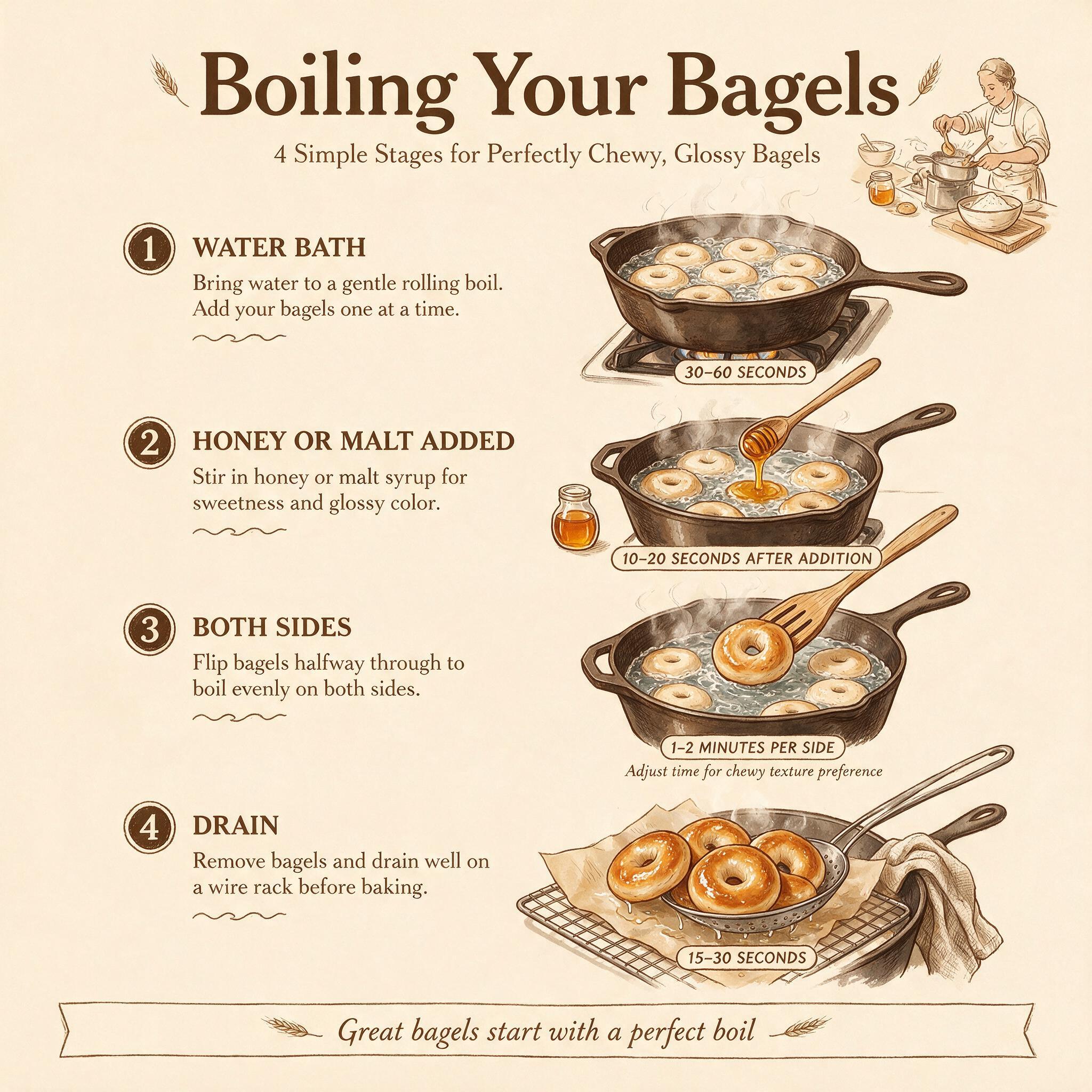
This is the step that separates real bagels from everything else. Boiling serves three critical functions:
- Gelatinizes surface starches — creates that distinctive chewy crust
- Sets the shape — prevents spreading during baking
- Pre-cooks the exterior — limits expansion, creating the dense interior we want
Bring your boil bath to a rolling boil on high heat: 8 cups water, 2 tablespoons baking soda, and 1–2 tablespoons brown sugar or barley malt syrup. The baking soda creates an alkaline environment that promotes browning (think of pretzels — same principle). The sugar adds sweetness and helps with the mahogany crust color.
Pro tip: The boil needs to be at a proper rolling boil before you drop bagels in. Not simmering, not barely bubbling — aggressive, vigorous boiling. If the water isn't hot enough when they hit it, your bagels will spread instead of holding their shape.
Drop 2–3 bagels into the boil at a time (don't overcrowd). Boil for 30 seconds per side. That's it. You're not cooking them through — you're setting the surface. Use a slotted spoon or spider to flip them carefully.
Malt syrup variation: For an artisan touch, replace baking soda with 5 tablespoons of barley malt syrup in your boil bath. The malt adds deeper, more complex flavor and produces a darker crust. Boil for 20–25 seconds per side instead of the full 30 — longer boils build thicker chewy skin, while shorter ones yield a thinner, crisper crust.
Apply toppings immediately after boiling, while the surface is still wet and tacky. The moist boil surface acts as natural adhesive for seeds and seasonings. If you're doing cinnamon sugar, brush with melted butter first before sprinkling — it helps the sugar stick where an egg wash normally would.
Baking — Deep Golden Brown
Preheat your oven to 425–450°F (218–232°C) while boiling. Ideally, use a baking steel or stone positioned on the middle rack for intense direct heat from below. If you only have a baking sheet, that works too — just be aware it won't conduct heat as efficiently.
Place bagels on parchment paper or a lightly floured peel and transfer them to the preheated surface. Bake for 20–25 minutes until deep golden brown. A pale bagel is an underbaked bagel — don't pull them early because they "look done" at 18 minutes. They need that full time to develop proper crust and finish cooking through.
Rotate the pan halfway through baking for even browning if your oven runs hot on one side (most do). The finished bagels should have a rich mahogany color all around, with no pale spots underneath.
Cooling — Patience Pays Off
Transfer baked bagels to a wire rack and let them cool for at least 15–20 minutes before slicing. This is non-negotiable — cutting into a warm bagel releases steam from the interior and leaves you with a gummy, undercooked texture. The crumb needs time to set properly.
I know this is hard — those smell incredible fresh out of the oven. But wait 20 minutes. Your future self will thank you when you slice through a properly set crumb instead of wrestling with sticky dough.
Troubleshooting: When Things Go Wrong
Bagels are forgiving, but they'll tell you what went wrong if you pay attention. Here's what to look for and how to fix it.
Dense, heavy bagels: Usually caused by underproofing (they didn't pass the float test), expired yeast, or adding too much extra flour during kneading. Solution: always do the float test before boiling. Use fresh yeast — if your packet has been sitting in the pantry for years, replace it. And be conservative with dusting flour during shaping; weigh your dough pieces instead of eyeballing.
Gummy interior: Cut too soon after baking is the most common culprit. Give them a full 20-minute cool. If this persists across multiple batches, check your gluten development — if the windowpane test failed before you shaped, the crumb structure never fully developed.
Pale crust: Three possible causes: oven wasn't hot enough (preheat fully at 450°F minimum), boil bath lacked alkalinity (not enough baking soda), or bagels were pulled from the oven too early. Bake until deep golden brown — not light gold, not medium brown. Deep mahogany is your target.
Bagels spreading or flattening during boiling: The boil water wasn't at a rolling boil when they went in, or the dough was overproofed (they'd doubled significantly before boiling). Solution: make sure your boil is vigorous and aggressive before dropping bagels in. And if your shaped bagels have already doubled on the proofing sheet, reduce their proof time next batch.
Bottoms burning too quickly: Oven rack positioned too low or baking sheet conducting too much heat directly. Move to the upper-middle rack position and consider placing a second empty baking sheet underneath for insulation.
Flavor Variations
Once you've mastered the basic technique, the fun begins — adding flavor through dough mix-ins and toppings.
Savory options: Everything bagel seasoning is the classic (sesame seeds, poppy seeds, dried garlic, dried onion, flaky salt). For something simpler, white sesame or black sesame alone works beautifully. You can also fold 2–3 chopped scallions directly into the dough during mixing for an onion-y flavor that's surprisingly good with cream cheese.
Sweet options: Cinnamon sugar is a crowd-pleaser — mix ¼ cup sugar with 1 tablespoon cinnamon, brush bagels with melted butter after boiling (instead of egg wash), then roll in the mixture. Dried cranberry and orange zest mixed into the dough before shaping makes something between a bagel and a pastry. Chocolate chip and coarse salt on top creates an interesting sweet-savory contrast that's worth trying at least once.
Seasonal ideas: In fall, try adding toasted pumpkin seeds to the dough and topping with cinnamon sugar. Winter calls for rosemary and cracked black pepper — earthy and warming. Spring brings everything bagel seasoning paired with a mild cream cheese spread.
Storing Your Bagels
Bagels are one of the few baked goods that actually improve with proper freezing. Here's how:
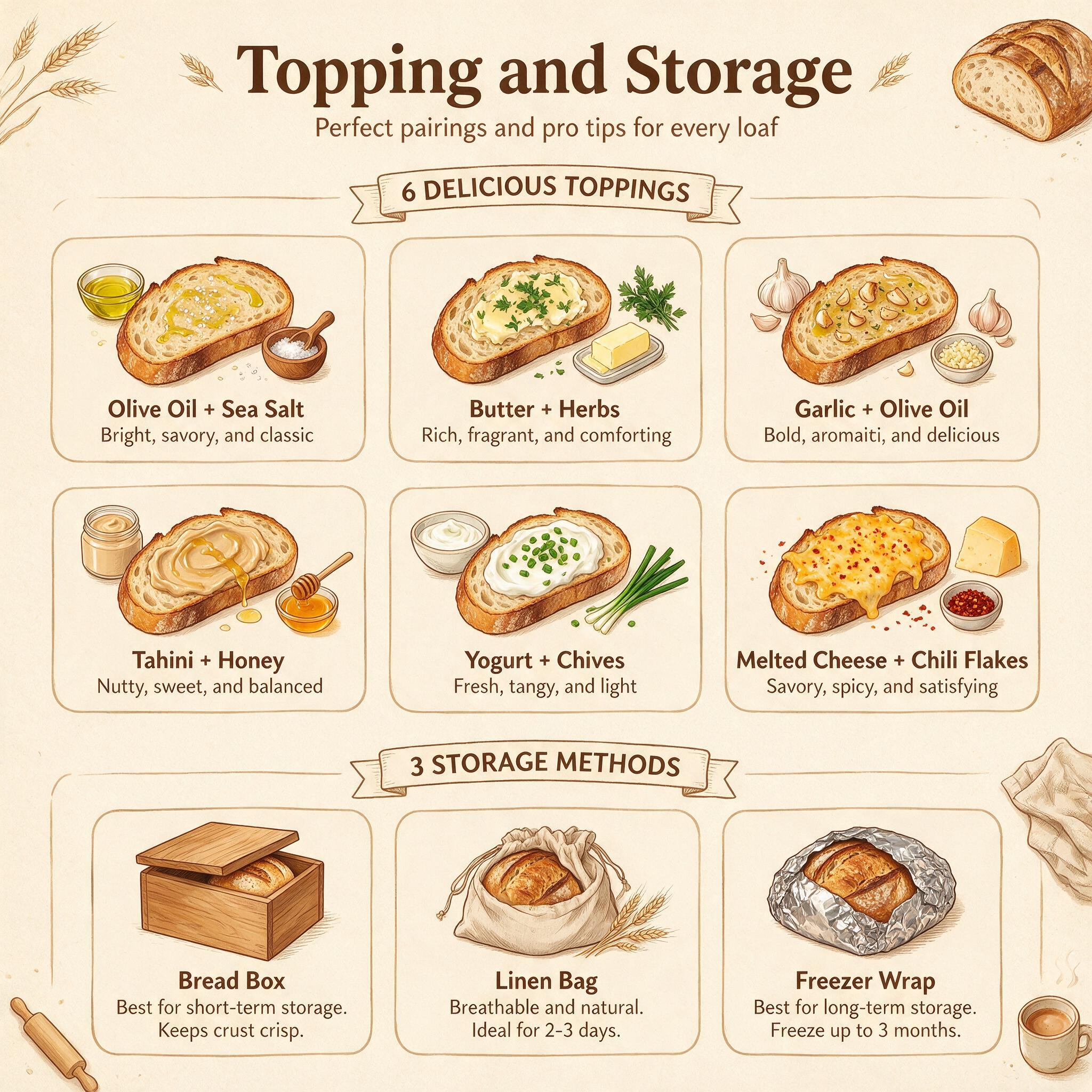
- •Room temperature: Keep in a paper bag for up to 24 hours. They'll go stale quickly at room temperature, so plan accordingly.
- •Freezing (best method): Slice bagels in half, freeze individually on a baking sheet until solid, then transfer to a freezer bag. They keep for up to 3 months. Toast directly from frozen — no need to thaw first. If reheating without freezing, wrap in foil at 350°F for about 10 minutes.
- •Never refrigerate. The fridge accelerates staling by crystallizing starch molecules. Freezing preserves texture; refrigeration ruins it.
Frequently Asked Questions
Can I use active (fed) starter instead of discard?
Yes, but you'll need to adjust the yeast amount. With an active starter, reduce instant yeast to 3–4g since the starter contributes additional leavening power. The flavor will be more sour — which some bakers prefer.
What if my kitchen is really cold (below 65°F / 18°C)?
Bulk fermentation and proof times will extend significantly. Give bulk 90 minutes instead of 60, and proof for a full hour or more. The dough is your guide — look for slight puffing and relaxed gluten rather than watching the clock. You can also place the shaped bagels in an unlit oven with just the light on to create a slightly warmer environment.
Can I make these Method Two (no yeast) during winter?
Absolutely, but plan ahead. Without commercial yeast, fermentation depends entirely on your starter's strength and room temperature. In cold kitchens, bulk ferment may take 6–8 hours or more. Use a strong, active discard — ideally one that's been at room temperature for a few hours before mixing. The flavor payoff is worth the extra time.
How thick should the hole be in the middle?
Aim for about 2 to 2.5 inches in diameter. It'll shrink slightly during boiling and baking, so start a touch larger than your target. If the hole closes up too much during proofing, just poke it open again gently before boiling.
Can I freeze unbaked bagels?
Yes — shape them, do the float test, then place them on the baking sheet and refrigerate for up to 24 hours (or freeze solid). When ready to bake, boil directly from cold or frozen, then proceed with your normal boil-and-bake timing. Frozen bagels may need an extra 5–10 seconds in the boil bath.
Closing Thoughts
Sourdough discard bagels are one of those recipes that reward repetition. Your first batch might not look like a bakery bagel — maybe the holes close up, or the crust comes out pale, or they're denser than you expected. All good. Every sourdough baker has been there. A dense loaf isn't wasted bread; slice it thick and toast it with butter, and you'll still be eating something genuinely delicious.
The beauty of these bagels is that they're deeply personal. What works in my kitchen might need tweaking in yours — your starter's strength, your flour's protein content, your oven's hot spots all play a role. Pay attention to how your dough behaves. Take notes if that helps you. Trust your eyes more than any timer. Over time, you'll develop an intuition for your own bagels that no recipe can teach.
And honestly? There's nothing quite like pulling a tray of glossy, deeply browned bagels out of the oven on a weekend morning, slicing through that chewy crust, and spreading something warm and creamy inside. It doesn't matter if you used Method One or Method Two — what matters is that you made them yourself, from flour, water, salt, time, and a little bit of living culture that would've been thrown away otherwise.
Happy baking. And don't throw away that discard tomorrow.