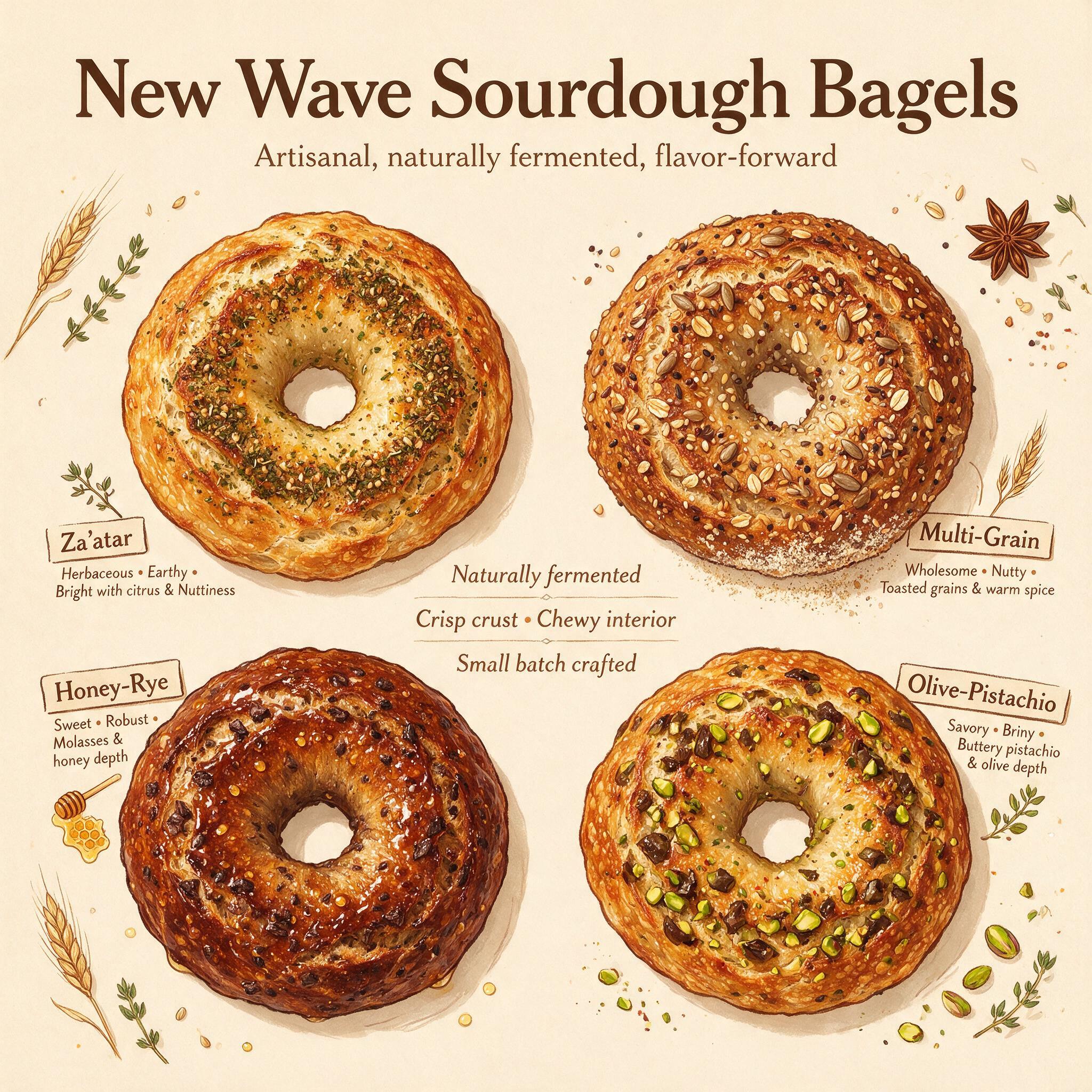
There's something almost magical about sourdough — flour, water, salt, time, and a living starter. That's it. No commercial yeast, no shortcuts. Just four ingredients that, given patience and a bit of know-how, transform into the most rewarding bread you'll ever bake from scratch.
But what happens when you take that same philosophy and apply it to one of America's favorite baked goods — the bagel? You get something that feels both familiar and entirely new: a sourdough bagel with a crackly, blistered crust, a tender open crumb, and layers of malty complexity that go far beyond anything from the corner deli.
This is the "new wave" of sourdough bagels — not a radical departure from tradition, but an evolution. It's what happens when artisan bakers like Maurizio Leo of The Perfect Loaf asked a simple question: what if we treated a bagel more like bread?
Why This Matters (Or: Why Should You Care?)
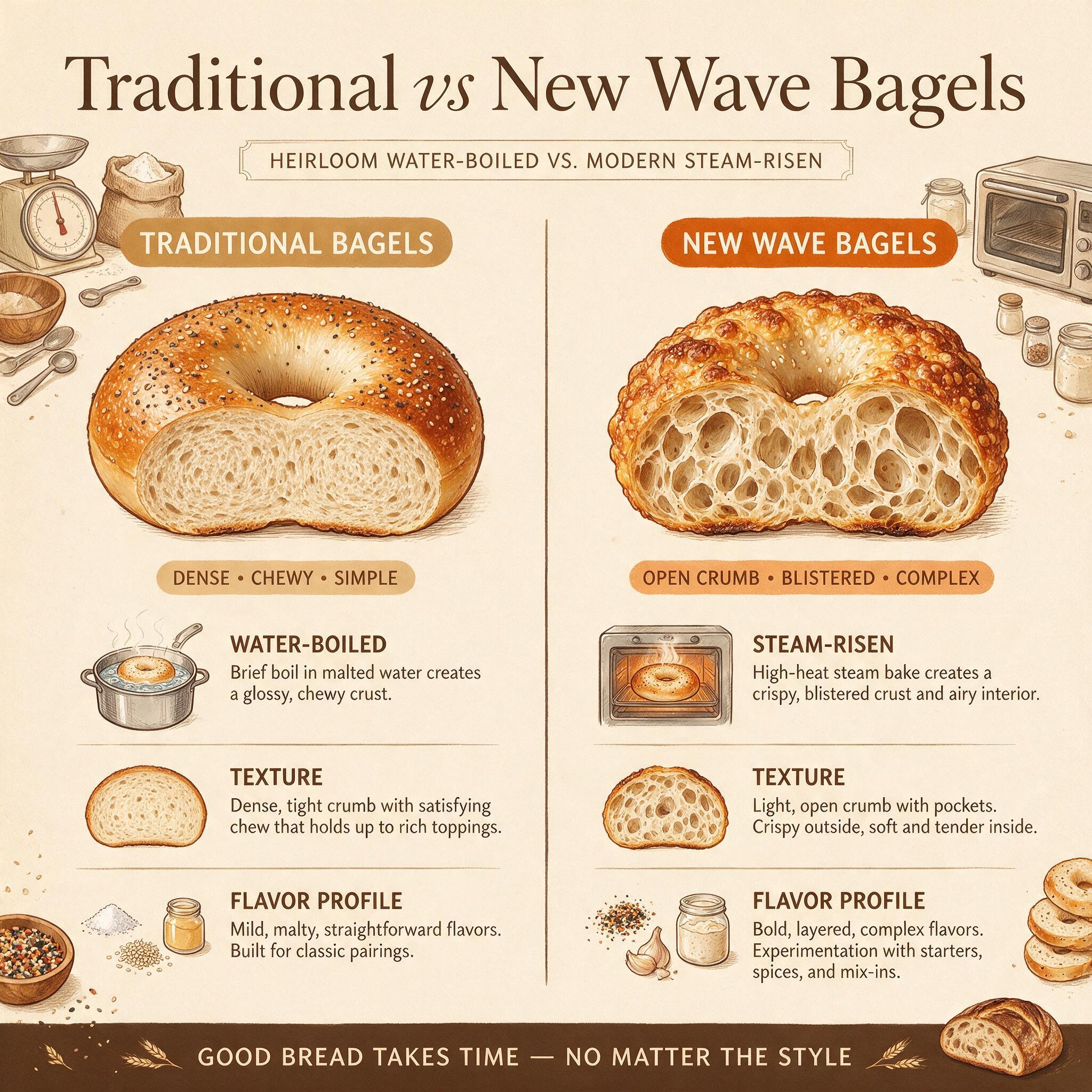
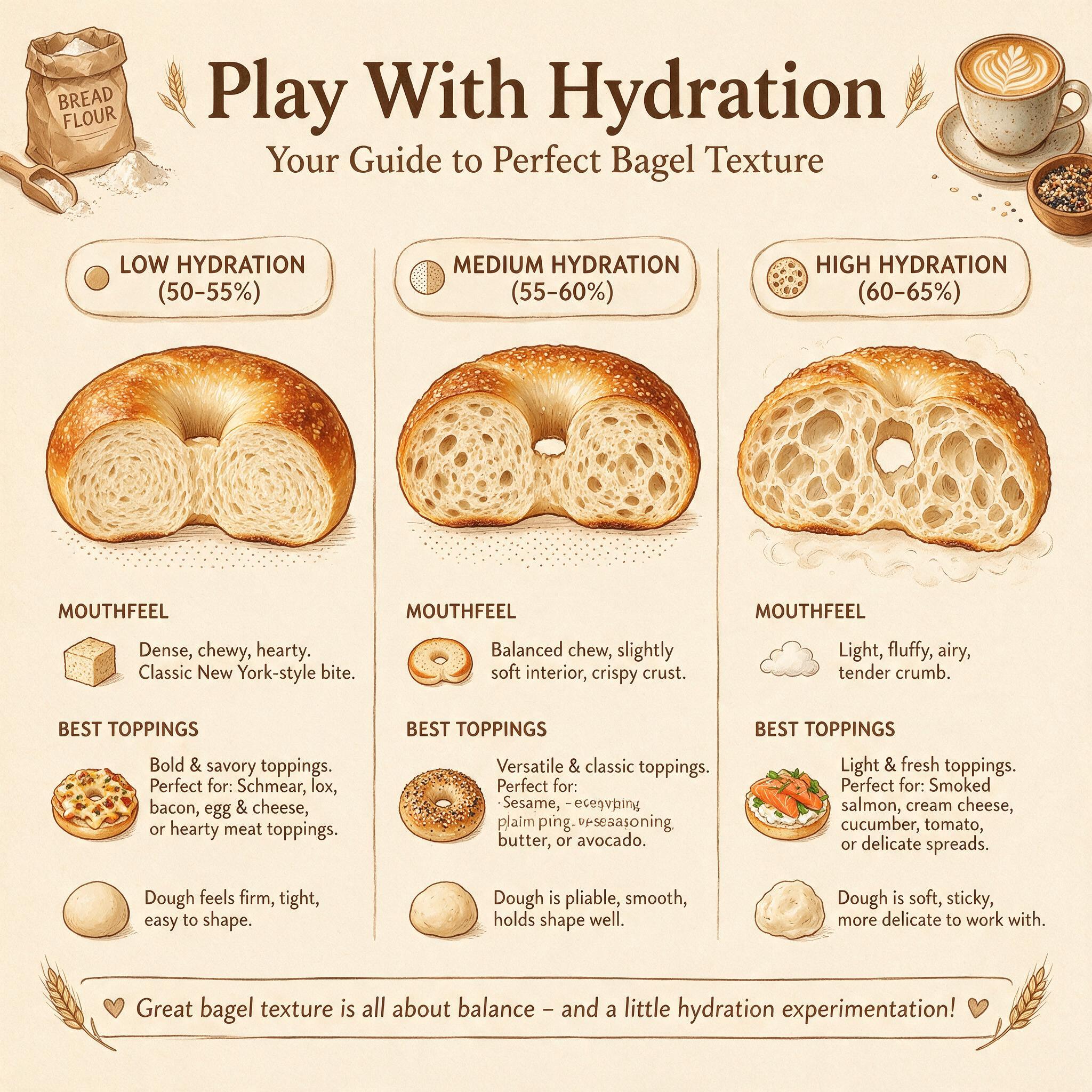
If you've ever made sourdough bagels before, you know the classic experience. Dense crumb. Chewy skin. Uniform shape. Delicious in its own way — but heavy, and sometimes a bit one-note. Traditional NY-style bagels are built around a very stiff dough (around 52% hydration), baked soda-boiled into submission, and shaped by rolling ropes into rings.
The new wave approach trades that dense chew for something lighter, glossier, and more complex. The crust becomes thin and crispy with beautiful blisters instead of thick and leathery. The crumb opens up — tender but still substantial. And the flavor? That's where things get really interesting. A sweet levain (a preferment built with added sugar) keeps sourness in check while pushing yeast activity, giving you malty, nutty depth without aggressive tang.
This isn't about abandoning tradition. It's about expanding what a bagel can be — and honestly, once you've had one of these, it's hard to go back.
The Four Pillars of New Wave Bagels
New wave sourdough bagels rest on four key innovations. Master these, and you'll have a framework that works in any kitchen, regardless of equipment or schedule.
1. Multi-Grain Flour Blends for Character
Instead of using one high-protein white flour (the classic approach), new wave bagels use a blend — each component serving a purpose:
- •~45% high-protein white flour (12–14%, like King Arthur Bread or Central Milling Great Northern) — provides the structural backbone
- •~40% medium-protein white flour (like Central Milling Artisan Bakers Craft, or any 11%+ protein bread flour) — adds tenderness without sacrificing strength
- •~10% whole wheat flour — warm, nutty depth
- •~5% whole rye flour — subtle earthiness, a boost to fermentation activity, and enhanced crust color
The whole grains aren't there for health points. They're there for flavor. Together they add layers of complexity that white flour alone simply can't provide — without making the bagel feel heavy or dense. If you're new to blending flours, start with this ratio and adjust from there as you learn how your particular kitchen responds.
2. Sweet Levain: The Flavor Secret
A sweet levain is a preferment built with added sugar. At first glance, that might seem odd for sourdough — after all, we're usually chasing tangy complexity, not sweetness. But here's the thing about bagels: they shouldn't taste aggressively sour. They should taste malty, slightly sweet, and deeply flavorful.
The sugar in the levain feeds yeast preferentially over bacteria. More yeast activity means more CO2 production — which opens up that crumb we're after. Less acid carries through to the final product, so your bagel stays rich rather than sharp.
Here's how I build mine:
Sweet Levain (Day 1, evening):
- •90g medium-protein flour
- •81g water
- •18g superfine sugar
- •36g ripe starter (at 100% hydration)
Mix it all together and let it rise overnight at room temperature — ideally around 74–76°F / 23–24°C — for about 12 to 14 hours. It's ready when it's risen significantly, super bubbly on top, and smells sweet rather than tangy. If it starts smelling vinegary, you may have let it go a bit too long. That's still usable; your bagels might just be slightly tangier than intended.
3. The Poke Method for Shaping
Traditional bagel shaping involves rolling a rope of dough and joining the ends into a ring. With higher-hydration new wave doughs (around 68%), that rope can come apart during the boil — frustrating, especially after all that work.
The poke method is simpler, more forgiving, and works beautifully at higher hydration:
- Divide your dough into twelve equal pieces (about 130g each)
- Ball each piece by folding the sides in, rolling down to create a smooth surface
- Press your index finger through the center of each ball to create a hole
- Gently stretch the hole with both hands while rotating until you have a 2–2.5 inch ring
It produces a more even shape than rope-and-ring, handles wetter dough without falling apart, and is genuinely faster once you get the rhythm going. I learned this method the hard way — my first batch of high-hydration bagels looked like donuts with holes punched through them because the ropes split during boiling. The poke method changed everything for me.
4. Overnight Cold Retard: The Most Transformative Step
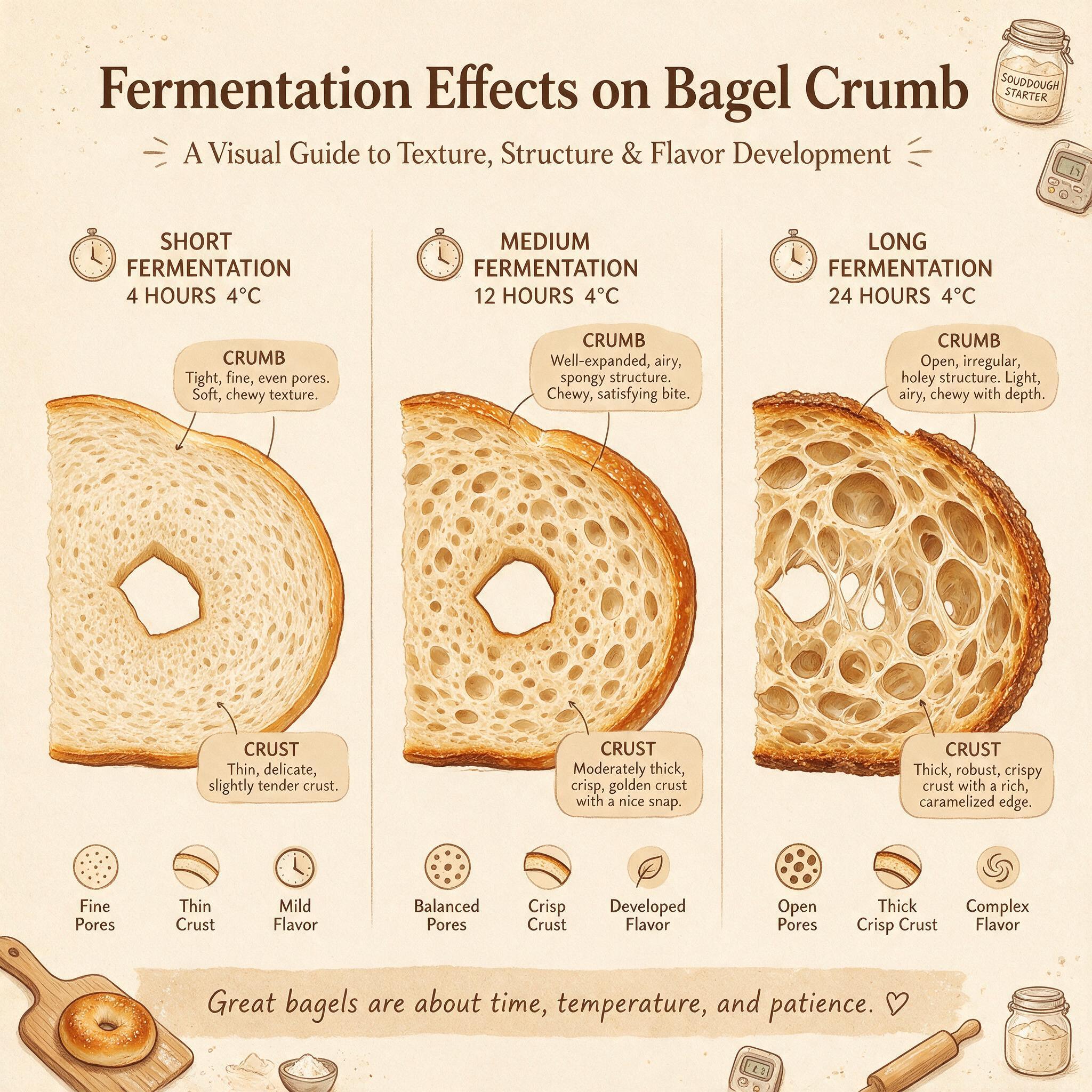
If you take away only one thing from this article, make it overnight cold retard. This single change — shaping your bagels in the evening and letting them chill in the fridge overnight before baking — does three things at once:
- •It opens up the crumb slightly during the slow proof
- •It develops more blisters on the crust (because extended rest = better oven spring)
- •It makes scheduling a breeze — shape after dinner, bake with breakfast
The cold slows fermentation without stopping it. Your dough keeps developing flavor and structure while you sleep or work. When you pull them from the fridge the next morning, they just need about two hours at room temperature to warm up before boiling. No early mornings required.
The Bridging Recipe: Classic NY Meets New Wave
This recipe is what I call a bridge — it honors the dense chew of traditional bagels while embracing the openness and complexity of new wave techniques. You'll get something that feels familiar but distinctly elevated.
Makes 12 bagels
Ingredients
For the sweet levain (mix evening before):
- •90g medium-protein flour
- •81g water
- •18g superfine sugar
- •36g ripe starter (at peak activity)
For the main dough:
- •406g high-protein white flour (~45%)
- •361g medium-protein white flour (~40%)
- •90g whole wheat flour (~10%)
- •45g whole rye flour (~5%)
- •23g barley malt syrup (plus extra for the boil)
- •9g diastatic malt powder
- •18g salt
- •542g water + 72g water (added in stages via bassinage)
- •226g ripe sweet levain
The Process
Step One: Build and Mix the Dough
Mix your levain ingredients together the night before. Set it aside at room temperature for 12–14 hours until bubbly and fragrant.
The next morning, combine all flours with the barley malt syrup and diastatic malt powder. Add the levain and about 542g of water. Mix until no dry flour remains — this will be a stiff, shaggy dough at first. Let it rest for 30 minutes (this autolyse period lets the gluten start developing on its own, making the next step much easier).
Now add the remaining 72g of water gradually — about half at a time — while kneading or folding. This technique, called bassinage, adds hydration in stages so your dough absorbs it fully without turning into soup. The final dough should be smooth and tacky but manageable. Add the salt last and work it through thoroughly.
Step Two: Bulk Fermentation (About 3 Hours)
Your bulk ferment will run about three hours — longer than you might expect for a bagel, because this dough is stiffer than typical sourdough. During this time, you'll do several sets of coil folds or stretches and folds, roughly every 30 minutes for the first two hours. After that, just let it rest.
You don't need to fold as aggressively with new wave bagels as you would with high-hydration loaves. Think gentle encouragement rather than forceful folding. The dough should feel smooth, elastic, and slightly puffy by the end — not collapsed or liquid-y.
Step Three: Shape and Ball
Turn your dough onto a lightly floured surface and divide into twelve equal pieces (about 130g each). Ball each one using the poke method described above. Place them on a parchment-lined tray, spaced apart, cover loosely with plastic, and refrigerate overnight.
Boiling: Where Bagels Become Bagels
This is the step that separates bread from bagel — literally. The boil sets the crust, gelatinizes the surface starches, and creates that signature glossy finish. Skip it, and you've got fancy rolls.
For your boiling bath:
- •Large pot of water
- •5 tbsp barley malt syrup (or substitute honey)
- •1 tsp baking soda
Bring the water to a rolling boil with the malt syrup dissolved in it. Add the baking soda — yes, it will foam up vigorously. That's normal and fine.
Drop your bagels into the boiling water, two or three at a time (don't crowd the pot). Boil each side for about 20–25 seconds. They'll float quickly if they're properly proofed — that's your first indicator of success. Pull them out with a slotted spoon, drain briefly on parchment, and transfer to your baking surface.
Why barley malt syrup? It adds the signature malty-sweet-bitter flavor that defines bagels — it's been the gold standard at commercial bakeries for decades. If you don't have it, honey water works as a substitute: same ratio of sugar (or honey) to water, just with a richer, more caramel note instead of malt's earthy sweetness.
Baking: Crisp and Golden
Preheat your oven — or better yet, your baking steel — to 500°F / 260°C. A baking steel is ideal because it stores and transfers heat far better than a stone, giving you that crucial burst of oven spring in the first few minutes. If you don't have one, a preheated Dutch oven or heavy baking sheet works too.
Place your bagels on the hot surface — parchment paper and all — and bake at 500°F for about 10 minutes. Then reduce to 450°F / 230°C and continue baking for another 5 minutes, or until they're a deep mahogany golden brown with a crackly, blistered crust.
Here's an important one: don't pull them early. Barley malt syrup and diastatic malt both promote browning, so your bagels need that full bake to develop proper color and flavor. As Maurizio Leo says, "A pale bagel is an underbaked bagel." They should look almost darker than you expect — deep golden brown with beautiful blistering across the surface.
Let them cool on a wire rack for at least 30 minutes before slicing. I know this is hard (they smell incredible), but cutting into a hot bagel steams the interior and can make the crumb gummy instead of tender.
Troubleshooting New Wave Bagels
Even experienced bakers hit snags with new wave bagels — especially on their first few attempts. Here are the most common issues I've encountered and how to fix them:
Bagels come out flat or dense after shaping. Your dough may have been over-fermented during bulk or cold retard, your shaping wasn't tight enough, or the boil water wasn't at a rolling boil when you dropped them in. Always verify with the float test before boiling — properly proofed bagels should float immediately. If they sink, give them more time at room temperature after the overnight chill.
Crumb is too closed and dense. Your hydration might be running low, or you've over-kneaded during mixing. Try increasing your total water by 3–4% on your next batch. Keep in mind: higher hydration means a wetter dough that's harder to handle during boiling — it's a tradeoff between openness and manageability.
Bagels come out pale. They didn't bake long enough at the reduced temperature, or you skipped the barley malt/diastatic malt in your dough. Don't be afraid of color — these bagels should look deeply golden, almost rustic. A properly baked new wave bagel has a crust that looks like it came from a serious bakery.
Dough is too sticky to shape. This is normal with 68% hydration doughs. Wet your hands before balling and poking — wet hands don't stick. If you're still struggling, reduce the final water by 20–30g on your next batch until you get comfortable with the process.
FAQ
Can I make these with just one type of flour?
Yes. You can use all high-protein bread flour and skip the blend — they'll still be delicious, just less complex in flavor. The multi-grain approach is an upgrade, not a requirement.
Do I have to use barley malt syrup for boiling?
No. Honey works as a substitute at roughly the same ratio (about 5 tablespoons per pot of water). Diastatic malt powder can also be added directly to your dough at about 1% of flour weight — it contains active enzymes that help with crust color and oven spring.
Can I freeze finished bagels?
Absolutely. Slice them, wrap tightly in plastic wrap (then foil if storing more than a few days), and freeze for up to three months. Thaw at room temperature or reheat directly from frozen in a toaster or 350°F oven. They're genuinely good toasted — maybe even better than fresh.
What if my kitchen runs hot?
In summer, your levain might ferment faster than 12 hours. Check it after about 8–10 hours and refrigerate once it's bubbly and fragrant. Similarly, bulk fermentation will be quicker — watch the dough visually rather than relying on a timer.
Can I make these with a different shaping method?
Rope-and-ring still works if you're careful — just handle them gently during boiling since higher-hydration ropes are fragile. The poke method is simpler and more forgiving, but either approach produces excellent results.
Closing Thoughts
New wave sourdough bagels represent something beautiful about the baking world: tradition isn't a fixed point, it's a starting line. Maurizio Leo didn't set out to reinvent the bagel — he just asked what would happen if you treated one like bread, gave it time, and let good ingredients do their thing.
The results are worth the extra planning. A crackly crust that shatters when you tear into a toasted bagel with butter. An interior that's tender but still has substance. Layers of malt, wheat, and subtle sourness that make even a plain bagel feel special. And the best part? Once you've got the four pillars — multi-grain flour blend, sweet levain, poke shaping, overnight chill — working in your kitchen, these bagels become reliable. They're yours to tweak: more rye for earthiness, less water if you want chewier results, different boil liquids as you experiment.
There's no single correct way to bake a new wave bagel. Your kitchen temperature, your starter's personality, even the humidity on baking day will all shift things slightly — and that's what makes sourdough deeply personal. Pay attention to how your dough behaves, take notes if that helps you, and trust your eyes more than any timer.
Happy baking!