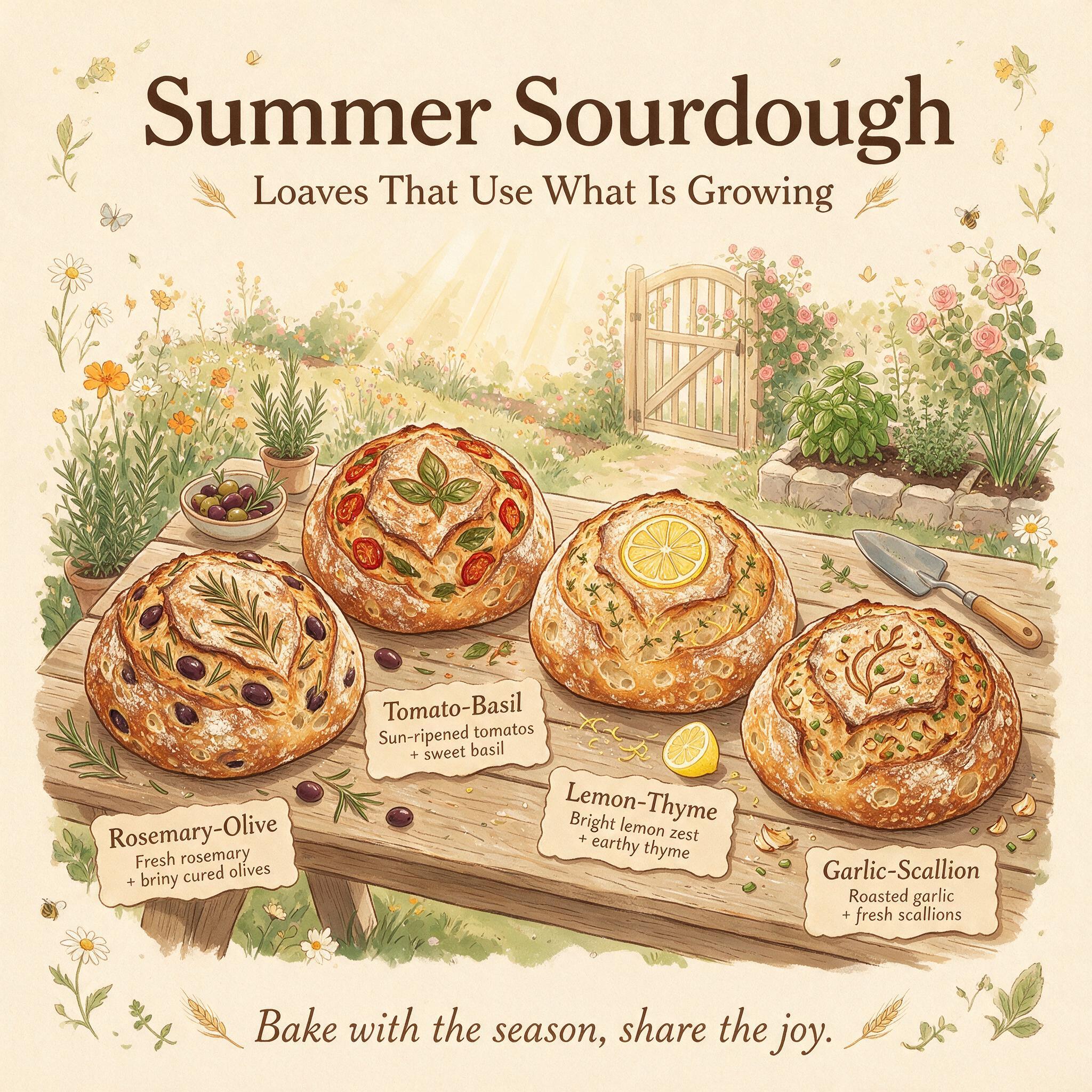
There's something almost magical about walking through a summer garden and realizing you have everything you need for your next loaf right outside the back door. Lemon trees heavy with fruit, rosemary bushes spilling over their edges, tomatoes ripening on the vine — summer is when sourdough stops being just bread and starts feeling like a conversation with the season.
I've been baking these summer-infused loaves for years now, and they never get old. There's a particular joy in slicing into a loaf where every bite carries a whisper of rosemary or a bright note of citrus — flavors that connect your kitchen directly to what's happening outside. This isn't about fancy ingredients or hard-to-find specialty items. It's about using what's already growing, right now, and turning it into bread that tastes like summer itself.
Why Summer Sourdough Is Worth the Effort
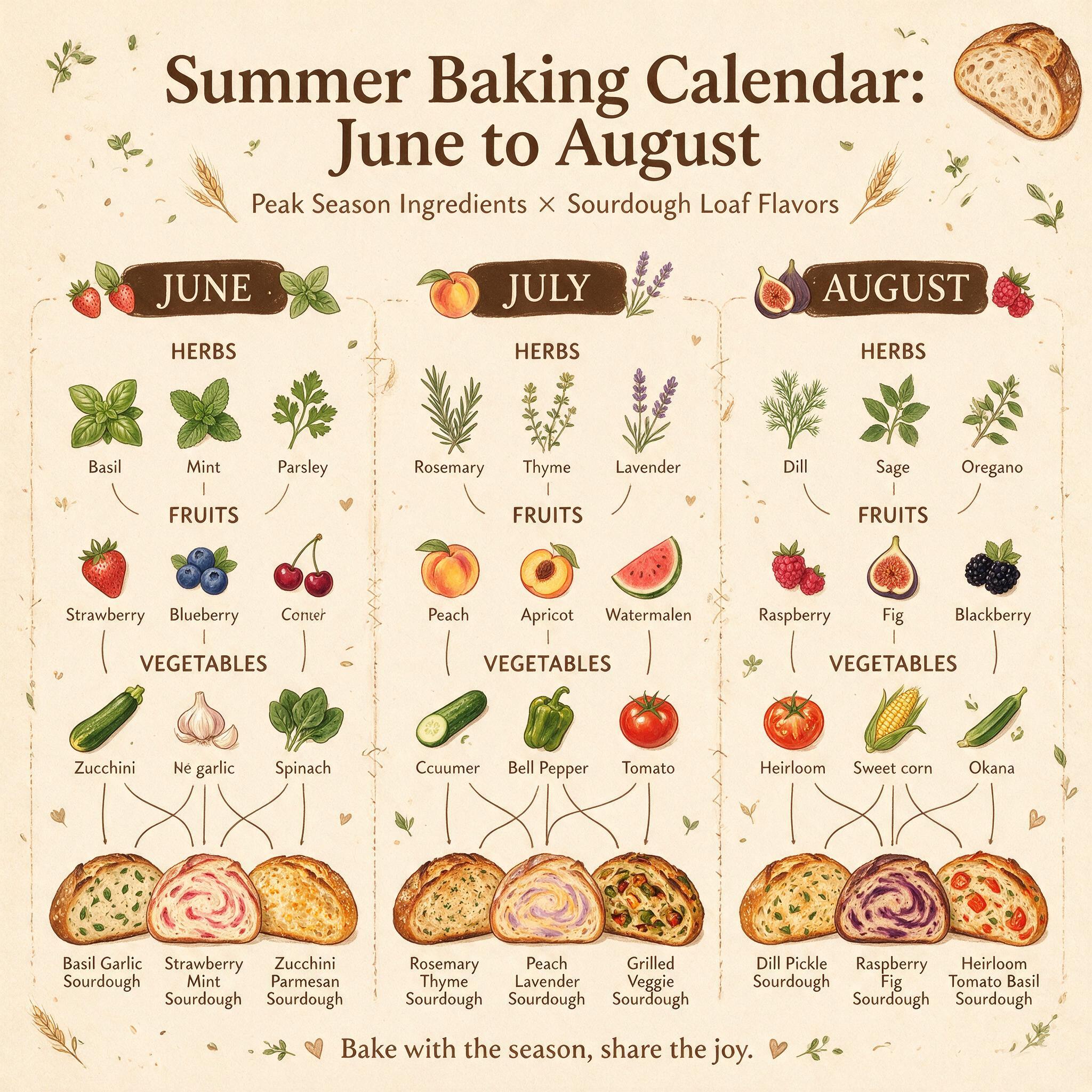
Most sourdough recipes you'll find online are built around a standard formula — flour, water, salt, starter. Simple, reliable, delicious. But once you're comfortable with the basics, adding seasonal ingredients transforms your bread into something deeply personal and seasonally connected.
Summer is actually one of the easiest seasons for flavored sourdough because so many of the best add-ins — herbs, citrus zest, dried tomatoes — are light enough to survive fermentation without sinking or weighing down your dough. You're not fighting against moisture or fat the way you might with cheese-heavy winter loaves. The sourdough process cooperates.
In this guide, I'll walk you through several summer loaf ideas, explain which ingredients work best for fermentation integrity, how to adjust hydration when things get wet, and when during your bake to fold everything in. Whether you have a garden overflowing or just access to a farmers market, there's something here for you.
The Four Summer Loaves I Make Most Often
1. Lemon Rosemary — The One I Can't Stop Making Every Summer
This is the summer loaf that started it all for me. Bright citrus from lemon zest meets savory garden rosemary in a combination that somehow feels both light and deeply satisfying. It's one of those breads where people take one bite and immediately ask what's in it, then try to guess the second ingredient.
The why: Lemon zest doesn't add moisture to dough — just oils and flavor compounds that distribute evenly during mixing. Rosemary adds an earthy, pine-like depth that balances the citrus beautifully. Together they create a loaf that tastes like a Mediterranean summer afternoon.
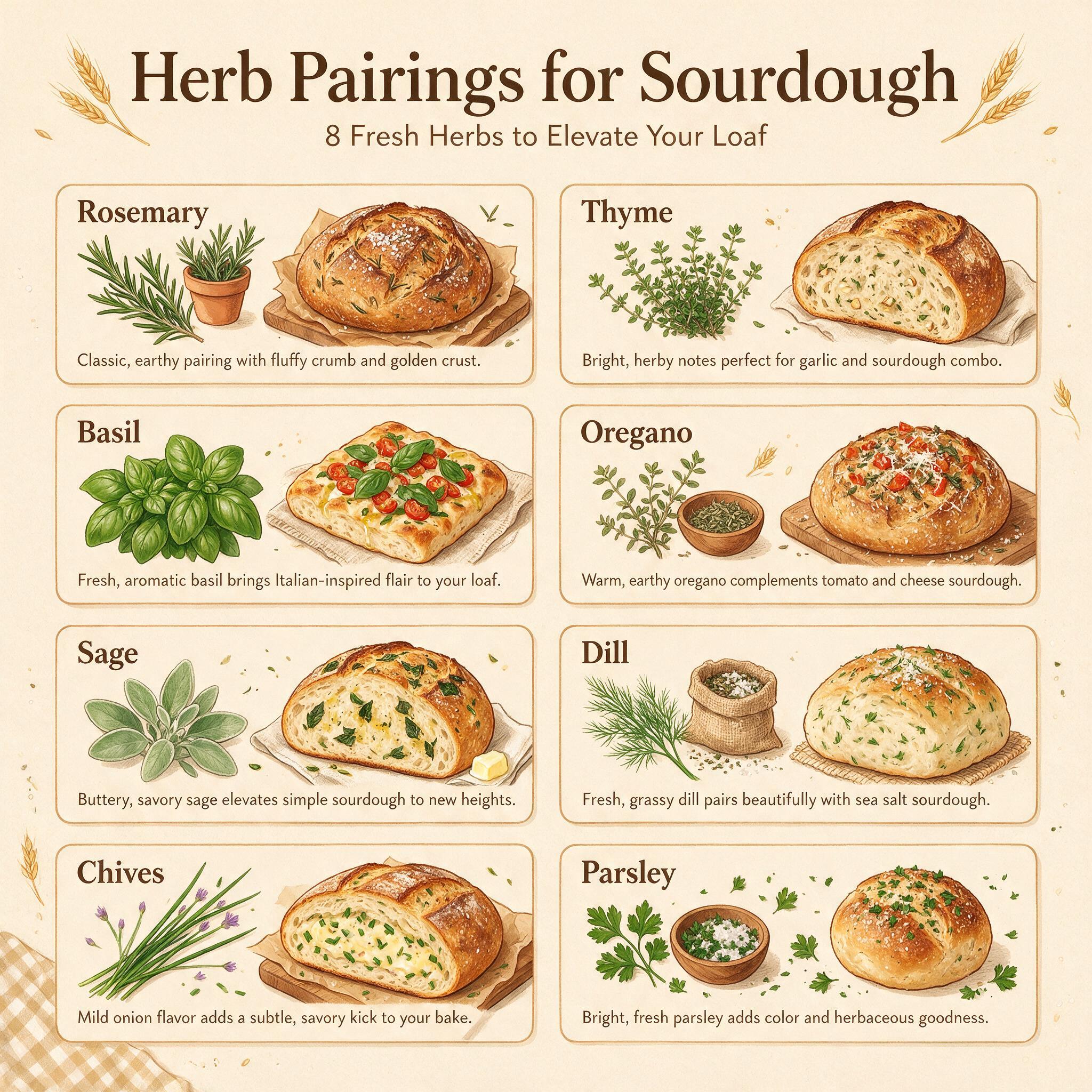
How to make it: Add 1–2 tablespoons of fresh lemon zest (just the yellow part, no white pith) and 1–2% finely chopped fresh rosemary leaves during your initial mix so both flavors distribute evenly throughout the dough. The rosemary oils need that early integration — if you add it too late, you'll get uneven pockets of strong herb flavor instead of a balanced loaf.
Pro tip: Don't overdo the rosemary. More than 2% can turn bitter during fermentation. Start with 1%, taste your zest first (some lemons are more intensely aromatic), and adjust from there on future bakes.
2. Tomato-Rosemary — Mediterranean Bread for Grilling Season
Fresh tomatoes add moisture, umami, and that unmistakable summer flavor to sourdough. The classic pairing with rosemary creates a loaf that's perfect alongside grilled vegetables or simple tomato salads.
The why: Fresh tomatoes are quite wet — about 94% water by weight — which means they release moisture during fermentation. This can create weak spots in your dough structure if you're not careful. Sun-dried tomatoes are the easier option: less moisture, more concentrated flavor, and they behave predictably in sourdough.
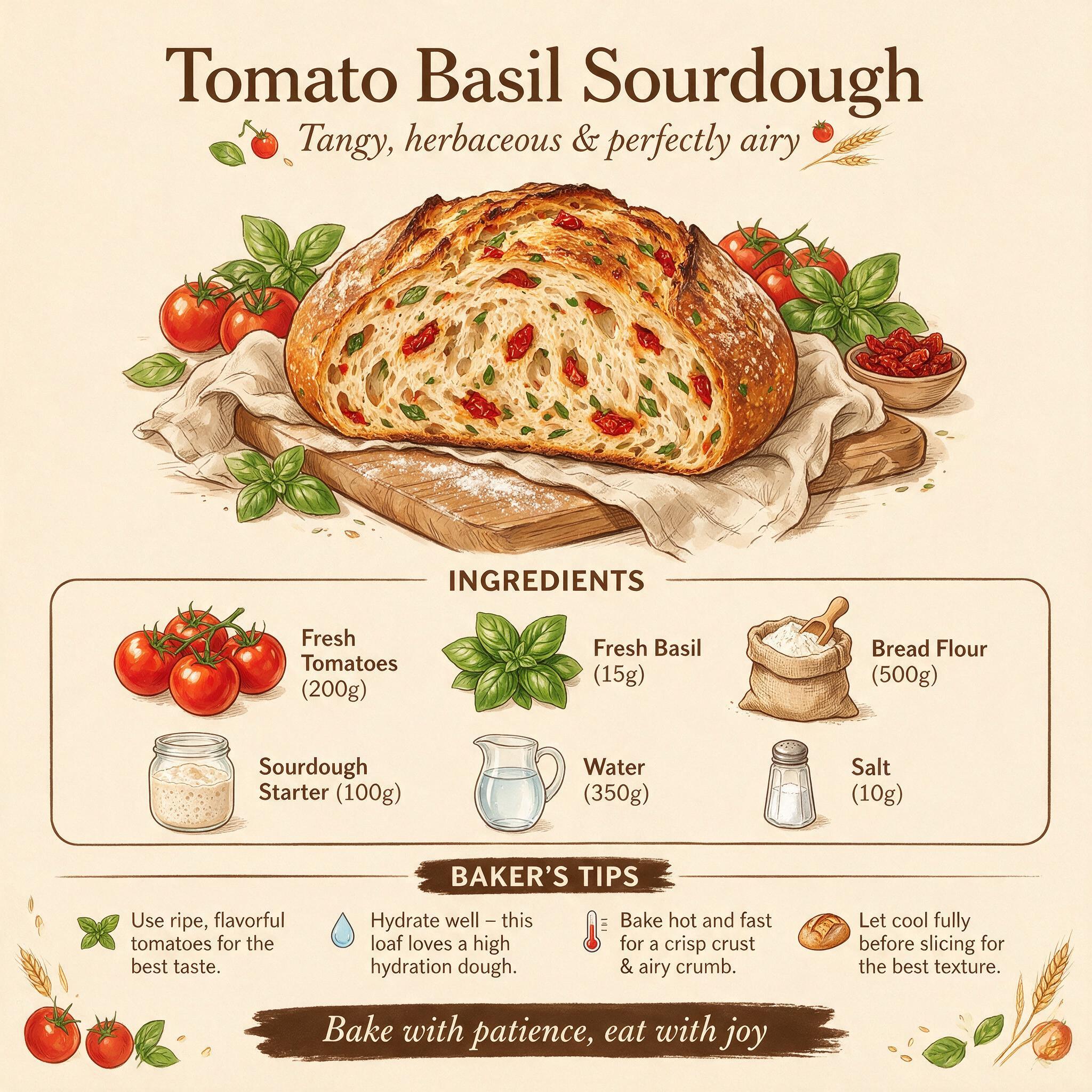
How to make it: If using fresh Roma or plum tomatoes (lower moisture than beefsteak varieties), chop them finely, pat very dry with paper towels, then fold into your dough during the final stretch-and-fold. If using sun-dried tomatoes, chop similarly and add at the same stage — no need to rehydrate if they're already soft enough to cut.
Hydration note: When using fresh tomatoes, reduce your recipe hydration by about 2–3% to compensate for the moisture they'll release during fermentation. This prevents a gummy crumb. If you're using sun-dried tomatoes with no added water, no adjustment is needed.
3. Zucchini Blossom Sourdough — The Garden Showstopper
Zucchini blossoms are one of summer's most delicate treasures. These edible flowers from your zucchini plant have a subtle, slightly sweet flavor that pairs surprisingly well with sourdough's tang. Using them in bread means you're not wasting the blooms — many gardeners pinch off extra blossoms specifically for cooking and baking.
The why: Zucchini blossoms are delicate but add noticeable moisture to dough. They work best when folded in at the very end of your bulk fermentation, minimizing their time in the acidic environment and preserving their subtle flavor. The flowers themselves don't contribute much structural disruption — they're mostly water and gentle texture.
How to make it: Gently wash fresh blossoms and pat completely dry. Remove the stamen (the thin green center) if you prefer a milder flavor, though many bakers leave it in for extra color. Chop them roughly into ½-inch pieces and fold into your dough during the final stretch-and-fold. Use immediately after adding — don't let them sit on the counter while you work through the rest of your folds.
Timing tip: Because blossoms add moisture, limit cold proof to 10–14 hours maximum. Extended refrigeration allows too much moisture migration from the flowers into the dough matrix.
4. Summer Herb Garden Loaf — Whatever's Growing
Basil, oregano, thyme, rosemary — any combination of your garden's herbs creates a beautiful loaf. This is my go-to when I have more herbs than I know what to do with and need to use them before they wilt.
The why: Fresh herbs at 1–2% of flour weight add aromatic complexity without disrupting fermentation. Different herbs bring different flavor profiles: basil adds sweetness, oregano brings Mediterranean warmth, thyme offers earthy subtlety, and rosemary (as we covered) gives pine-like depth. You can create entirely different loaves just by changing the herb combination.
How to make it: Use 1–2% fresh herbs by flour weight, finely chopped. For a two-herb loaf like basil-oregano or thyme-rosemary, split the percentage evenly between them (so 0.75% each in a 1.5% total recipe). Add during your final stretch-and-fold to minimize gluten disruption.
A note on dried herbs: If you don't have fresh herbs available, you can use dried at 0.5–1% of flour weight. Dried herbs are more concentrated and release their oils differently — add them during the initial mix instead of the final fold, since they need more time to rehydrate and distribute in the dough.
Which Summer Add-Ins Survive Fermentation?
Not all ingredients play nicely with sourdough's long fermentation. Understanding which category your add-in falls into is the single most important skill for successful flavored loaves. Here's a practical guide:
The Reliable Few (Light, Dry, or Well-Distributed)
These add-ins cause no trouble in sourdough and can usually be added at any stage:
- •Citrus zest — Lemon or orange zest adds flavor without moisture. Add during initial mix for even distribution.
- •Dried herbs — Rehydrate naturally during autolyse and bulk fermentation.
- •Seeds (sesame, poppy, sunflower) — Low-density, minimal structural impact. Add at initial mix or use as topping after shaping.
The Fermentation-Friendly Mid-Range
These work well with a few considerations:
- •Fresh herbs (rosemary, basil, thyme, oregano) — 1–2% of flour weight, add during final fold. Don't exceed the recommended percentage or bitterness can develop.
- •Nuts (walnuts, pecans) — 8–12% of flour weight, toast first for better flavor. Add at final fold; nuts can interrupt gluten structure over very long proofs.
- •Dried fruit (cranberries, apricots) — 10–15% of flour weight by flour weight. Toss in a tablespoon of your recipe flour before folding in to prevent sinking.
The Moisture-Makers (Require Adjustment)
These ingredients release water during fermentation and need attention:
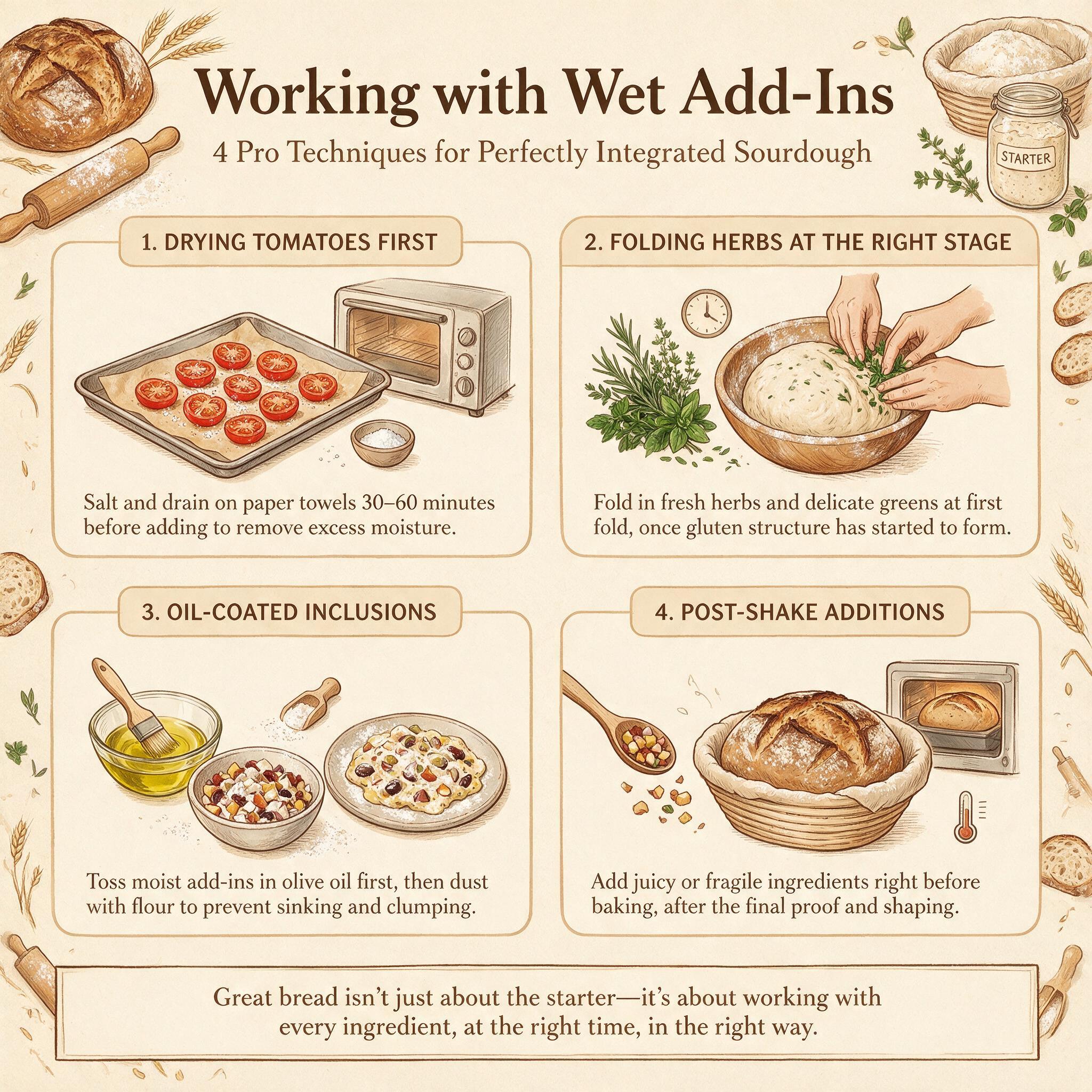
- •Fresh tomatoes — Very wet, can cause weak spots. Pat dry thoroughly or use sun-dried instead. Reduce hydration by 2–3%.
- •Zucchini blossoms — Delicate but moist. Fold in last; limit cold proof to 10–14 hours.
- •Fresh berries (if you catch early summer strawberries) — Chop finely, toss in flour, fold during final stretch-and-fold.
The Quick Reference: When to Add Each Ingredient
| Add-in | Best Timing | Hydration Note | Max Cold Proof |
|---|---|---|---|
| Citrus zest | Initial mix | No adjustment needed | 18–24 hours |
| Fresh herbs (rosemary, basil) | Final fold | Standard or −2% if wet | 12–18 hours |
| Sun-dried tomatoes | Final fold | No adjustment needed | 16–20 hours |
| Fresh tomatoes | Final fold | Reduce by 2–3% | 10–14 hours |
| Zucchini blossoms | Final fold | Reduce by 2–3% | 10–14 hours |
| Nuts | Final fold | Standard | 18–20 hours |
Hydration: The One Adjustment That Makes Everything Work
Here's something I wish someone had told me earlier in my sourdough journey: wet add-ins need wetter dough, but the add-in itself adds water during fermentation. It sounds contradictory, so let me explain.
When you fold fresh tomatoes or zucchini blossoms into your dough, they start releasing moisture immediately — especially during a cold proof where the slow fermentation gives them time to weep. If your recipe calls for 75% hydration and you add wet ingredients without adjusting, your final dough might behave like it's at 78–79% hydration — sticky, difficult to shape, with a denser crumb.
The fix: Reduce your base recipe hydration by 2–3% when using high-moisture add-ins. So if you normally bake at 75%, start at 72–73%. The wet ingredients will add back moisture during fermentation and bulk up to roughly where you'd want them anyway.
For dry or moderate add-ins (citrus zest, dried herbs, nuts), no adjustment is needed. Your dough behaves predictably because nothing significant is being added or removed from the water balance.
A note on humidity: Summer kitchens tend to be more humid than winter ones, and your flour absorbs ambient moisture differently depending on storage conditions. If your dough feels stickier than expected during mixing, don't immediately add flour — let it rest for 10 minutes (the autolyse effect), then re-evaluate. Flour hydration varies by brand and even by batch.
Troubleshooting Summer Loaves
My loaf sank in the middle after adding fresh tomatoes
This is the most common issue with wet summer add-ins. The tomato released too much moisture during proof, creating a weak spot in your dough's structure. Next time: chop fresh tomatoes smaller (¼-inch dice works better than large chunks), pat them very dry with paper towels, and reduce hydration by 2–3%. Sun-dried tomatoes are the foolproof alternative — same flavor profile, nearly zero moisture risk.
My herbs turned bitter in the finished loaf
You likely used too much fresh herb, or the herbs were old/dried out before use. Fresh rosemary beyond 2% of flour weight tends toward bitterness during fermentation. If your herbs are past their prime (dried out, browned edges), they'll contribute more bitter compounds than aromatic ones. Always taste-test a small piece of herb before committing to a full recipe — if it tastes bitter raw, it'll taste worse baked.
My zucchini blossoms turned mushy after proofing
Zucchini blossoms are extremely delicate and contain a lot of water. They're best when folded in at the very last moment of your bulk fermentation, with minimal handling afterward. If you're doing coil folds or aggressive stretch-and-folds, switch to gentler finger stretches during the final fold. Also make sure your cold proof doesn't exceed 12 hours — longer refrigeration equals more moisture release from the blossoms into your dough.
My loaf didn't rise as much as usual with summer add-ins
Summer heat accelerates fermentation, and adding ingredients can slightly slow it down (the extra mass interrupts gluten development). This is normal. Your bulk fermentation might run 15–30 minutes shorter than your standard recipe in warm weather. Watch for visual cues — when the dough has spread noticeably and jiggles like set custard when you gently shake the bowl — rather than relying solely on a timer.
Frequently Asked Questions
Can I use frozen herbs instead of fresh?
Yes, though the texture will be slightly different. Thaw frozen herbs and pat dry before using. Reduce the amount by about 25% since frozen herbs are often chopped finer than you'd chop fresh ones. Add during your final fold rather than initial mix — frozen herbs release moisture more quickly when they hit room-temperature dough.
How much lemon zest is too much?
Start with one tablespoon of zest for a standard two-cup-flour loaf (about 250g flour). Two tablespoons is the upper limit before citrus flavor starts dominating. If your lemons are particularly aromatic ( Meyer lemons tend to be), stick closer to one tablespoon. Zest only the yellow part — the white pith underneath adds bitterness without fragrance.
Can I make these loaves ahead and freeze them?
Absolutely. Slice and freeze in airtight bags once completely cooled. Reheat slices directly from frozen in a toaster or oven at 350°F for about 10 minutes. Summer herb loaves freeze particularly well — the flavors actually deepen slightly after a day or two in the freezer.
What if I don't have a banneton?
Use any bowl lined with a well-floured kitchen towel. Dust generously with rice flour (it doesn't absorb into dough like wheat flour does) to prevent sticking. The shape won't be as perfectly round, but the bread will taste identical.
Can I double these recipes for two loaves?
Yes — scale all ingredients proportionally. Just make sure your mixing bowl is large enough; doubled dough takes up significantly more space during bulk fermentation than you might expect. If you're adding wet ingredients like tomatoes to a doubled batch, consider reducing hydration slightly more (3% instead of 2%) since the moisture has less surface area to evaporate from.
A Note on Summer Fermentation Timing
Summer changes everything about sourdough timing. At constant room temperatures above 78°F (25°C), bulk fermentation can move noticeably faster than in spring or fall. Your dough might be ready for shaping in 4 hours instead of the 6–7 hours you're used to during cooler months.
The visual cues don't change — look for that spread-out, custardy jiggle — but the clock moves differently. Don't be surprised if your lemon rosemary loaf is done before dinner time when you started mixing at breakfast. This isn't a problem; it's just summer sourdough being summer sourdough.
If you work a 9-to-5 and want to bake on weekends, consider building your levain the night before (or early morning) with a longer bulk in the cooler overnight hours, then refrigerate after shaping for a cold proof that gives you schedule flexibility without sacrificing flavor. The cold proof actually improves herb-infused loaves — it allows those aromatic oils to integrate more fully into the dough matrix while keeping your fermentation window manageable.
Closing Thoughts
Summer sourdough is one of my favorite ways to connect the kitchen to the garden, the season to the table. Whether you're working with a lemon tree out back, farmers market tomatoes, or a bunch of fresh herbs that grew wild on your windowsill, these loaves turn what's growing right now into something deeply satisfying.
The key principles are simple: understand which ingredients add moisture and adjust accordingly, time your add-ins correctly (early mix for dry things, final fold for wet), and trust the visual cues over the clock — especially in summer when fermentation moves at its own pace.
There's no single correct way to bake a summer sourdough loaf. Your garden might have different herbs than mine, your kitchen might run warmer or cooler, your local lemons might be more or less aromatic. That's not a problem — it's the beauty of sourdough. Pay attention to how your dough behaves with each new combination, take notes if that helps you, and keep experimenting. Next summer, you'll have a whole repertoire of seasonal loaves that taste like your garden, your kitchen, your bread.
Happy baking!