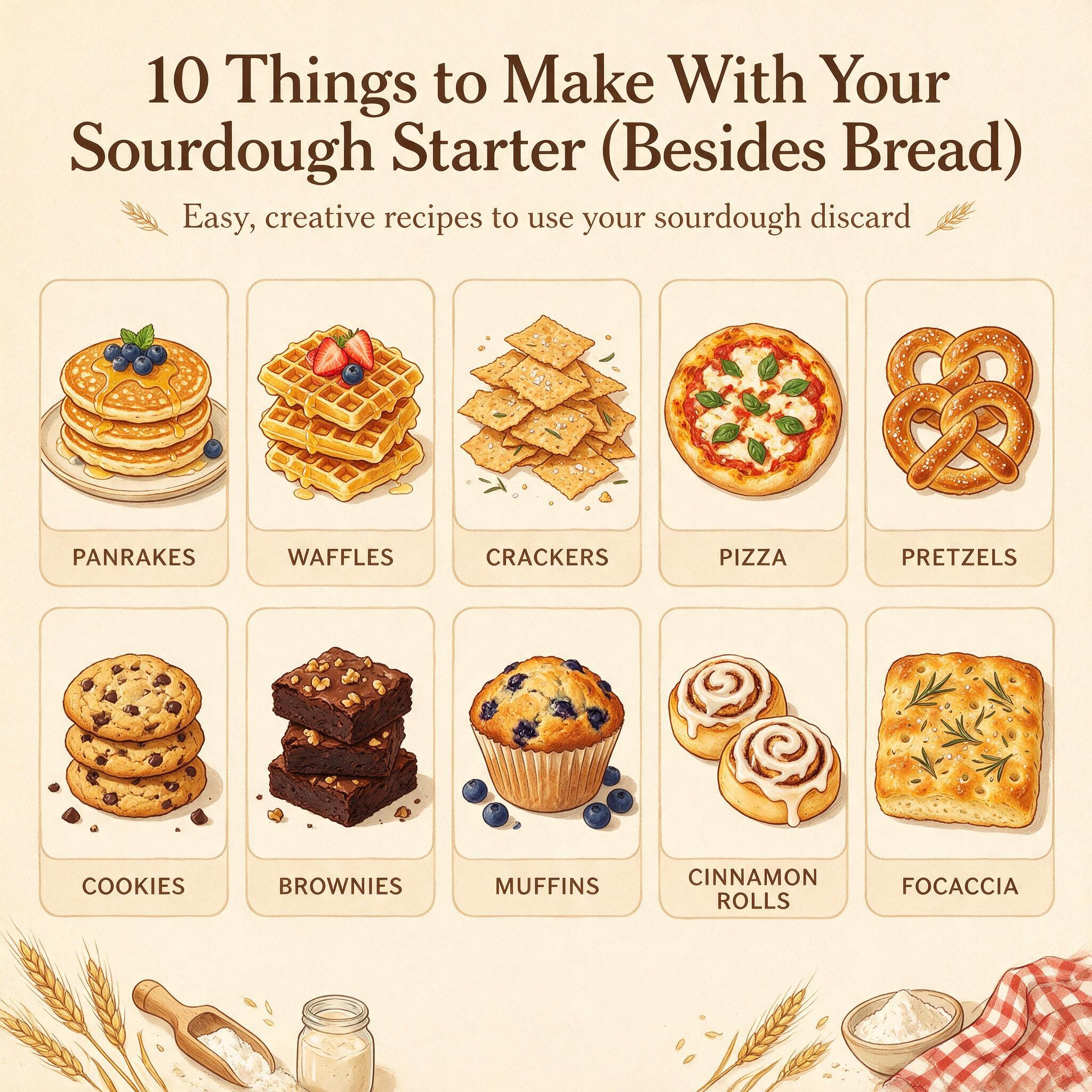
There's something almost magical about sourdough — flour, water, salt, time, and a living starter. That's it. No commercial yeast, no shortcuts. Just four ingredients that, given patience and a bit of know-how, transform into the most rewarding bread you'll ever bake from scratch. But here's what I've learned after years of feeding that jar every single day: your sourdough starter is so much more than a bread-making tool. It's a pantry staple that can elevate everything from tortillas to brownies.
Why Your Starter Belongs in Everything (Not Just Bread)
Before we get into the recipes, let me tell you why discard — that portion of your starter you scoop out to keep it from overflowing — is actually a secret weapon in the kitchen.
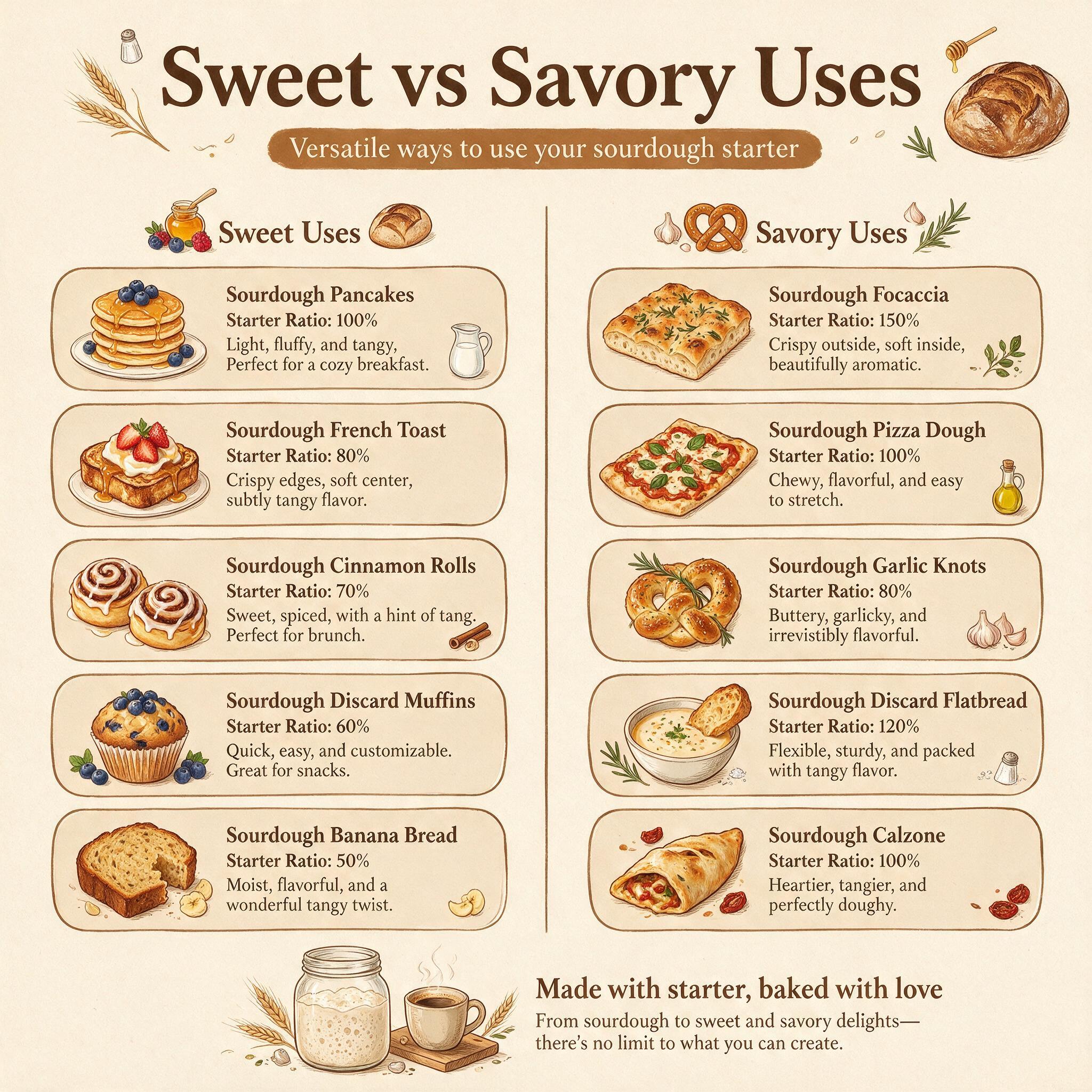
Sourdough discard brings four things to any recipe that are hard to replicate: tang, moisture, fermentation complexity, and tenderizing power. The acidity balances sweetness, reacts with baking soda for lift in quick breads, keeps baked goods tender longer than plain flour and water ever could, and adds a depth of flavor that makes even simple cookies taste like they've been sitting on your counter developing character.
I know what you're thinking — "But my starter is just bread stuff." I used to think the same way. Then I made sourdough tortillas for the first time (viral recipe, came across them on social media), and everything changed. The tang they added was unlike anything butter or oil could do alone. Since then, I've experimented with discard in everything from focaccia to brownies, and here's what I've found worth sharing.
Savory Applications
1. Sourdough Tortillas
This is where it started for me, and honestly, this might be the single most useful thing you can do with discard.
Mix your discard with flour, a little water, fat (I personally love bacon fat here — rendered from last night's breakfast, strained), and salt. Let it rest briefly so the flour hydrates fully, then roll each portion paper-thin on a floured surface. Cook on a hot cast-iron griddle for 30 to 60 seconds per side until you see little brown spots bloom across the surface.
The result is pliable, tangy tortillas that stay soft for hours — not like store-bought wrappers that dry out and crack within minutes. The bacon-fat version adds a smoky depth that turns any taco or quesadilla into something special. I've made these with olive oil too, but the bacon fat is next level.
The key here is rolling them thin. If your tortillas are thick, they'll puff up like little bread bowls instead of staying pliable. You want flat and flexible. Think crepe-thin, not naan-thick.
2. Sourdough Focaccia
Focaccia is one of the most forgiving things you can make with sourdough discard because it's essentially a no-knead dough. The discard replaces commercial yeast entirely — you just mix flour, water, olive oil, and your starter, let it rest, stretch it into a pan, dimple generously, top, and bake at 425 to 475°F until the edges are deeply golden.
What makes this special is how the fermentation gives you that irresistibly crisp crust with a tender, open crumb underneath — all without kneading. The tang from your starter cuts through the richness of olive oil in a way that feels sophisticated but takes almost zero effort.
Toppings are where you get creative. Classic rosemary and sea salt works beautifully. Cherry tomatoes pressed into the dimples, olives scattered across the surface, garlic cloves nestled in — all excellent. I've also done sweet versions with caramelized onions and goat cheese that surprised everyone at dinner.
3. Sourdough Flatbread / Flammkuchen
For something even quicker than focaccia, try a stovetop flatbread. Mix your discard with flour and a little oil, roll it out thin (again, paper-thin is the goal), and cook in an oiled pan for two to three minutes per side until you get light browning spots. These are soft, flavorful, and perfect for meal prep — make a batch of dough on Sunday and you've got flatbreads ready all week.
If you want to go oven route, try Flammkuchen (the Alsatian version). That's your sourdough flatbread topped with crème fraîche, thinly sliced onions, and cheese, baked until the edges crisp up. No yeast needed — the discard gives it that fermented character. It sounds fancy but comes together in about 20 minutes from start to finish once you have starter ready.
4. Sourdough Pizza Dough
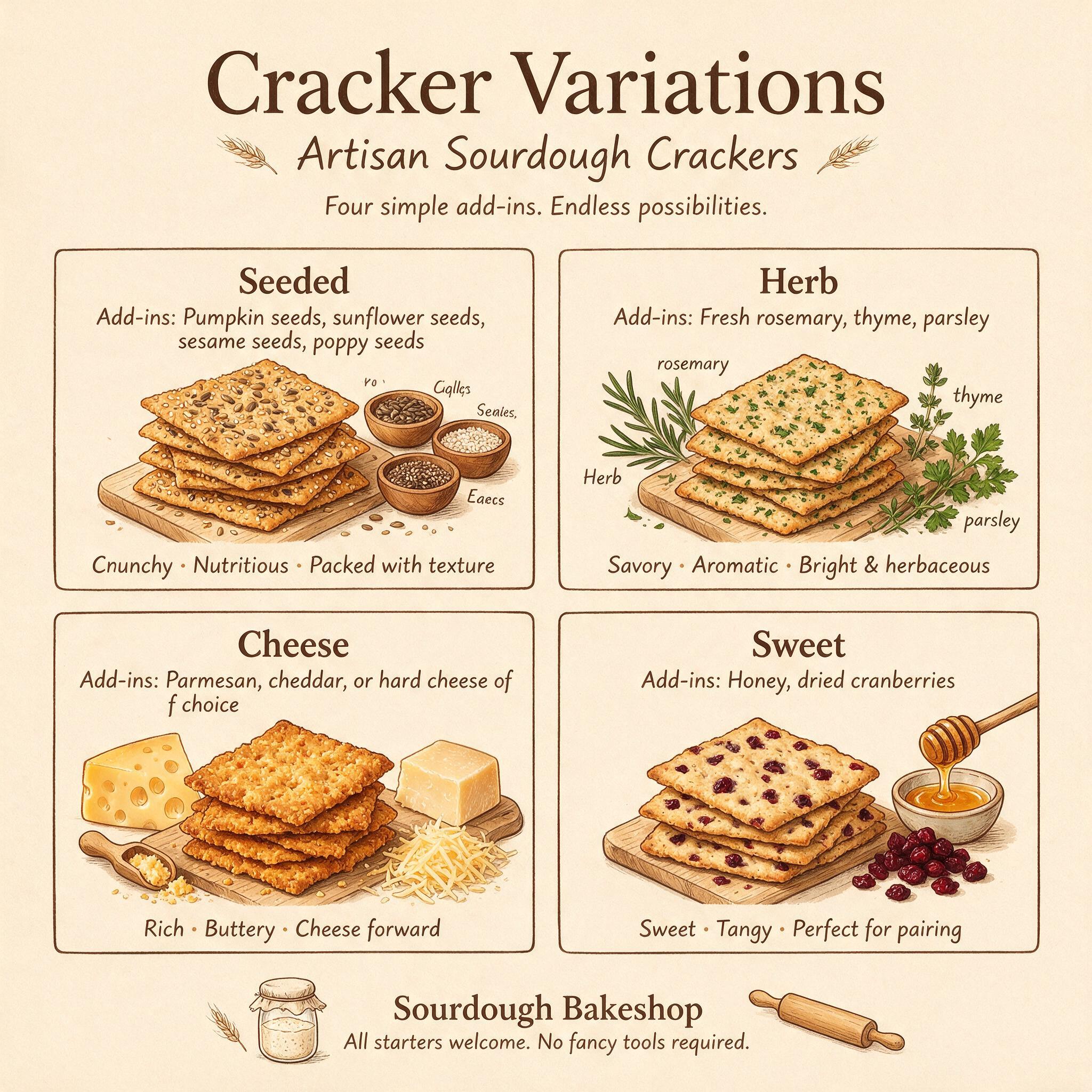
If you've ever made pizza at home, you know that good crust makes all the difference. Sourdough discard adds a complexity that plain dough simply can't match — a subtle tang that complements rich toppings like sausage, pepperoni, or even just margherita with fresh mozzarella.
Mix your discard with high-protein flour (bread flour works well), water, and salt. Let it ferment — this could be anywhere from 4 to 12 hours depending on your kitchen temperature. Stretch thin onto a pizza steel or stone preheated at the highest temperature your oven goes (500 to 550°F). Bake until the crust has those beautiful leopard spots and the cheese is bubbling.
The fermentation improves digestibility too — that's one of my favorite things about sourdough across any application. The longer rest gives your gut a break compared to quick-rise doughs.
5. Sourdough Biscuits (or "Biscuit Bombs")
This went viral for a reason. Jalapeño cheddar bacon biscuit bombs — cheese-stuffed balls of discard-enriched biscuit dough, baked until golden and puffy — are genuinely one of the best things you can make with sourdough discard.
The science is simple: your starter tenderizes biscuit dough the same way buttermilk does, because both are acidic. But discard adds that extra layer of fermentation complexity that makes these taste like they came from a bakery rather than your Sunday morning experiment.
Cut cold butter into a flour-and-discard mixture until it resembles coarse crumbs, then fold in your mix-ins — cheese, diced jalapeños, crumbled bacon work great together. Form balls (stuff each one with an extra cube of cheddar if you're feeling fancy) and bake at 425 to 450°F for about 15 minutes until deeply golden on top.
If biscuit bombs feel like too much work, regular drop biscuits work just as well. The principle is the same — the discard replaces buttermilk, and the result is a tender, tangy biscuit that pairs perfectly with soup or stew.
6. Sourdough Cornbread
This might be my favorite thing to make when corn season hits. The acidity in your starter reacts beautifully with baking soda for excellent lift, while the tang cuts through the natural sweetness of corn — creating something more complex than standard cornbread without being overly sweet.
Mix your discard with cornmeal, a little flour (just enough structure), eggs, milk or buttermilk, and oil or melted butter. Combine wet and dry ingredients until just mixed — overmixing makes tough cornbread, always. Pour into a preheated cast-iron skillet and bake at 400 to 425°F for about 20 to 25 minutes until the top is golden and a toothpick comes out clean.
The moisture from your discard keeps the crumb tender longer than traditional recipes. I've made cornbread with discard for years now, and it's never gone back. The acid-soda reaction gives you that lift without needing commercial yeast, and the tang makes every bite interesting.
Sweet Applications
7. Sourdough Cinnamon Rolls
Here's where things get really interesting — sourdough can make cinnamon rolls that are more complex and less cloyingly sweet than standard versions. The secret is in how the starter's tang cuts through the sweetness of cinnamon-sugar filling, creating a sophisticated balance that feels grown-up without being fussy.
Mix your discard into an enriched dough (butter, sugar, eggs), let it ferment until puffy, roll it out on a floured surface, spread with brown butter and cinnamon-sugar mixture, then roll up tightly. Score into individual rolls, proof until they've visibly expanded, and bake at 350 to 375°F for about 25 to 30 minutes.
The result is a cinnamon roll that still tastes like comfort food but has depth you didn't expect — that fermented character from your starter adds layers of flavor that make plain sugar cookies feel one-dimensional by comparison. I personally find these even better the next day, after the flavors have had time to meld overnight.
8. Sourdough Cookies (Sugar Cookies)
King Arthur Baking has been making sourdough sugar cookies for years now, and they've convinced me that this isn't just a novelty — it's genuinely good. Replace some of the butter or milk in your standard cookie dough with discard, mix, scoop onto a baking sheet, and bake at 350 to 375°F until the edges are just barely golden.
What happens is surprising: the sourdough flavor comes through as subtle rather than overtly tangy. The moisture from the starter keeps cookies tender longer (seriously, store-bought cookies go hard in a day; these stay soft for days). And there's a slight tang that makes them taste more interesting than plain sugar cookies without tasting "sour."
These are great for decorating too — they hold royal icing beautifully and have enough structure to handle piping. If you're making holiday cookies, this is an easy way to use up discard while making something festive.
9. Sourdough Brownies ("Super Fudgy")
Another King Arthur signature that became a household recipe in my kitchen: sourdough brownies. Replace some of the liquid in your favorite brownie recipe with discard and bake at 350°F until just set (you want them slightly underdone for maximum fudginess).
The acidity from your starter enhances chocolate flavor perception — it's a real thing, like how a squeeze of lemon brightens berry desserts. The discard also contributes moisture that makes these noticeably denser and fudgier than regular brownies. People who try these don't expect sourdough in them, and they're always surprised when you tell them.
The key is not overbaking. Pull these out when the center still looks slightly soft — they'll continue setting as they cool. Let them cool completely before cutting for clean edges. I know it's tempting to eat them warm (they're incredible warm), but patience pays off here.
10. Sourdough Croissants
This one's for the ambitious bakers among us, and it's become increasingly popular on social media as more home bakers experiment with fermenting laminated doughs.
Incorporate your discard into the détrempe (the base dough) of croissant dough, then laminate with butter through the traditional fold process — letter folds, chill between each set, repeat until you've built up all those layers. Bake at 400 to 425°F until deeply golden and shattering-crisp on the outside, tender and airy inside.
The fermentation from your starter adds flavor complexity to an already rich pastry, and it improves digestibility — important when you're working with a dough that's essentially half butter. The croissants taste like something you'd get at a Parisian bakery, only with a subtle tang underneath all that flaky butteriness.
They take time (you'll need a full day minimum), but the process is meditative: roll, fold, chill, repeat. Worth it if you're patient.
Bonus Quick-Mentions
A few more applications worth trying when you have discard building up:
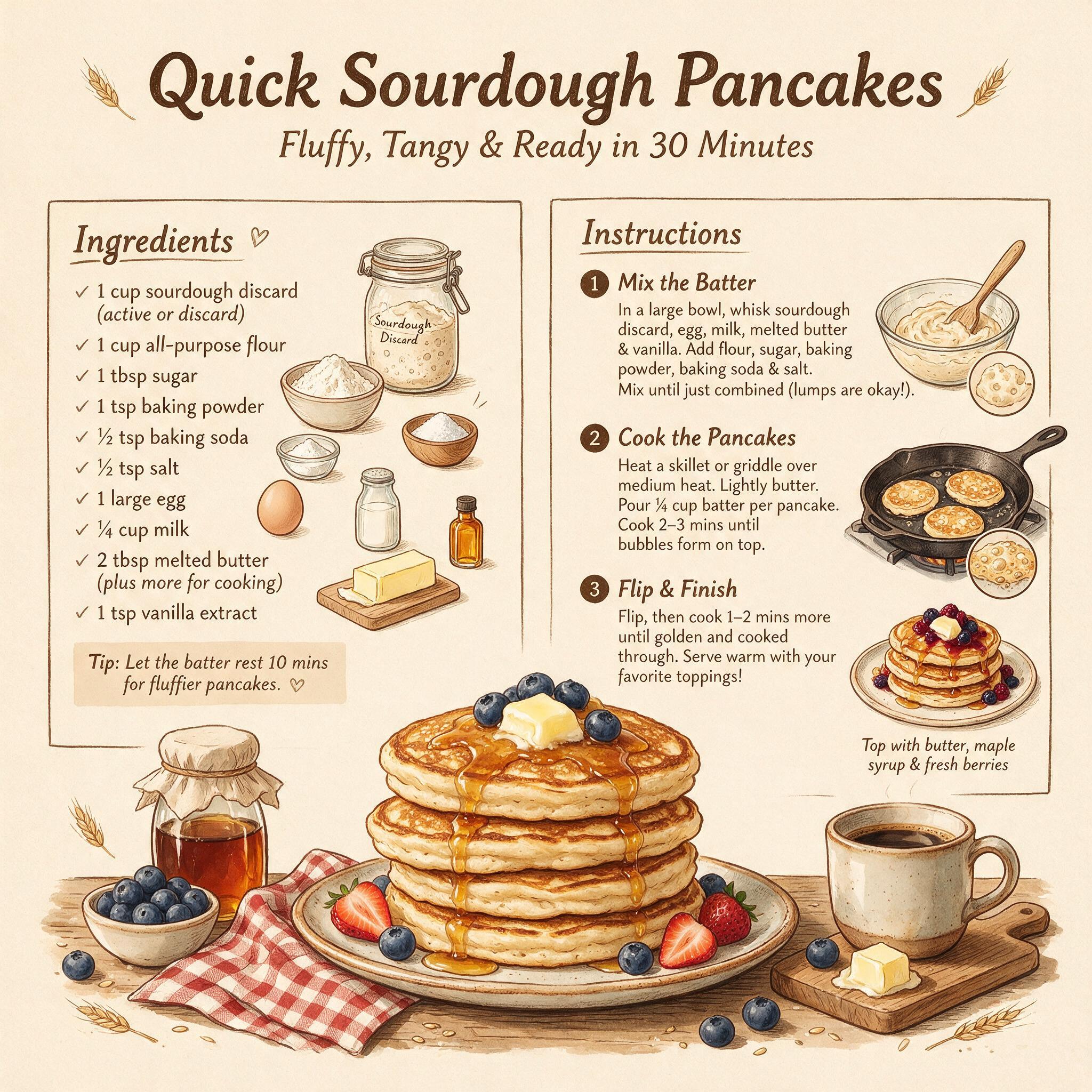
Sourdough waffles — crispy edges, soft centers. The acidity creates better browning and a subtle tang that pairs beautifully with savory toppings (fried chicken, actually) as well as syrup.
Sourdough muffins — blueberry or banana. Discard replaces buttermilk entirely in these recipes. Tang adds sophistication to what could otherwise be plain morning bread.
Sourdough banana bread and zucchini bread — classic quickbreads get an upgrade from discard: moister crumb, better rise from the acid-base chemistry with baking soda, and more complex flavor overall.
Troubleshooting Tips
Here are some things I've learned through trial, error, and a few too-many-attempts experiments:
Your dough is sticking to everything. This happens most often with tortillas and flatbread. Wet your hands before rolling instead of adding extra flour — you want minimal surface flour for the best texture. If it's still sticky after wetting, add just a tablespoon more flour at a time until manageable.
Your biscuits aren't rising properly. Make sure your butter is cold when you cut it into the flour mixture. The cold fat creates steam during baking, which gives lift. Also, don't overwork the dough — mix until just combined and handle as little as possible before baking.
Your cookies taste too tangy. This means your discard was very active (or you used a larger proportion than intended). Next time, use slightly less discard or let it sit in the fridge a bit longer before using — the flavor mellows as fermentation slows down. You can also increase the sugar slightly to balance.
Your cornbread is dense. Undermixing isn't usually the problem with cornbread — overmixing is. But if yours came out dense, check that your baking soda was fresh (test it by dropping a little in vinegar — it should fizz vigorously) and that your discard was active enough to provide lift.
Your flatbread is too tough. You're probably rolling them too thick or not cooking them hot enough. The pan needs to be properly preheated, and the dough should be as thin as possible. If you can read newsprint through it, you're about right.
Frequently Asked Questions
Can I use active (fed) starter instead of discard? Yes, absolutely. Active starter works in all these applications — you'll just get more rise from the live yeast. The trade-off is less tang, since fed starter has had time to consume its food. If you prefer a milder flavor, use active starter. For that tangy depth, discard is your friend.
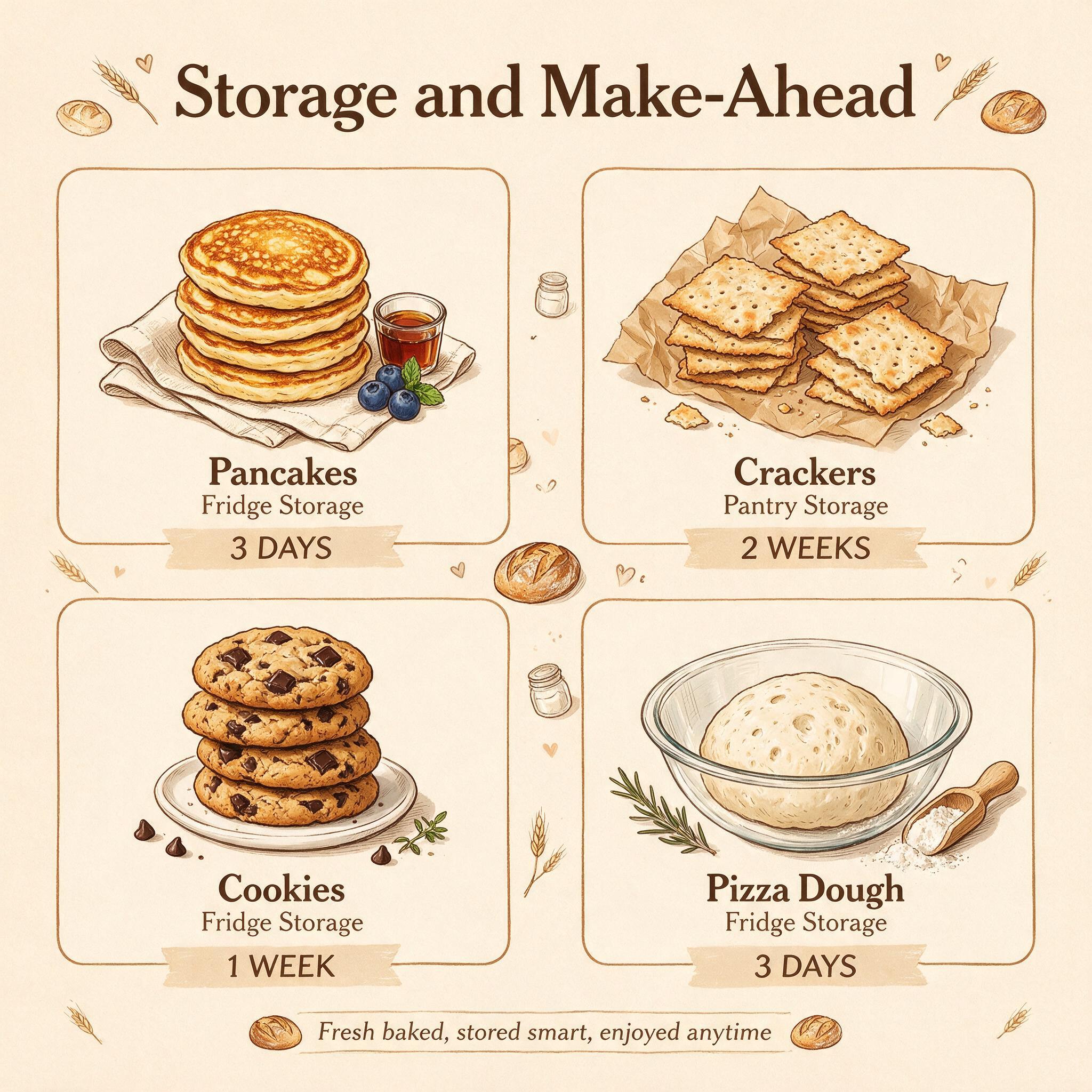
How long can I keep these baked goods? Most of these (cookies, brownies, biscuits) stay fresh for 3 to 4 days in an airtight container at room temperature. Tortillas and flatbreads are best within 2 days but freeze beautifully — stack them with parchment between each and freeze for up to a month. Reheat tortillas directly on a hot griddle to restore pliability.
Can I double or triple these recipes? Most of them scale well. The main thing to watch is fermentation time — bigger batches take longer to rise. When making larger quantities of dough, give it extra time and judge by volume rather than clock. If your kitchen is warm (above 78°F / 25°C), fermentation will move faster regardless of batch size.
What if I don't have discard on hand? You can make a quick "discard" by taking equal parts flour and water, mixing them, and letting sit at room temperature for 12 to 24 hours. It won't be as developed as true starter, but it'll provide the acidity you need for most of these recipes. Not quite the same, but close enough in a pinch.
Do I need to adjust baking times? Generally no — discard recipes bake at roughly the same temperatures and times as their non-sourdough equivalents. The one exception is enriched doughs like cinnamon rolls or croissants, which may take 2 to 3 minutes longer because the added moisture from starter means slightly more time needed for thorough baking. Watch visual cues (golden color) rather than strictly trusting the clock.
Closing Thoughts
Sourdough is deeply personal — what works in my kitchen might need tweaking in yours, and that's the beauty of it. Your room temperature, your flour, even your water all influence how discard behaves. Pay attention to how your dough feels rather than strictly following timing instructions. Trust your eyes more than any timer.
The next time you're scooping out that discard and tossing it (guilty), try one of these instead. Start with tortillas or cornbread — they're the easiest entry points and genuinely impressive results. Once you taste what sourdough discard can do outside of bread, you'll never look at that jar the same way again.
Happy baking!