There's a particular kind of guilt that comes with dumping starter down the sink. You've been feeding it, talking to it, watching those bubbles grow — and then every other Sunday you pour half of it away like it's leftover coffee. But what if discard isn't waste at all? What if it's actually one of the most interesting ingredients in your kitchen?
The word "discard" does sourdough starter a disservice. It implies something less-than, an afterthought. But discard is fermented flour and water — alive with lactic acid bacteria, carrying the tangy complexity of hours or days of slow fermentation. When you put it into batter or dough, it brings three things that are genuinely hard to replicate any other way: tang (that bright acidity), moisture (the liquid from your unfed starter), and tenderness (acidity breaks down some gluten, creating a softer crumb).
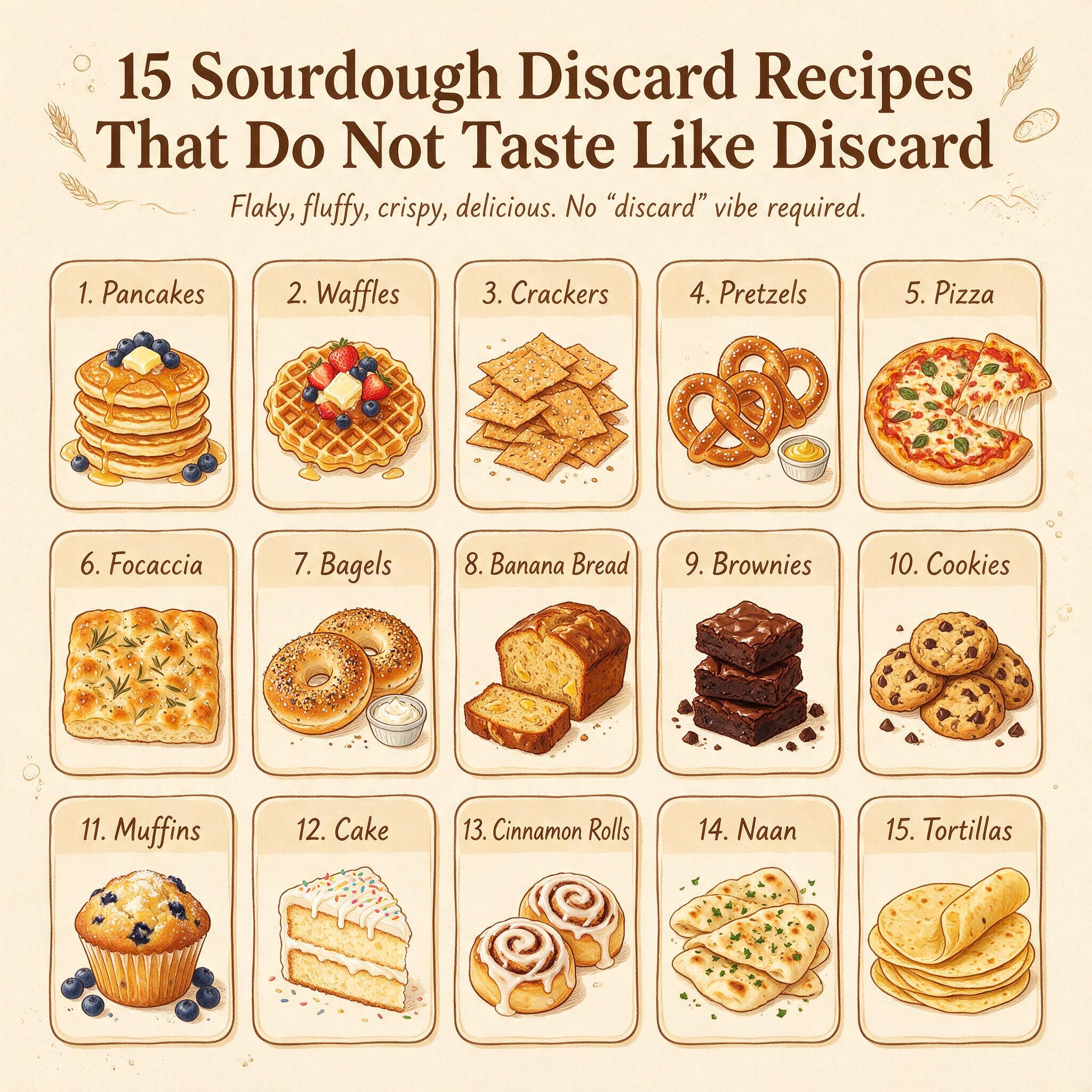
This isn't a list of crackers. It's not even a list of pancakes — though those are fine too. These are fifteen recipes where discard doesn't just fill space; it does something. Each one leverages at least one of those properties in a way that makes the final product better than it would be without it.
The Three Superpowers of Sourdough Discard
Before we get to the recipes, let's talk about what discard actually brings to the table — because understanding this changes how you think about every recipe below.
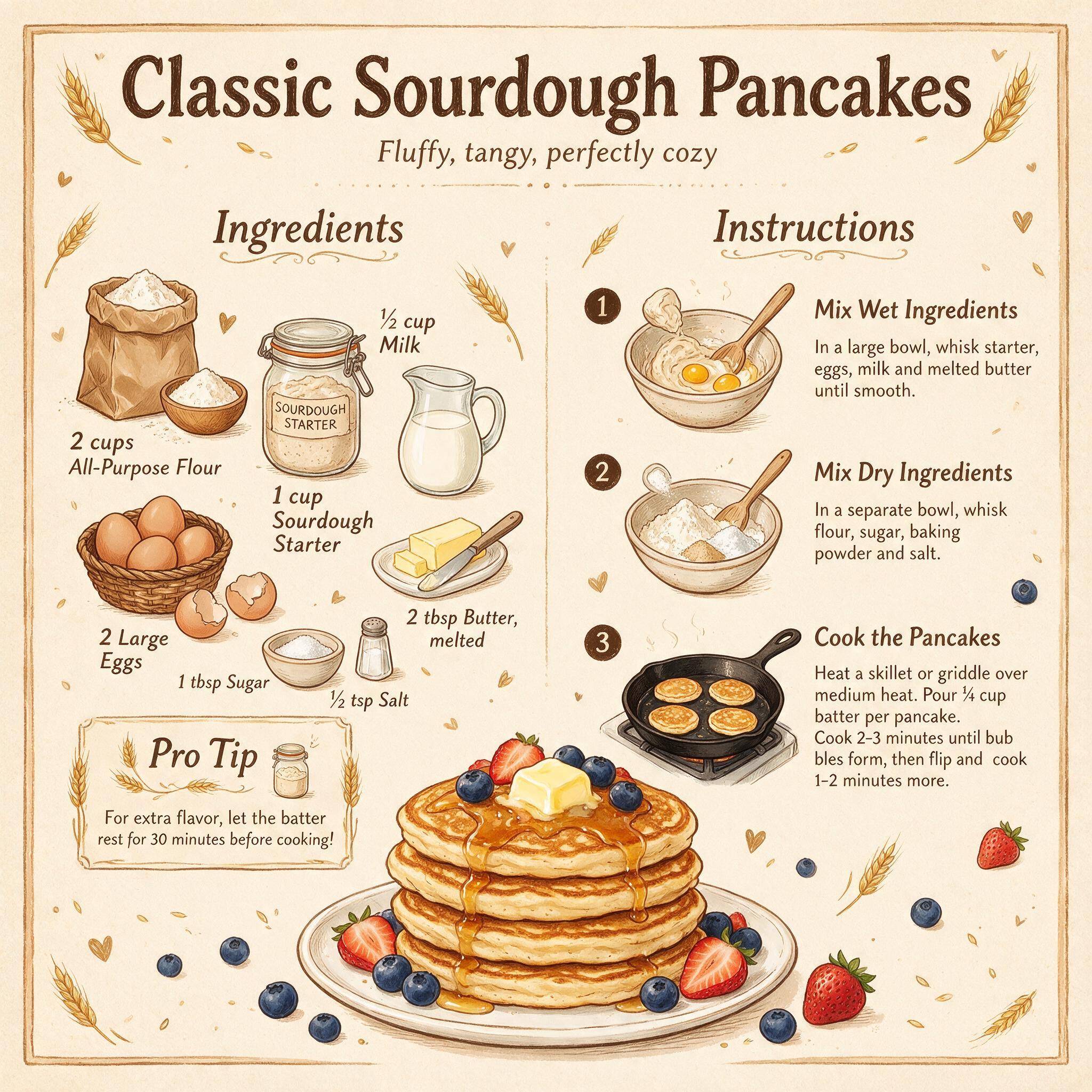
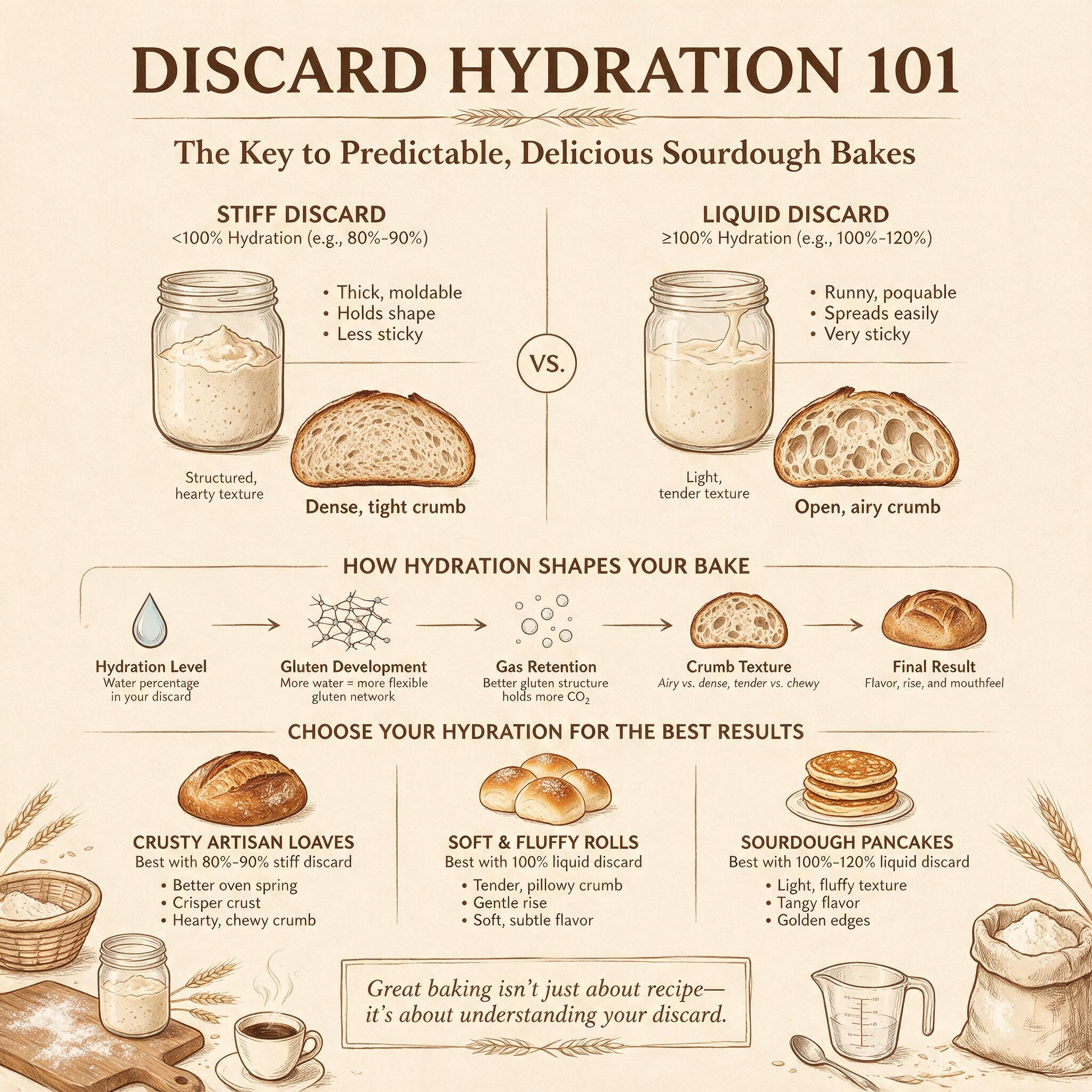
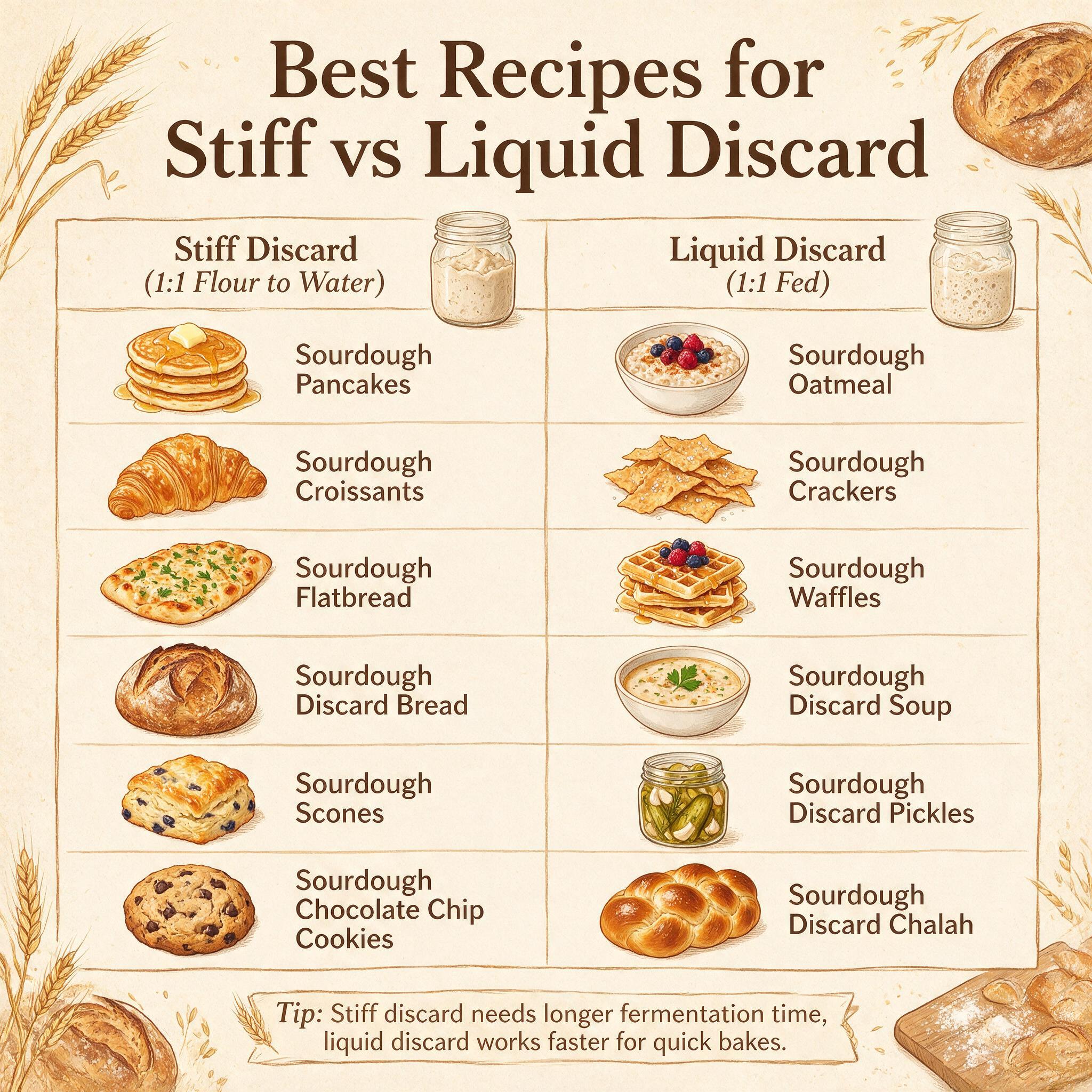
Tang and acidity. This is the most obvious contribution. Your discard has been sitting in a jar, quietly doing its thing, producing lactic acid (smooth, yogurt-like) and acetic acid (sharper, vinegar-like). When you fold that into cornbread or banana bread, those acids react with baking soda for lift, cut through richness, and add depth that plain flour and water can't provide.
Moisture. Discard is roughly equal parts flour and water by weight. That liquid content keeps baked goods tender longer than recipes relying solely on oil or butter. I've found this especially noticeable in brownies — the discard version stays fudgy for days, not just hours.
Fermentation complexity. Even an unfed starter has consumed sugars, produced gases, and developed flavor compounds over its lifetime. That background character shows up in flatbreads, focaccia, and tortillas as a subtle depth that makes simple ingredients taste more intentional.
With that framework in mind, let's walk through the recipes. I've organized them into three categories — savory breads and flatbreads, sweet baked goods, and breakfast items — because I think it helps to see discard at work across different flavor profiles.
Savory Breads & Flatbreads
1. Sourdough Cornbread
Discard in cornbread is one of those perfect pairings that feels almost obvious once you've tried it. The acid reacts with baking soda for lift — more reliable than buttermilk alone — while the tang cuts through the sweetness of corn in a way that balances the whole loaf. And moisture from discard keeps the crumb tender longer than oil-based versions.
Ingredients:
- •120g sourdiscard (unfed starter, straight from the fridge)
- •2 large eggs
- •60ml milk or buttermilk
- •60ml neutral oil (vegetable or canola) or melted butter
- •140g cornmeal (medium grind for best texture)
- •80g all-purpose flour
- •1 tsp baking soda
- •½ tsp baking powder
- •1 tsp salt
- •2 tbsp honey or sugar (adjust to taste)
Preheat your oven to 400–425°F. If you have a cast iron skillet, put it in the oven while it preheats — that's where the magic happens. In a bowl, whisk together the discard, eggs, milk, and oil until smooth. In a separate bowl, combine cornmeal, flour, baking soda, baking powder, salt, and honey. Pour the wet ingredients into the dry and stir just until combined — a few lumps are fine.
Pour the batter into your hot skillet (it should sizzle gently). Bake for 20–25 minutes until the top is golden brown and a toothpick comes out clean. Let it rest in the pan for five minutes before slicing. The crust will be crisp, the interior tender and moist — and that subtle tang? It makes every bite more interesting than standard cornbread.
2. Sourdough Focaccia (No-Knead)
This might be the most forgiving recipe on this list. You don't knead anything. You don't need yeast. You mix, you stretch, you dimple, and you bake. The discard replaces commercial yeast entirely, giving you a focaccia with genuine depth rather than just salt and olive oil.
Ingredients:
- •200g sourdiscard (at room temperature is ideal)
- •340g bread flour or high-protein flour
- •300ml warm water (about 85–90°F / 30°C)
- •1½ tsp fine salt
- •60ml extra-virgin olive oil, plus more for dimpling
Mix the discard and warm water in a large bowl until dissolved. Add the flour and stir with a wooden spoon or your hand until you have a shaggy, wet dough. Drizzle in half the olive oil and fold it in — this will be sticky, which is normal. Cover the bowl and let it rest for 30 minutes. After that, do two sets of stretch-and-folds, thirty minutes apart. Then cover and let it bulk ferment until noticeably puffy — anywhere from 4 to 8 hours depending on your kitchen temperature.
Transfer the dough to an oiled 9×13-inch baking sheet. Gently stretch it into the pan (it'll resist; just give it ten minutes and keep going). Let it rest in the pan for another hour or two until it looks puffy and fills most of the pan. Preheat your oven to 425–475°F — hotter is better for crust.
Dimple the surface generously with oiled fingers. Add your toppings: flaky salt, rosemary, cherry tomatoes, olives, sliced garlic. Drizzle generously with olive oil. Bake at 425–475°F for 25–30 minutes until deeply golden and crisp. This focaccia has a tender, open crumb inside and an almost crackly crust outside. The flavor is complex — tangy from the discard, rich from the olive oil, herbal from whatever you top it with. It's incredible sliced warm straight from the pan.
3. Sourdough Flatbread (Stovetop)
When you need flatbread now, not in four hours, this stovetop version is your friend. Discard adds tang and flavor to what would otherwise be a plain flour-and-water tortilla. It cooks in minutes on the stovetop — no oven required.
Ingredients:
- •120g sourdiscard
- •150g all-purpose flour (plus more for rolling)
- •60ml warm water
- •1 tbsp olive oil
- •½ tsp salt
Mix discard, water, olive oil, and salt. Stir in the flour until a soft dough forms. Knead briefly on a floured surface — just enough to come together, maybe two minutes. Divide into two or three balls and roll each one paper-thin on a lightly floured surface.
Heat an oiled skillet over medium-high heat. Cook each flatbread for 2–3 minutes per side until puffed in spots and golden brown underneath. Serve immediately with hummus, baba ganoush, or simply with salt and olive oil. The discard gives these a subtle tang that pairs beautifully with savory dips — and they're tender enough to wrap around anything you put inside them.
4. Sourdough Flammkuchen (Alsatian Flatbread)
Flammkuchen is the Alsatian version of flatbread — thin, crisp, and topped with crème fraîche, caramelized onions, and gruyère cheese. It's essentially a tartiflette in bread form, and using discard for the base means no yeast needed. The fermentation character from your starter gives the thin crust a subtle depth that plain dough can't match.
Ingredients (for the dough):
- •150g sourdiscard
- •200g all-purpose flour
- •60ml warm water
- •1 tbsp olive oil
- •½ tsp salt
Toppings:
- •¾ cup crème fraîche or sour cream
- •2 large onions, thinly sliced and caramelized
- •150g gruyère cheese, grated
- •Salt and pepper to taste
Mix the discard with water, olive oil, and salt. Add flour and form a dough. Roll it out paper-thin on a floured surface — I mean thin, like you're making crepes. Transfer to a parchment-lined baking sheet. Spread crème fraîche evenly over the base (season lightly with salt and pepper). Layer caramelized onions and grated gruyère across the top.
Bake at 450–475°F for 12–15 minutes until the edges are deeply golden and crisp, and the cheese is bubbling. The contrast between the thin, slightly tangy crust and the rich, creamy toppings is what makes this special. It's a great make-ahead appetizer or a light dinner when you want something that feels more refined than your average flatbread.
5. Sourdough Tortillas
These have gone viral for good reason. Discard in tortillas does two things that butter or oil can't: it adds wonderful tang, and the fermentation creates pliability — these fold and roll without cracking. Naomi's Kitchen recipe (with its bacon-fat twist) popularized them, but once you make discard tortillas, you'll keep making them regardless of your fat choice.
Ingredients:
- •120g sourdiscard
- •200g all-purpose flour
- •60ml warm water
- •30g melted lard, bacon fat, or neutral oil (lard gives the best texture)
- •½ tsp salt
Mix discard with warm water and melted fat. Add flour and salt, then knead for about five minutes until you have a smooth, pliable dough. Divide into 8 equal portions and roll each one paper-thin on a lightly floured surface. Heat a dry cast iron skillet or comal over medium-high heat. Cook each tortilla for 30–60 seconds per side until it puffs slightly and develops brown spots. Stack them under a clean kitchen towel to stay soft.
The tang from discard is subtle but noticeable — it makes these taste more alive than store-bought versions. Bacon-fat tortillas have a smoky depth that pairs beautifully with eggs in the morning or beans at dinner. If you want to experiment: try rendering bacon fat, mixing it into your tortilla dough, and seeing how that changes everything they touch.
6. Sourdough Biscuits / Biscuit Bombs
Biscuit bombs — cheese-stuffed balls of tender dough baked until golden — have been all over social media for good reason. Discard tenderizes the dough the way buttermilk does, with added fermentation complexity that makes these taste more interesting than standard drop biscuits.
Ingredients:
- •120g sourdiscard (cold from the fridge)
- •240g self-rising flour (or 235g all-purpose flour + 3½ tsp baking powder + ½ tsp salt)
- •85g cold unsalted butter, cubed
- •Optional mix-ins: shredded cheddar cheese, diced jalapeños, cooked bacon bits
Cut the cold butter into the flour mixture using a pastry cutter or your fingers until it resembles coarse crumbs. Pour in the cold discard and stir gently with a fork until the dough just comes together — don't overwork it. If adding mix-ins, fold them in now.
For biscuit bombs: scoop about 2 tablespoons of dough, flatten into a disc, place a small cube of cheese in the center, wrap the dough around it, and roll into a ball. Place on a parchment-lined baking sheet. Bake at 425–450°F for 12–15 minutes until golden brown. For regular drop biscuits: scoop mounds onto a sheet and bake at the same temperature.
The result is tender, flaky, and tangy — with that cheese pull if you're making bombs. These are incredible warm from the oven, especially alongside soup or chili. The discard gives them a flavor depth that buttermilk alone doesn't quite achieve.
Sweet Baked Goods
7. Sourdough Banana Bread
Banana bread is one of those recipes where everyone has an opinion — dense and fudgy vs. light and cakey, sweet vs. not-too-sweet. Discard lands somewhere in the middle: moister than a plain version, more complex in flavor, with better rise thanks to acid-baking soda reaction.
Ingredients:
- •120g sourdiscard (room temperature)
- •3 ripe bananas (very spotted, almost black skins)
- •80g melted butter or neutral oil
- •1 large egg
- •150g sugar (white or brown — I use half-and-half)
- •1 tsp vanilla extract
- •200g all-purpose flour
- •½ tsp baking soda
- •¼ tsp salt
- •Optional: ½ cup chopped walnuts or pecans
Preheat your oven to 350°F. Line a loaf pan with parchment paper. Mash the bananas in a large bowl — you want them smooth, not chunky. Whisk in the melted butter (or oil), egg, sugar, and vanilla until combined. Stir in the discard.
In a separate bowl, whisk together flour, baking soda, and salt. Fold the dry ingredients into the wet mixture just until no streaks of flour remain. If using nuts, fold them in now. Pour into your prepared loaf pan and smooth the top.
Bake at 350°F for 55–65 minutes. The loaf is done when a toothpick comes out with moist crumbs (not wet batter) and the internal temperature reaches about 200°F. Let it cool in the pan for 10 minutes, then transfer to a wire rack.
The discard makes this bread stay moist for days — I've had it for four days and it was still great on day three. The tang is subtle but noticeable, adding sophistication without making it taste like sourdough bread. If you want a milder flavor, use freshly discarded starter (straight from the fridge). For more tang, let your discard build up for several days between feedings before using it.
8. Sourdough Brownies (Super Fudgy)
Fudgier than standard brownies. Deeper chocolate flavor. More moist crumb that holds its structure without being dense. That's what discard does in a brownie — and I've been making these ever since I first tried the King Arthur version.
Ingredients:
- •120g sourdiscard
- •170g unsalted butter
- •300g sugar (white or a mix of white and brown)
- •4 large eggs at room temperature
- •60g good-quality cocoa powder (Dutch-process if you have it)
- •90g all-purpose flour
- •½ tsp salt
- •1 tsp vanilla extract
Preheat your oven to 350°F. Line an 8×8-inch pan with parchment, leaving overhang on the sides for easy removal. Melt the butter in a microwave-safe bowl or double boiler — don't let it brown. Let it cool slightly, then stir in the discard until smooth. Whisk in sugar until combined. Add eggs one at a time, whisking well after each addition. Stir in vanilla.
Sift cocoa powder, flour, and salt over the wet mixture. Fold gently with a spatula until just combined — don't overmix. Pour into your prepared pan and spread evenly.
Bake at 350°F for 28–32 minutes. The edges should be set and slightly cracked; the center should still look soft when you jiggle the pan. A toothpick will come out with moist crumbs, not clean — that's what you want for fudgy brownies. Let them cool completely in the pan before cutting.
The acidity from discard enhances chocolate flavor perception — it's a real thing, similar to how adding a pinch of espresso powder deepens cocoa. The moisture keeps these fudgy rather than cakey. They'll stay fresh at room temperature for three days covered tightly, and I've had them last five days (though they disappeared by then).
9. Sourdough Muffins (Blueberry or Banana)
Discard makes an excellent buttermilk substitute in muffins. The tang adds sophistication to sweet muffins — it's the same reason buttermilk works so well, only with fermentation depth on top.
Ingredients:
- •120g sourdiscard
- •240g all-purpose flour
- •150g sugar
- •1 tbsp baking powder
- •½ tsp salt
- •2 large eggs
- •180ml milk (any kind)
- •60ml melted butter or neutral oil
- •200g fresh or frozen blueberries (or 2 mashed bananas for banana muffins)
Preheat your oven to 375°F. Line a muffin tin with liners or grease well. Whisk together flour, sugar, baking powder, and salt in one bowl. In another, whisk discard, eggs, milk, and melted butter until smooth. Pour wet into dry and fold gently with a spatula — stop when you still see streaks of flour. Fold in blueberries (or mashed banana) last.
Spoon batter into muffin cups, filling each about two-thirds full. Bake at 375°F for 20–25 minutes until golden and a toothpick comes out clean. Let cool in the pan for five minutes before transferring to a rack.
The discard gives these a slight tang that makes them taste more like a bakery muffin than a home-baked one. Blueberry version: the berries burst with juice against the tangy crumb. Banana version: extra moist and deeply flavored. Both keep well for three days in an airtight container.
10. Sourdough Zucchini Bread
Same benefits as banana bread — moister crumb, more complex flavor, acid-soda lift — but with seasonal vegetable integration that makes summer baking feel intentional rather than obligatory. If you have too much zucchini from your garden (or your neighbor's), this is the way to use it.
Ingredients:
- •120g sourdiscard
- •250g zucchini, finely grated and squeezed of excess moisture
- •80ml neutral oil or melted butter
- •2 large eggs
- •160g sugar (brown sugar adds nice depth)
- •1 tsp vanilla extract
- •240g all-purpose flour
- •½ tsp baking soda
- •¼ tsp salt
- •1 tsp cinnamon
- •¼ tsp nutmeg
- •Optional: ½ cup chopped walnuts
Preheat your oven to 350°F. Line a loaf pan with parchment. Grate the zucchini on a box grater, then squeeze it in a clean kitchen towel to remove excess liquid — this step matters; too much moisture makes bread gummy.
Whisk together discard, eggs, oil (or butter), sugar, and vanilla until smooth. In a separate bowl, whisk flour, baking soda, salt, cinnamon, and nutmeg. Fold the dry ingredients into the wet mixture. Gently fold in the squeezed zucchini and any optional nuts. Pour into your prepared loaf pan.
Bake at 350°F for 55–65 minutes until a toothpick comes out clean and the internal temperature reaches about 200°F. Cool in the pan for ten minutes, then transfer to a wire rack.
The combination of zucchini moisture plus discard moisture creates an incredibly tender crumb that stays soft for days. The cinnamon and nutmeg mask most of the tang — it's there but subtle, making each bite more interesting than plain zucchini bread. This is also one of the best ways to use discard in summer when your garden produces more zucchini than you can eat.
11. Sourdough Cookies (Sugar)
Discard in cookies changes the texture game entirely. The moisture and tenderness from discard create a softer, chewier cookie with subtle tang that balances sweetness — making these taste more interesting than standard sugar cookies without tasting sour at all.
Ingredients:
- •120g sourdiscard (room temperature)
- •230g unsalted butter, softened
- •200g granulated sugar
- •1 large egg
- •1 tsp vanilla extract
- •340g all-purpose flour
- •½ tsp baking soda
- •½ tsp salt
Cream the softened butter and sugar together until light and fluffy — this takes about three minutes with a mixer. Beat in the discard, then add the egg and vanilla, mixing well. In a separate bowl, whisk flour, baking soda, and salt. Gradually add dry ingredients to wet, mixing on low speed until just combined.
Chill the dough for at least one hour (or overnight). This is important — discard adds moisture that makes the dough softer than standard sugar cookie dough, so chilling firms it up enough to scoop cleanly. Scoop onto parchment-lined baking sheets and bake at 350–375°F for 10–12 minutes until edges are just golden but centers still look soft.
Let them cool on the sheet for five minutes before transferring to a rack. The discard version is softer, chewier, and more complex than traditional sugar cookies. They're not sour — just interesting. If you want to experiment: try chilling the dough overnight in the fridge. The flavors develop further, and the cookies spread less, giving you thicker, chewier results.
12. Sourdough Donuts (Cake-Style)
Cake donuts with discard have a tang that balances sweet glaze beautifully — something plain cake donut batter just doesn't achieve. It's not sour; it's depth. Think of it like adding lemon juice to frosting — you can't taste the lemon directly, but everything tastes more itself.
Ingredients (for donuts):
- •120g sourdiscard (room temperature)
- •250g all-purpose flour
- •200g sugar
- •2 large eggs at room temperature
- •60ml milk
- •85g unsalted butter, melted and cooled slightly
- •1 tsp baking soda
- •½ tsp salt
- •1 tsp vanilla extract
For frying: Neutral oil for deep frying (350°F / 175°C) or a donut pan for baking
Preheat your oven to 350°F if baking, or heat oil in a heavy pot to 350°F if frying. Whisk together discard and milk until smooth. Add eggs, melted butter, sugar, vanilla, and salt — mix well. Sift flour and baking soda over the wet mixture and fold gently until just combined. The batter will be thick but pourable — similar to cake donut batter.
For frying: Pipe or spoon batter into hot oil (use two spoons). Fry 1–2 minutes per side until golden brown. Drain on paper towels and coat with sugar while still warm. For baking: Fill a greased donut pan about three-quarters full and bake at 350°F for 10–12 minutes until golden and springy to the touch.
Glaze while still warm — a simple powdered sugar glaze (powdered sugar + milk + vanilla) works perfectly. The discard tang is subtle but noticeable, cutting through the sweetness of the glaze in a way that makes these feel more refined than typical cake donuts. They're also noticeably moister and stay fresh longer than plain versions.
Breakfast & Brunch
13. Sourdough Waffles
Crispy edges, soft centers, better browning from acidity — sourdough discard waffles are genuinely worth the extra effort of using discard instead of just mixing flour and milk. The tang cuts through syrup richness in a way that makes breakfast feel balanced rather than just sweet.
Ingredients:
- •120g sourdiscard (room temperature)
- •240g all-purpose flour
- •2 large eggs, separated
- •300ml milk
- •60ml melted butter
- •2 tbsp sugar
- •1 tsp baking powder
- •½ tsp baking soda
- •½ tsp salt
Preheat your waffle iron according to manufacturer instructions. Whisk together discard, milk, melted butter, egg yolks, and sugar until smooth. In a separate bowl, whisk flour, baking powder, baking soda, and salt. Add dry ingredients to wet and stir until just combined — lumps are fine.
Beat the egg whites until stiff peaks form. Gently fold them into the batter — this is what gives discard waffles their lift and lightness. Cook in your preheated waffle iron according to manufacturer directions. Serve immediately with butter, maple syrup, or fresh fruit.
The acidity from discard creates better Maillard browning (that's the chemical reaction that gives food its golden crust), so these develop a deeper color and richer flavor than standard waffles. The tang is subtle — more noticeable if your discard has been building for several days between feedings. If you prefer milder waffles, use freshly discarded starter straight from the fridge.
14. Sourdough English Muffins / Crumpets
Nooks-and-crannies without commercial yeast. That's what discard delivers in English muffins — fermentation creates that characteristic texture that makes them perfect for toast with jam or eggs Benedict. The tang adds complexity to an otherwise plain breakfast bread.
Ingredients:
- •120g sourdiscard (room temperature)
- •340g bread flour or high-protein flour
- •240ml warm milk or water
- •2 tbsp melted butter
- •1 tsp fine salt
Mix discard with warm milk (or water) and melted butter until dissolved. Add flour and salt, then stir until a very wet, sticky dough forms — this is much softer than typical bread dough. Cover the bowl tightly and let it ferment at room temperature for 8–12 hours (overnight works perfectly). The dough should be bubbly and increased in volume but not necessarily doubled.
Flour a surface generously. Turn the dough out onto it — don't knead, just pat or press into a rectangle about one inch thick. Cut rounds with a floured 3-inch ring mold (or glass). Place rings on a cornmeal-dusted baking sheet and let the rounds rise inside them for 45–60 minutes until puffy.
Heat a griddle or heavy skillet to medium-low (about 275–300°F). Remove the rings and cook muffins for 8–10 minutes per side until deeply golden brown on both sides — they should look like miniature hockey pucks. They'll finish cooking through during this process. Let them rest for a few minutes, then split open with a fork (not a knife — you want those nooks-and-crannies).
Toast well before serving. The discard creates a texture very close to traditional English muffins — the fermentation does the work that yeast normally handles. They're tangier than store-bought versions and infinitely better toasted with butter or jam. Store extras in the freezer and toast straight from frozen — they reheat beautifully.
15. Sourdough Pizza Dough
This sits at the crossover between savory and sweet — pizza crust is its own category really. Discard adds flavor depth to pizza crust that plain dough lacks, fermentation creates better texture over time, and the result is a crust that's genuinely more interesting than standard Neapolitan or New York-style dough.
Ingredients:
- •200g sourdiscard (room temperature)
- •500g high-protein bread flour
- •340ml lukewarm water (about 85°F / 30°C)
- •1½ tsp fine salt
Mix discard and lukewarm water in a large bowl until dissolved. Add flour and mix with your hand or a wooden spoon until shaggy. Rest for 30 minutes (autolyse — this develops gluten without kneading). Add salt and knead for about 8–10 minutes until smooth and elastic. The dough should be tacky but not sticky — adjust water by 10g increments if needed.
Place in an oiled bowl, cover, and bulk ferment at room temperature for 4–6 hours, doing one stretch-and-fold every hour for the first two hours. Then refrigerate for at least 24 hours (up to 72 hours — longer cold fermentation = more flavor).
When ready to bake, remove dough from fridge 2–3 hours before baking. Divide into portions (about 250g per personal pizza). Gently stretch each portion on a floured surface — don't use a rolling pin; stretch by hand to preserve air bubbles. Top with your preferred sauce and cheese.
Bake at 500–550°F on a steel or stone for 8–12 minutes until crust is charred in spots and cheese is bubbling. The discard creates a crust with better digestibility (long fermentation breaks down gluten more thoroughly) and deeper flavor than quick-rise doughs. If you're new to discard pizza, start with a shorter cold ferment (24 hours) before experimenting with longer times.
Troubleshooting: When Things Don't Go as Planned
My cornbread came out dense. Check that your baking soda was fresh — it needs acid (from the discard) to activate. If your discard is very old and acidic, this works great. But if you've been feeding it regularly, it might not be acidic enough on its own. Add a splash of vinegar or lemon juice to balance it out.
My focaccia didn't puff up. This usually means the dough was too cool during bulk fermentation. Sourdough discard is less active than fed starter, so it needs time — and warmth. If your kitchen runs cold (below 70°F / 21°C), give it an extra hour or two, or place it in a slightly warm spot (near a radiator, on top of the fridge).
My banana bread was too wet. Squeezing excess moisture from zucchini or using very ripe bananas that have released their liquid can throw off the hydration. If your dough feels like soup before baking, add 20–30g more flour and mix gently. Next time, squeeze grated zucchini more thoroughly.
My discard waffles are gummy inside. This usually means undercooking or too much batter in the iron. Make sure your waffle iron is properly preheated, don't overload it, and cook until steam stops escaping — that's when they're done. If you're still having issues, reduce the batter per waffle slightly.
My discard brownies cracked on top. That's normal and actually a sign of good structure. Cracked tops are typical for fudgy brownies — it means the edges set before the center. If you want smoother tops, reduce baking time by 2–3 minutes.
My tortillas are tough. Either they're undercooked (they should puff slightly) or overworked during kneading. Knead just until smooth — don't over-knead discard tortilla dough. And make sure your skillet is properly hot before cooking; a cool pan makes tough tortillas every time.
Frequently Asked Questions
Does the sourdough taste "sour" in these recipes? Generally no. The tang from discard is subtle and gets balanced by other ingredients — especially sugar, fat, or cheese. If you're worried about sourness, use freshly discarded starter (straight from the fridge after feeding). For more tang, let your discard build for several days before using it.
Can I freeze these recipes? Almost all of them freeze well. Banana bread and zucchini bread freeze beautifully — slice first so you can grab individual portions. Cooked waffles and English muffins freeze perfectly (toast straight from frozen). Flatbreads and tortillas freeze well wrapped in parchment between sheets.
What if my discard isn't active? Discard doesn't need to be active for these recipes — it's already fermented flour and water, so even a quiet starter works. The acid is still there. If you're using it in baked goods with baking soda (cornbread, banana bread), the acidity matters more than activity level.
Can I substitute another liquid for discard? Yes, but results differ. Buttermilk works in most sweet recipes as a direct swap. Yogurt thinned with milk also works. For flatbreads and focaccia, you'll lose some of the fermentation character — it won't taste "wrong," just less complex.
How long do these keep? Banana bread and zucchini bread: 3–4 days in an airtight container (or freeze). Brownies: 3 days at room temperature, or up to a week refrigerated. Waffles and English muffins: freeze for up to one month. Flatbreads and tortillas: 2–3 days wrapped tightly, or freeze for longer storage.
Closing Thoughts
Here's what I've learned after years of treating discard like something to get rid of: it's actually one of the most versatile ingredients you'll use in sourdough baking. It doesn't taste "discardy" — it tastes fermented, which is a good thing. Tangy, moist, complex. Those are desirable qualities in almost any baked good.
The recipes above aren't just ways to use up starter waste. They're genuinely delicious standalone recipes where discard does real work: reacting with baking soda for lift, tenderizing crumb structure, adding flavor depth that plain flour and water can't provide. Pick one or two to start with — maybe cornbread if you want something familiar, or focaccia if you want to see what discard can really do — and build from there.
Your starter has been working all week in that jar on your counter. Don't just dump it. Bake with it. You'll be surprised at how much better everything tastes when you give discard its moment in the oven.
Happy baking!