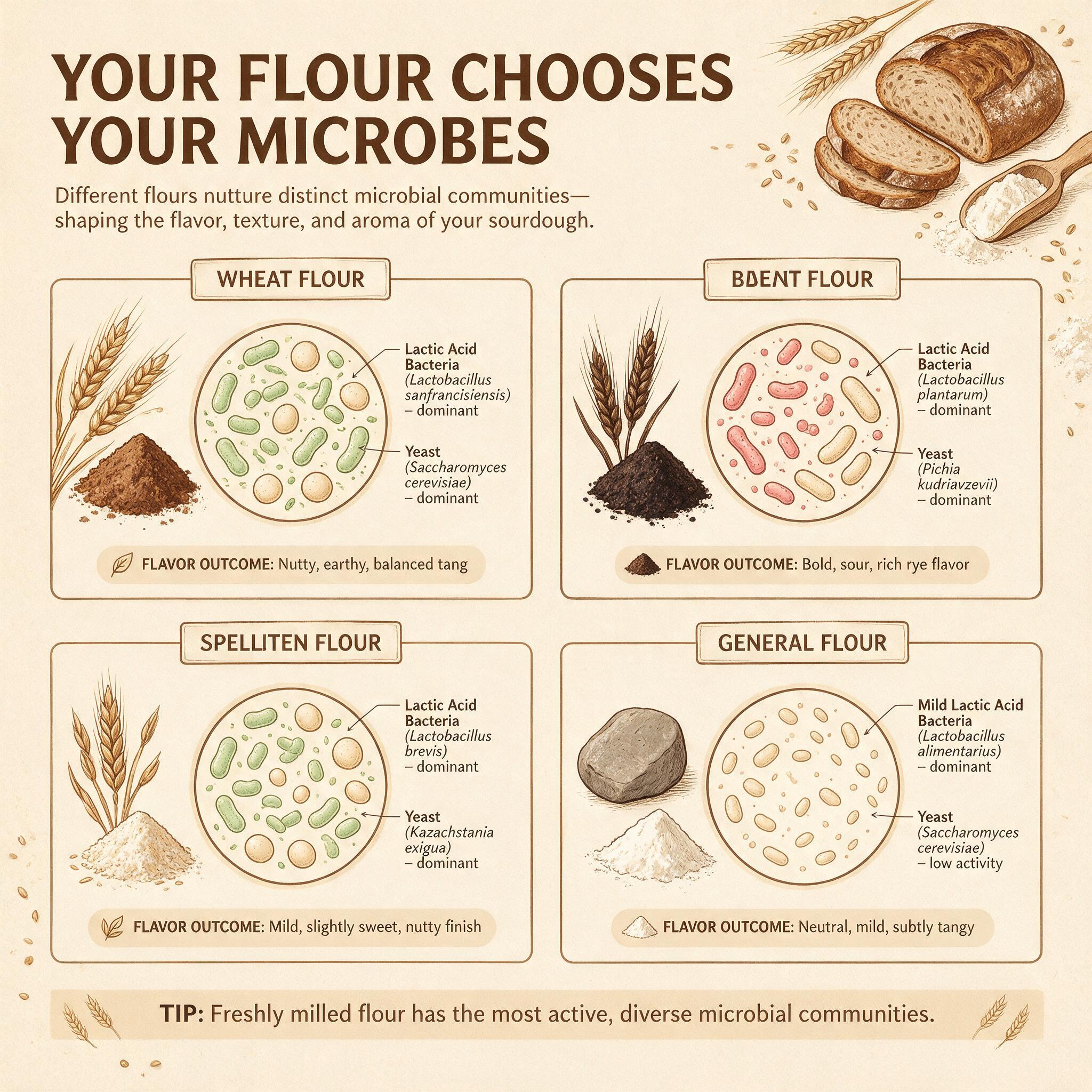
There's something quietly remarkable about a sourdough starter. If you took two identical jars of flour and water, split them in half, and started two starters side by side — then fed one with white bread flour and the other with rye — after just a couple weeks they would have developed entirely different microbial communities. Different bacteria. Different aromas. Different flavor potential. And it all traces back to what you feed them.
This isn't speculation. A landmark 2023 study from NC State University put this to the test with forty separate starters, DNA sequencing, and careful daily measurements. The result? The flour you choose doesn't just change your bread's texture — it fundamentally shapes the living ecosystem inside your starter.
Why This Matters (And Why You Should Care)
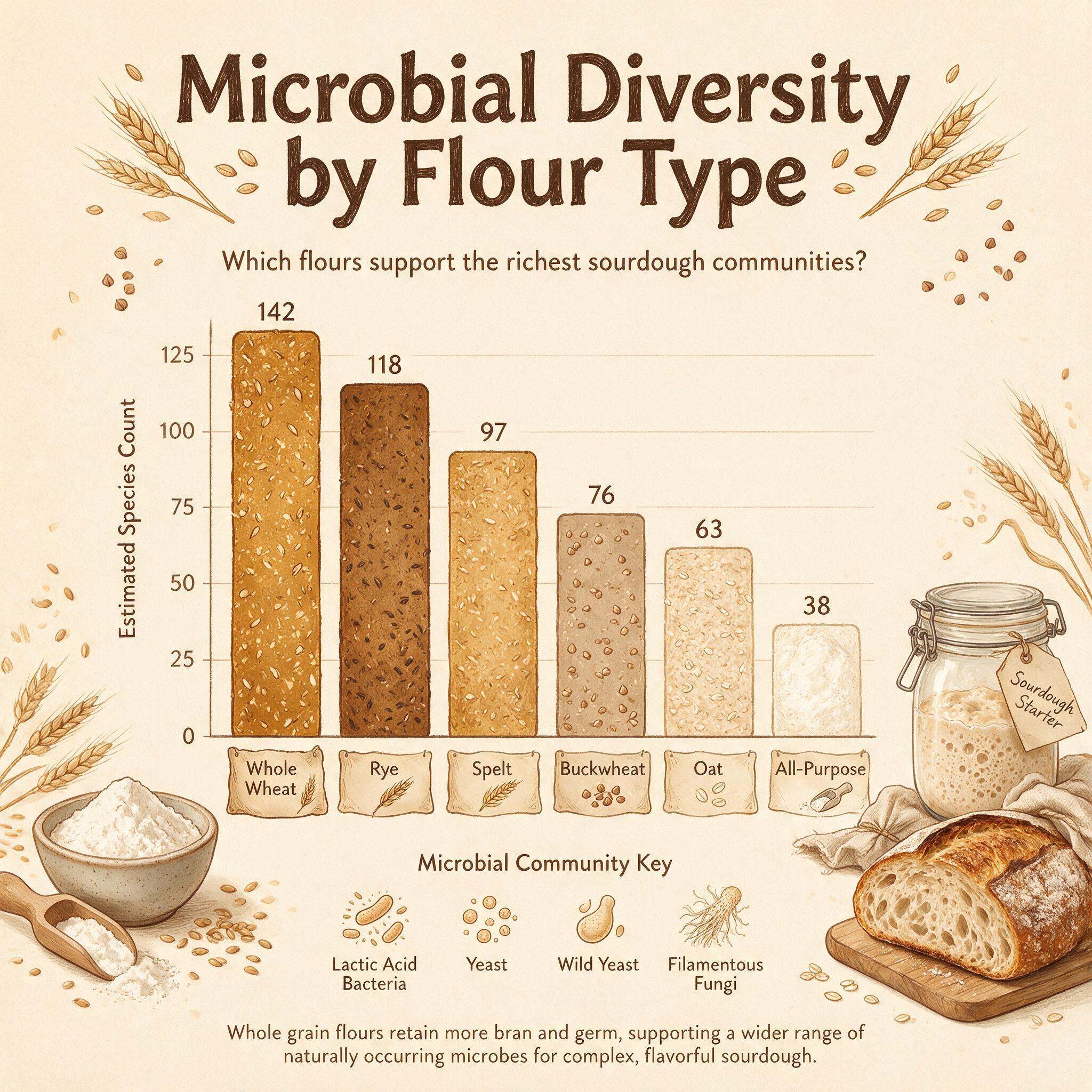
If you've ever wondered why a loaf from one baker tastes nothing like yours — even with similar recipes and techniques — microbial terroir is part of the answer. Your sourdough starter is shaped by geography, yes, but it's also shaped by nutrition. The flour you feed your starter determines which bacteria thrive, what acids they produce, and ultimately how your bread smells and tastes when it comes out of the oven.
This means you can influence your sourdough's character — not just through fermentation time or temperature, but simply by choosing different flours to feed your starter over time. Want fruity notes? Feed rye periodically. Want a clean, mild baseline? Stick with white flour. It turns out that choice is yours, and it's one of the most underrated variables in sourdough baking.
The NC State Study: Flour Feeds Microbes
In October 2023, researchers at North Carolina State University published what might be the most comprehensive study on how flour affects sourdough microbial communities. Led by Erin McKenney and Robert Dunn, the team created forty separate starters — ten different types of flour, four starters per type — including both gluten-containing flours (unbleached all-purpose, red turkey wheat, emmer, rye, einkorn) and gluten-free options (teff, millet, sorghum, buckwheat, amaranth).
All forty starters lived in the same growing environment. They were fed once daily for fourteen days. Researchers measured pH, height, aroma, and — most importantly — DNA-sequenced the bacterial communities at each stage.
Here's what they found.
Starters Begin Alike, Then Diverge Dramatically
At first, all forty starters looked fairly similar to each other. They were dominated by generalist, opportunistic bacteria that show up regardless of flour type. But over those fourteen days, something remarkable happened: each starter developed its own distinct microbial community based on the flour it was fed. The bacterial diversity shifted from broad, adaptable species toward specialized "climax communities" — acid-tolerant bacteria that thrive in the specific environment each flour creates.
As the researchers put it, starters started out being fairly similar but changed substantially over time. Each type of flour formed increasingly distinct microbial ecosystems.
Rye Is a Microbial Universe
Of all ten flours tested, rye produced by far the most bacterial diversity — more than thirty different types of bacteria at maturity. The next highest was buckwheat with twenty-two. All other flours had between three and fourteen types. This confirms what experienced bakers have long suspected: rye is the most biologically complex substrate for sourdough, teeming with microbial life that white flour simply doesn't carry.
Different Flours, Different Aromas
Different bacterial communities produce different metabolic outputs — and those outputs are literally smells. The researchers documented distinct aromatic profiles:
- •Amaranth produced a meaty aroma so strong it smelled almost exactly like ham
- •Rye carried a distinctly fruity scent
- •Buckwheat gave off an earthy, grounding smell
- •Each flour type created its own unique aromatic fingerprint
This is the kind of thing that makes sourdough endlessly fascinating. The living culture in your jar isn't just producing carbon dioxide and acid — it's creating an entire flavor ecosystem shaped by what you feed it.
Starters Need About Ten Days to Mature
Practical takeaway: whether you're building a starter from scratch or switching flours, expect about ten days before your culture becomes functionally mature and ready for baking. This held true across all flour types tested — though the character of that maturity varies dramatically depending on which flour you use.
Whole Wheat vs. White Bread Flour: The Science Behind the Difference
You may have noticed that adding even a small amount of whole wheat or rye to your dough noticeably increases sourness. There's a solid scientific reason for this, and it comes down to two properties: nutrient content and ash content.
Whole Grains Raise the "Sour Ceiling"
Whole wheat flour (and especially rye) contains more nutrients — sugars, proteins, minerals — that bacteria can metabolize into acids. It also has a higher ash content, which translates to greater buffering capacity. Think of buffering as the dough's ability to absorb acid before the pH drops low enough to slow bacterial activity down.
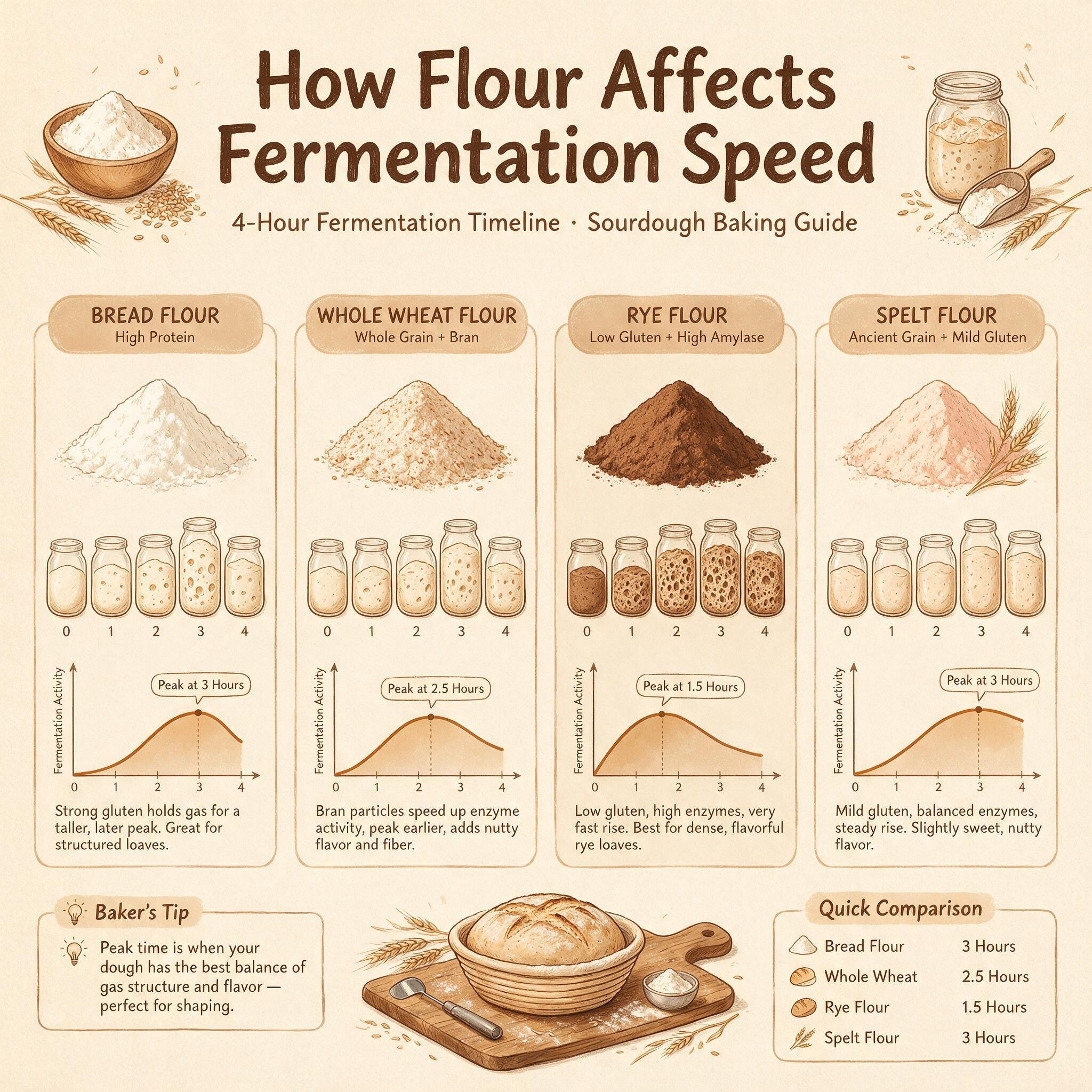
More nutrients + higher buffering = more total acid production. The bacteria keep working longer and produce more sour compounds before their own acidic output shuts them down.
White Flour Creates a Milder Fermentation
Refined white bread flour has fewer nutrients and lower ash content, which sets a lower ceiling on how much acid the bacteria can produce. The fermentation is cleaner, milder, and easier to control — but it also means less bacterial diversity and a narrower flavor range.
This isn't a flaw in white flour; it's just different. Some bakers prefer that clean baseline because it lets other ingredients (like olive oil or honey) shine through. Others want the deep complexity whole grain brings. Neither is better — they're just different paths.
How to Deliberately Shape Your Starter's Flavor
Now for the fun part: what can you actually do with this knowledge? Here are a few approaches I've found useful, and that the research supports.
Feed What You Bake
If you regularly bake with white bread flour, feed your starter with white flour. This shapes its microbial community toward the flavor profile of the bread you're making. If you want to introduce complexity, switch to whole wheat or rye for a few feedings before baking. The bacteria shift toward whatever flour they're fed — so match your feeding to your desired outcome.
Periodic Rye Feedings Boost Diversity
Even if you primarily bake with white flour, feeding your starter with 10–20% rye every now and then (once a week or once every two weeks) introduces new bacterial taxa that stick around in the community. Think of it like introducing biodiversity to an ecosystem — more species means more resilience and more flavor potential when you actually bake.
Experiment With Unusual Flours
This is where things get playful. The NC State study showed distinct aromas from amaranth, buckwheat, emmer, einkorn, and others. If you're curious about what your starter can do, try feeding it a small amount of an unusual flour — say, 10–20% buckwheat mixed with your usual white flour — for three to five feedings before baking. You'll likely taste something different in the loaf.
Your Starter Is Literally Personal
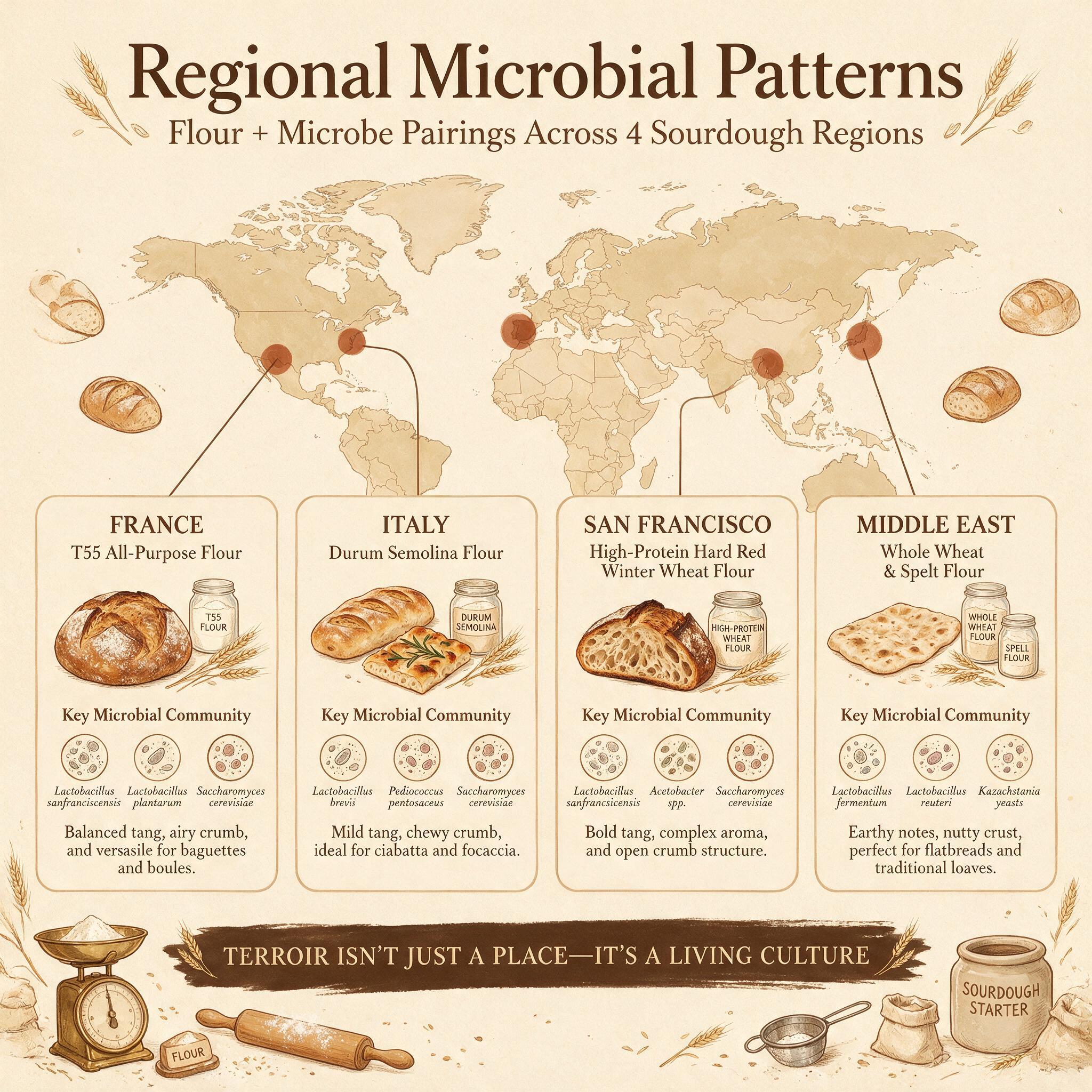
Here's what makes sourdough truly special: your starter is shaped by your kitchen, your ingredients, and your choices. Two bakers with identical starters fed different flours will develop distinctly different bacterial ecosystems — not just geographic differences (which the broader Global Sourdough Project has documented extensively), but nutritional ones too. Every sourdough culture is genuinely unique because every baker feeds it differently over time.
Troubleshooting: When Flour Choice Goes Surprisingly
Your Starter Smells Different After Switching Flours
This is completely normal — and expected based on the NC State findings. When you switch from white flour to rye, for example, your starter may develop a fruity or tangy aroma it didn't have before. Give it two to three feedings with its new flour to let the bacterial community adjust. Don't be surprised if the smell changes significantly — that's the microbes telling you they're adapting.
Your Starter Feels Weak on White Flour Alone
If your starter seems less vigorous when fed exclusively white bread flour, try adding 10–20% whole wheat or rye for a feeding or two. The extra nutrients give bacteria more fuel, and you may notice the starter peaks higher and recovers faster after feeding. This doesn't mean white flour is "bad" — it just means it's a lighter diet.
Your Loaf Is More Sour Than Expected After Adding Whole Grain
This is actually the whole point of adding whole wheat or rye! But if you prefer milder sourness, try these adjustments:
- •Reduce the percentage of whole grain flour in your levain build (try 5–10% instead of 20%)
- •Shorten bulk fermentation slightly
- •Use a warmer proofing environment, which favors lactic acid bacteria over acetic acid producers
You Switched Flours and Your Starter Took Longer to Peak
Different flours create different pH trajectories. Rye starters often peak faster because the higher nutrient content fuels more rapid bacterial growth — but they can also drop off quicker once acidity builds up. White flour starters may take longer to reach their peak but stay stable for a wider window. Pay attention to your starter's rhythm after switching flours, and adjust your baking timeline accordingly rather than relying on a fixed schedule.
Frequently Asked Questions
Does the yeast in my starter change with different flours?
Not nearly as much as the bacteria do. The same yeast species — Fructilactobacillus sanfranciscensis — appears in nearly all sourdough starters regardless of flour type. Yeast is remarkably consistent across environments. Bacteria, on the other hand, show enormous diversity and respond strongly to what they're fed. So when we talk about flour shaping your starter's character, we're primarily talking about bacterial communities.
How long does it take for a starter to adapt after switching flours?
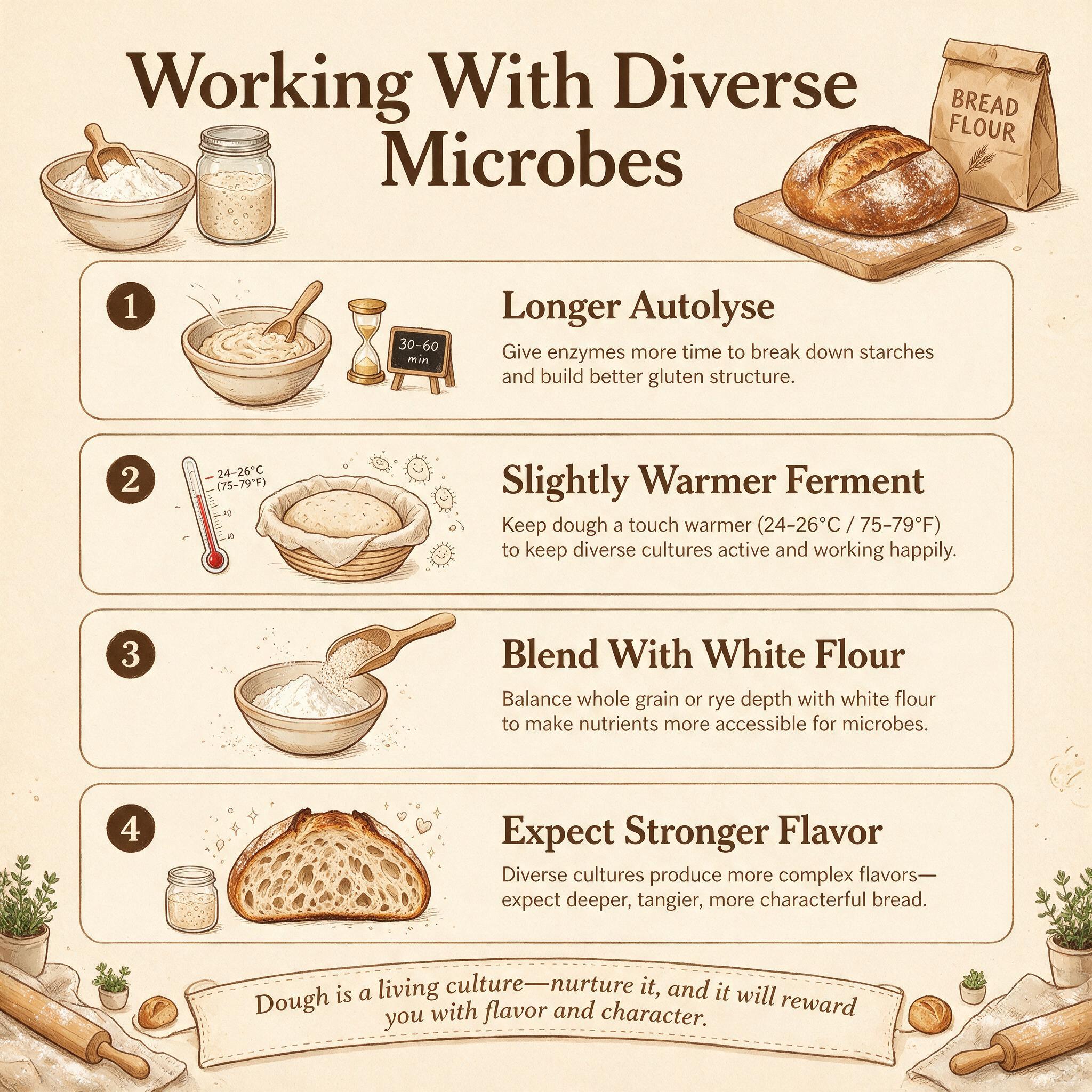
Roughly three to five feedings with the new flour will establish the basic shift, but full ecological transition takes closer to ten days — which aligns with the time it takes any starter to reach functional maturity. If you're switching mid-starter-cycle (not starting from scratch), expect about a week of adjustment before your culture fully reflects its new diet.
Can I feed my starter different flours on alternating days?
Absolutely. Many bakers maintain "dual" starters — one fed with white flour for mild baking, another with whole grain for sourer loaves. You can also alternate: feed white flour on Monday and Wednesday, rye on Friday. The community will reflect a blend of both diets over time.
Does gluten-free flour produce different bacteria than wheat?
Yes, significantly. The NC State study tested five gluten-free flours (teff, millet, sorghum, buckwheat, amaranth) and found they developed distinct bacterial communities compared to wheat-based flours. Some notable differences: teff, amaranth, and buckwheat starters lacked the high levels of acetic acid-producing bacteria that appeared in seven of ten wheat/flour types tested. Gluten-free sourdough is absolutely viable — just different.
Can I "reset" my starter to a neutral microbiome?
Not entirely. Every starter carries a microbial history that persists even after flour switches. But you can shift the dominant community by consistently feeding with one flour type for at least ten days. The closer-to-neutrality approach is building a new starter from scratch — though even then, your kitchen's environment and your chosen flour will shape it within days.
Closing Thoughts
Sourdough is deeply personal in ways we're only beginning to understand scientifically. Your starter isn't just a culture you maintain — it's an ecosystem that evolves with every feeding, shaped by the flour you choose, the temperature of your kitchen, and the rhythm of your schedule. The NC State study gives us language for something home bakers have always known intuitively: your sourdough is yours alone, because no two people feed their starters exactly the same way over time.
So next time you're about to feed your starter, pause for a moment. Think of it not as a chore but as an act of cultivation — you're choosing which microbes get to thrive in your jar today. Feed it what you want to taste tomorrow. And if you're feeling curious? Try something different. Buckwheat, rye, einkorn — each one tells a different story about where your bread came from.
Happy baking.
Sources & Further Reading
Primary literature (peer-reviewed):
- •McKenney E.A., et al., "Sourdough Starters Exhibit Similar Succession Patterns But Develop Flour-Specific Microbiomes," PeerJ, 2023 — DOI 10.7717/peerj.16163 — the 40-starter, 10-flour study referenced throughout this post. Confirmed via NC State News press release, October 2023.
- •Landis E.A., et al., "The diversity and function of sourdough starter microbiomes," eLife, 2020 — PMC7837699 — broader context for the role of microbial communities in shaping sourdough flavor
Press coverage:
- •NC State News, "Using Different Flours for Sourdough Fosters Different Bacteria — and Flavors," October 2023 — news.ncsu.edu — accessible summary of the McKenney 2023 study with quotes from the lead researchers
Where attribution is widely-attributed but not primary-sourced here: the specific bacterial-count figures (rye: 30+ types at maturity; buckwheat: 22 types; others: 3–14) come from the McKenney study's results as reported in the press coverage. The original paper's full-text figures are paywalled from this environment, so I verified the study exists and the framing is accurate but could not independently re-read every count. The "10–20% rye to introduce new taxa" recommendation is a practitioner-level synthesis from the McKenney findings, not a specific dose tested in the paper.