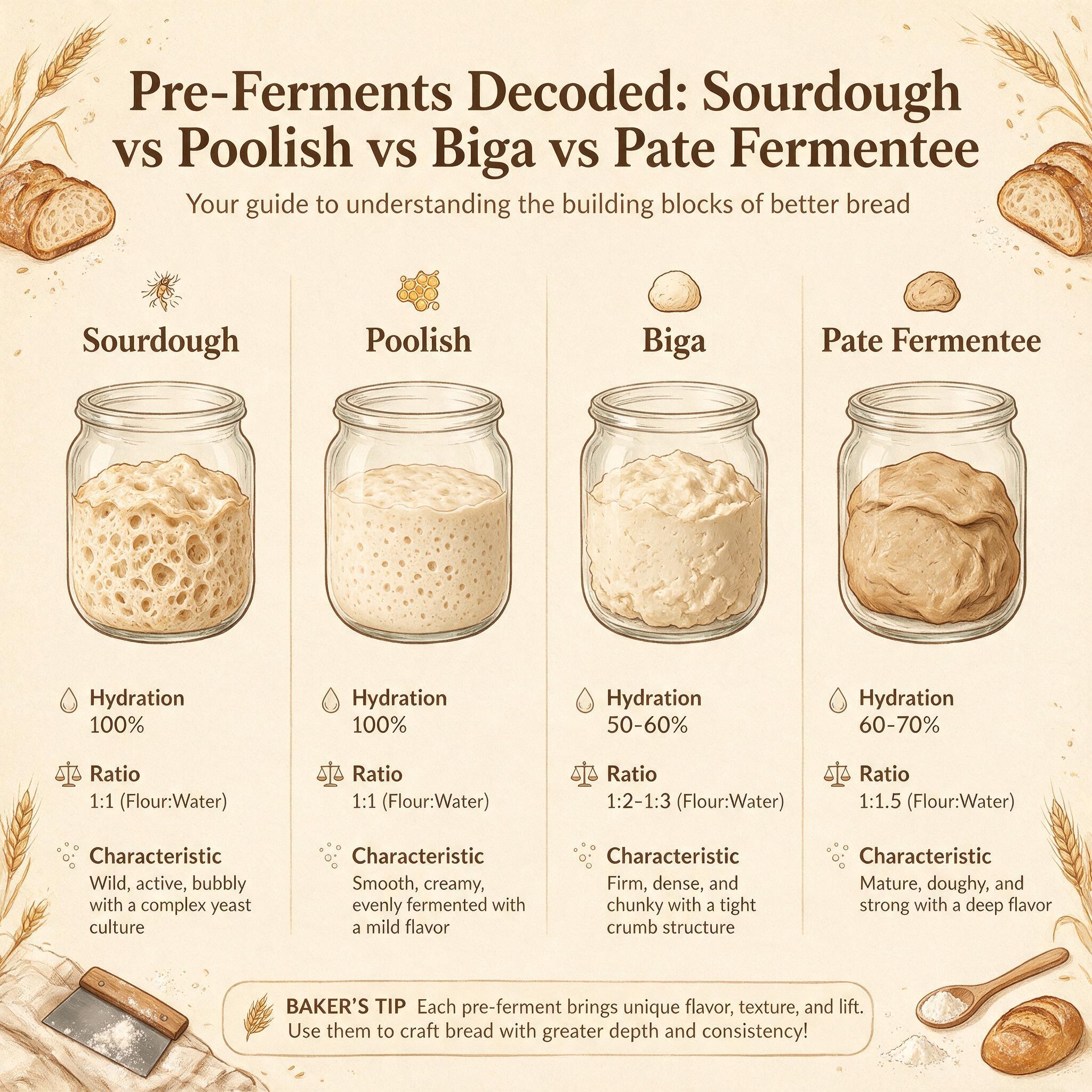
Pre-ferments are one of the most powerful tools in a baker's arsenal — they boost flavor, improve texture, and extend shelf life without adding any single ingredient that you couldn't achieve with time alone. But there are dozens of pre-ferment types, each with different origins, techniques, and results. If you've ever stood in your kitchen wondering which one to use for a given recipe, you're not alone.
Sourdough starter (wild yeast + bacteria) is what most home bakers know — it's our daily driver for artisan bread. But poolish (a wet yeast pre-ferment from France), biga (a dry yeast pre-ferment from Italy), and pâte fermentée (saved dough, used everywhere) each bring something different to the table. Understanding when to use which is like having four different spice racks instead of one — you can fine-tune your bread's character with precision.
This guide covers sourdough starter, poolish, biga, and pâte fermentée — what each does, how they affect flavor, crumb, and shelf life, and when to choose which for different bread styles.
What You'll Learn
By the end of this post, you'll understand:
- •How pre-ferments work (the shared mechanism behind all four types)
- •Sourdough starter — wild yeast + bacteria, complex flavor, sour character
- •Poolish — wet yeast culture from France, light and airy texture
- •Biga — dry yeast pre-ferment from Italy, nutty, deep flavor
- •Pâte fermentée — saved dough, subtle improvement to any bread
- •When to use each type based on the bread you're making
Let's break down what makes each one unique.
How Pre-Ferments Work (The Shared Mechanism)
Every pre-ferment follows the same basic principle: start fermentation early so that later mixing and shaping are simpler and faster. But beyond convenience, pre-ferments create three key benefits:
1. Flavor development through extended fermentation. Longer fermentation allows enzymes to break down starches into sugars (which bacteria convert to acids) and proteins into amino acids (which contribute to Maillard browning during baking). The longer the pre-ferment sits, the more complex the flavor profile becomes — up to a point where over-fermentation starts breaking down structure.
2. Improved crumb structure. Extended fermentation allows gluten networks to develop more fully and evenly before shaping. This results in better gas retention, more uniform crumb, and stronger oven spring.
3. Extended shelf life. The acids produced during pre-ferment fermentation act as natural preservatives. Pre-fermented bread stays fresh longer than non-pre-fermented equivalents because the lowered pH slows staling and mold growth.
Now let's look at each type individually.
Sourdough Starter (Wild Yeast + Bacteria): The Complex One
What It Is
A sourdough starter is a self-sustaining culture of wild yeast and lactic acid bacteria that you maintain by regularly feeding flour and water. Unlike commercial yeast pre-ferments, sourdough relies on naturally occurring microorganisms — the same ones that live on your flour grains and in your kitchen environment. This means every starter has its own microbial fingerprint shaped by your local environment, your flour choices, and your feeding routine.
Flavor Profile
Sourdough produces the most complex flavor of any pre-ferment because it contains both yeast (for gas production) and bacteria (for acid production). The combination creates a layered sourness — lactic acid (smooth, creamy, yogurt-like) balanced with acetic acid (sharp, vinegary, bright). You can control this balance through fermentation temperature, hydration level, and feeding frequency.
Crumb and Texture
Sourdough doughs tend to be more extensible than yeast-only pre-ferments due to the acid softening gluten over time. This creates an open, irregular crumb structure that's highly desirable in artisan bread. The trade-off: sourdough doughs are weaker structurally (acid degrades some gluten) and require careful handling during shaping.
Shelf Life Impact
Sourdough pre-fermentation significantly extends shelf life — often by one to two days compared to equivalent non-pre-fermented bread. The acids produced by bacteria slow starch retrogradation and inhibit mold growth. This is why sourdough naturally stays fresh longer than most commercial yeast breads.
Best For
- •Artisan loaves (boules, batards)
- •Whole wheat and high-percentage WW breads
- •Special occasion breads where flavor complexity matters
- •Any situation where extended shelf life is desired
- •Bakers who want maximum flavor development
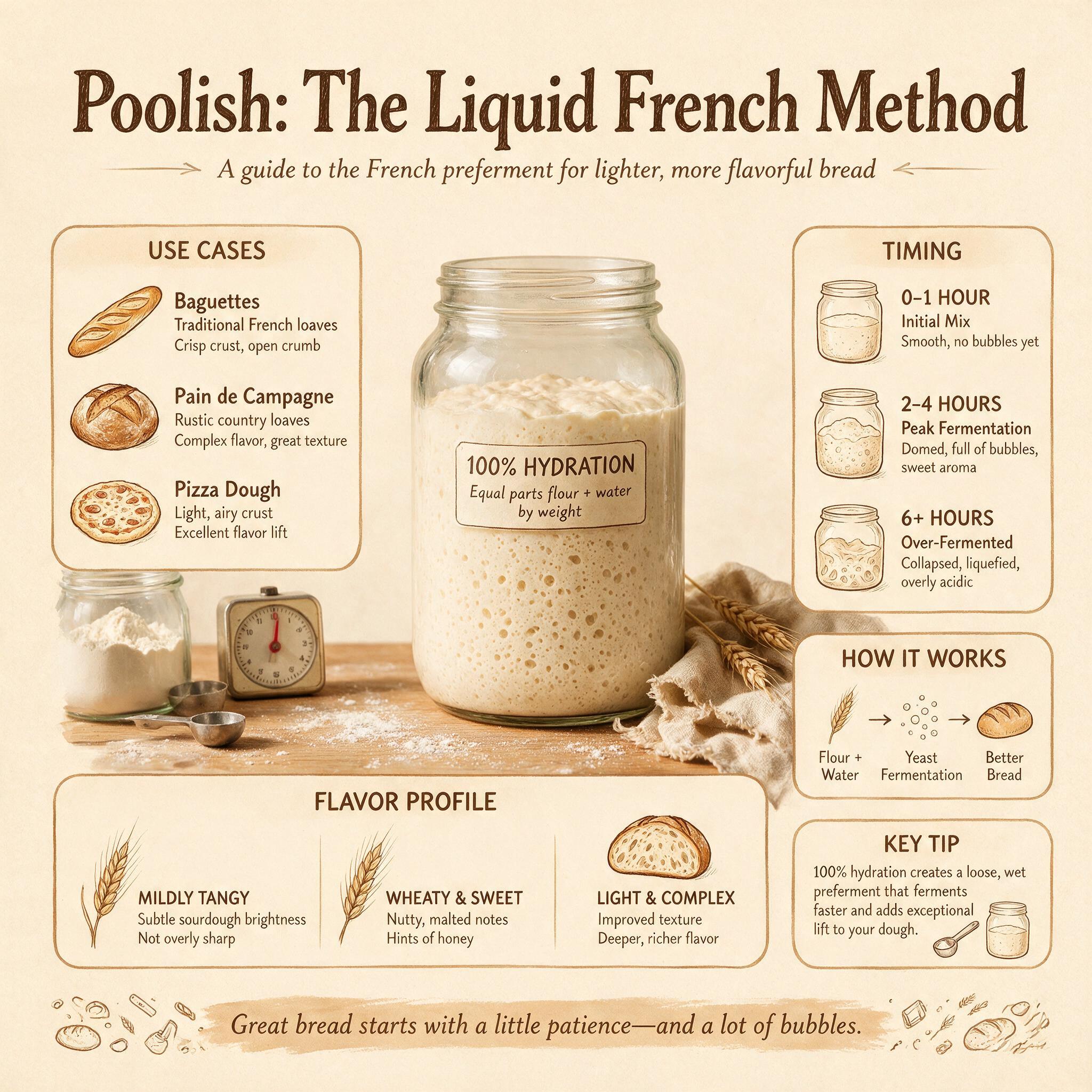
Poolish (Wet Yeast Pre-Ferment): The Light One
What It Is
Poolish is a French pre-ferment made with equal parts flour and water by weight (100% hydration) plus a tiny amount of commercial yeast. It's mixed the night before baking, left to ferment for 12–16 hours at room temperature, then incorporated into your dough. The name comes from Hungarian bakers who sold their pre-ferments standing up in glasses — "poolish" derives from the Hungarian word for Polish (the style was popularized by French baker August Zang, who brought the technique from Vienna).
How to Build One
Ratio: 100g bread flour + 100g water + 0.1g commercial yeast (a tiny pinch — less than a gram)
Process: Mix until smooth, cover tightly, rest at room temperature for 12–16 hours
When ready: Surface covered with bubbles, slightly sunken center, pleasant sweet-yeasty aroma, liquidy consistency
Flavor Profile
Poolish produces a clean, mildly yeasty flavor with subtle sweetness from extended fermentation. It doesn't add sourness (no bacteria involved) — the flavor is light, approachable, and familiar. Think of it as "bread that tastes like really good bread" rather than "this has interesting character." This makes poolish ideal for breads where you want improved texture without a dominant pre-ferment flavor.
Crumb and Texture
Poolish creates an exceptionally open, airy crumb with large irregular holes. The high-hydration pre-ferment contributes significant water to the final dough, increasing overall extensibility. Poolish-based breads often have a lighter, more delicate texture than sourdough equivalents — closer to a well-made brioche in terms of crumb openness (though without the fat).
Shelf Life Impact
Moderate improvement over non-pre-fermented bread — maybe half a day to one extra day of freshness. Poolish extends shelf life through enzymatic activity and sugar development, but lacks the acid-based preservation of sourdough.
Best For
- •French-style breads (baguettes, ciabatta)
- •Pizza dough where light, airy crust is desired
- •Breads where you want open crumb without sour flavor
- •When you need a reliable pre-ferment that's quick to build (overnight) and doesn't require starter maintenance
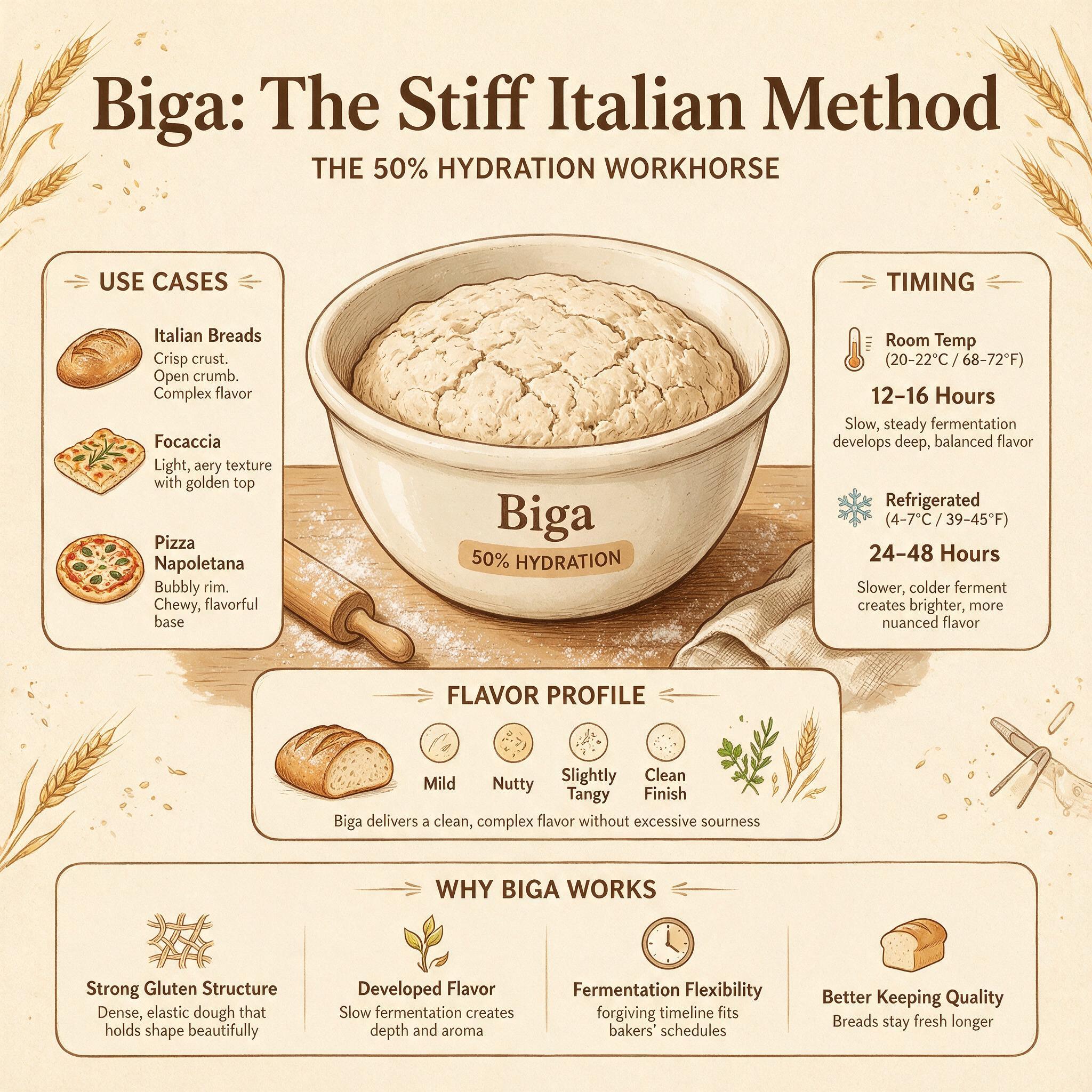
Biga (Dry Yeast Pre-Ferment): The Nutty One
What It Is
Biga is an Italian pre-ferment at much lower hydration than poolish — typically 50–65% hydration, making it a firm dough ball rather than a pourable liquid. Like poolish, it uses commercial yeast (tiny amount) plus flour and water, but the denser consistency creates different fermentation dynamics.
How to Build One
Ratio: 100g bread flour + 50–65g water + 0.1g commercial yeast
Process: Mix into a firm dough ball, cover tightly, rest at room temperature for 12–18 hours (or refrigerate for up to 72 hours)
When ready: Surface cracked and dry-looking, slight expansion, pleasant fermented aroma
Flavor Profile
Biga produces deeper, nuttier flavor than poolish due to the lower hydration environment. The denser culture ferments more slowly, allowing more complex amino acid development (which contributes to Maillard browning). There's a subtle sweetness with notes of toasted grain and a faint tang from limited bacterial activity in the low-hydration environment. It's closer to sourdough in complexity but still distinctly different — less acidic, more nutty and wheat-forward.
Crumb and Texture
Biga creates a denser crumb than poolish (the pre-ferment itself is firmer) while still being significantly more open than non-pre-fermented dough. The result is a bread with substantial structure — good oven spring, well-defined crumb, but not the dramatic open holes of poolish or sourdough. This makes biga ideal for hearth breads where you want crusty exterior and structured interior without extreme openness.
Shelf Life Impact
Similar to poolish — moderate improvement over non-pre-fermented bread. The longer fermentation time (12–18 hours at room temp, up to 72 if refrigerated) allows more flavor development but not quite the acid preservation of sourdough.
Best For
- •Italian-style breads (focaccia, ciabatta variations)
- •Pizza dough where chewy crust is preferred over airy
- •Rustic hearth loaves with substantial crumb structure
- •When you want nutty, wheat-forward flavor without sourness
Pâte Fermentée (Saved Dough): The Simplest One
What It Is
Pâte fermentée is the simplest pre-ferment of all: save a piece of yesterday's dough and use it as part of today's starter. No separate mixing, no waiting for bubbles — just refrigerate a portion of your finished dough and add it to your next batch. This technique is used across every bread tradition because it works with any recipe, requires zero extra equipment, and improves results without changing anything else about your process.
How to Use One
Ratio: 15–20% of your total flour weight as pâte fermentée
Process: Save 100–200g of dough from a previous bake (wrap tightly in plastic), refrigerate for up to 3 days, add directly to new dough during mixing
When ready: The saved dough will have firmed slightly in the fridge and may have small bubbles on the surface — this is normal. No waiting required; just chop it into pieces and mix it into your new dough.
Flavor Profile
Pâte fermentée produces a subtle improvement over non-pre-fermented bread — barely noticeable sourness, slight depth of flavor that's hard to describe but clearly present. It's not a dramatic change like sourdough or biga; think of it as "this tastes slightly better than usual" rather than "this has a distinct character." The effect is more pronounced with longer refrigeration (48–72 hours vs. 12 hours).
Crumb and Texture
Modest improvement in crumb uniformity and oven spring compared to non-pre-fermented dough. The saved dough contains already-developed gluten and some gas structure, which gives the new batch a slight head start on fermentation. Not as dramatic as poolish or sourdough but still noticeable if you're comparing side by side.
Shelf Life Impact
Small improvement — maybe a few hours to half a day of extra freshness. The limited fermentation time in pâte fermentée doesn't produce enough acid for significant preservation, but any pre-fermentation helps marginally.
Best For
- •Everyday sandwich breads and pan loaves
- •When you want "just a little better" without changing your routine
- •Bakers who don't maintain a starter or want to use commercial yeast exclusively
- •Any recipe where you can spare 10–20% of the dough from a previous bake
- •The easiest entry point into pre-ferment baking — zero learning curve
Side-by-Side Comparison
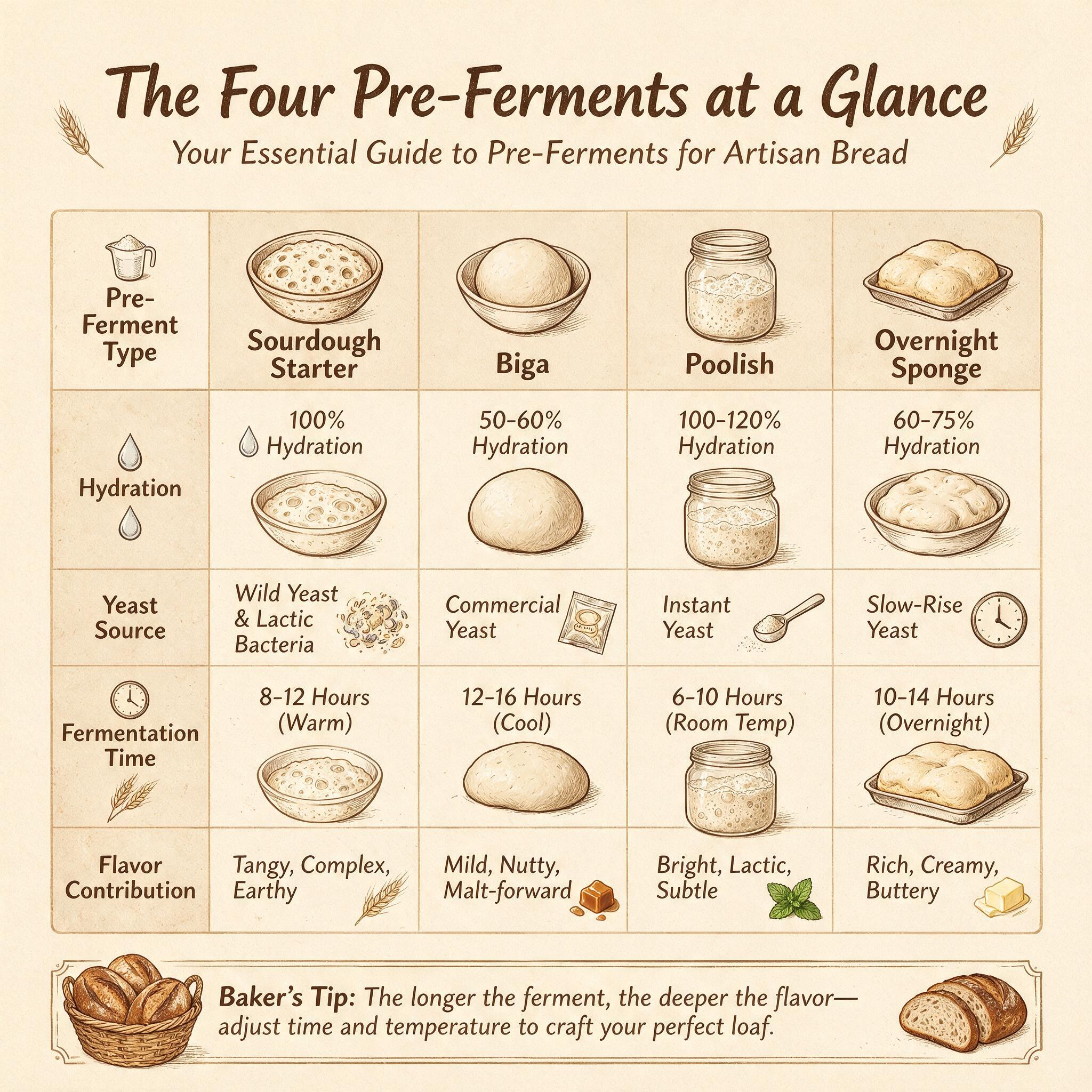
| Factor | Sourdough Starter | Poolish | Biga | Pâte Fermentée |
|---|---|---|---|---|
| Hydration | 100% (liquid) | 100% (liquid) | 50–65% (firm dough) | N/A (saved dough) |
| Leavening | Wild yeast + bacteria | Commercial yeast only | Commercial yeast only | Wild yeast or commercial (whatever the original used) |
| Build time | 4–12 hours | 12–16 hours | 12–72 hours | Overnight (no active building) |
| Flavor complexity | Highest | Moderate-low | Moderate | Subtle |
| Sourness | Yes, controllable | None | Very slight | Depends on original dough |
| Crumb openness | Open and irregular | Very open and airy | Structured with good holes | Slightly improved vs. no pre-ferment |
| Shelf life extension | 1–2 days | ~0.5–1 day | ~0.5–1 day | Few hours to half a day |
| Learning curve | Moderate (maintain culture) | Low (overnight mix) | Low (overnight mix) | Lowest (save dough) |
When to Choose Which Pre-Ferment
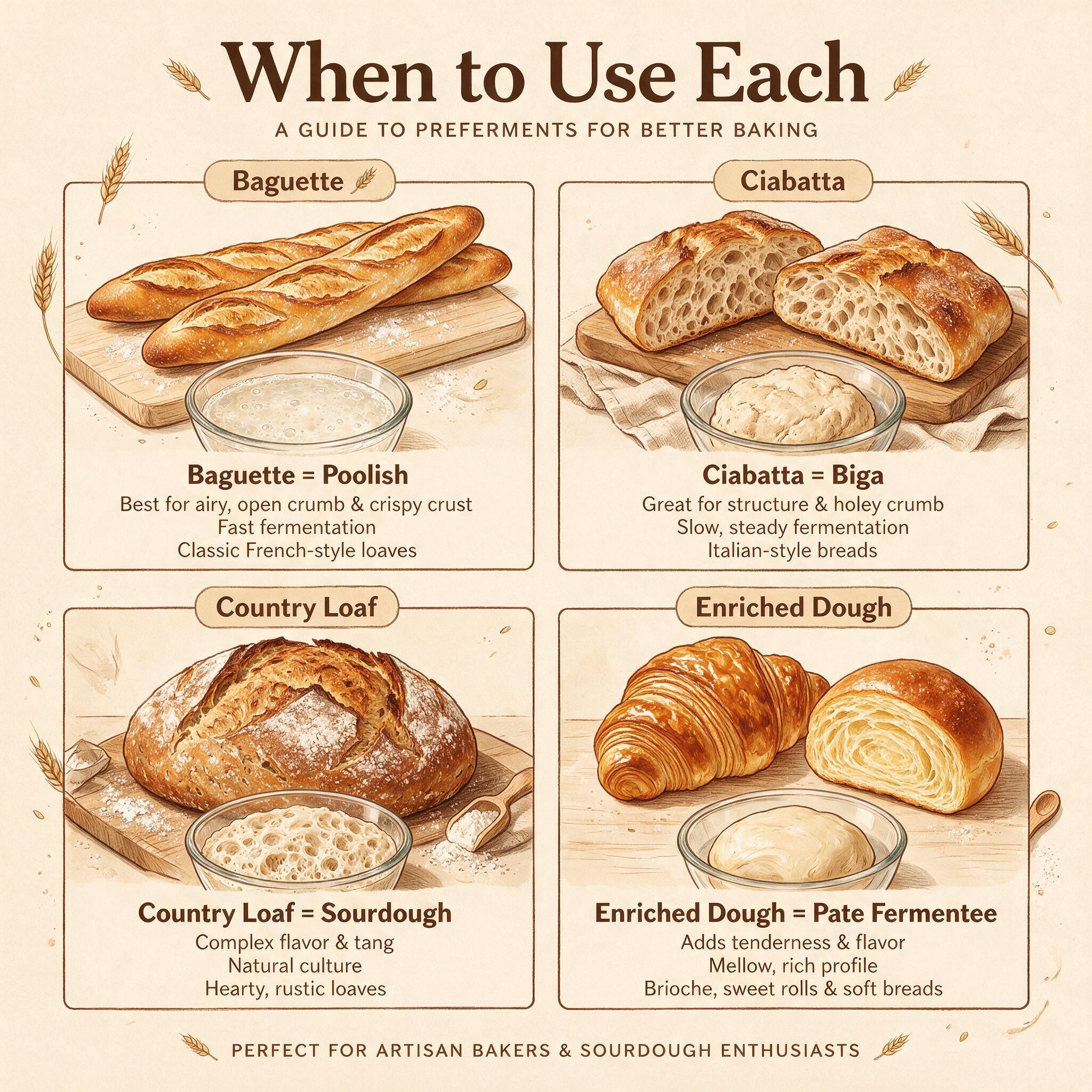
Choose Sourdough Starter When:
- •You want maximum flavor complexity and sour character
- •You're baking artisan loaves where open crumb is desired
- •Extended shelf life matters (sandwich breads that need to last several days)
- •You enjoy the process of maintaining a living culture
- •You have at least 8 hours for building + fermenting
Choose Poolish When:
- •You want light, airy texture without sour flavor
- •You're making French-style bread or pizza dough
- •You need a reliable overnight pre-ferment that's quick to build
- •Your kitchen runs warm and you want something predictable (poolish is less temperature-sensitive than sourdough)
Choose Biga When:
- •You want nutty, wheat-forward flavor without sourness
- •You're making Italian-style breads or chewy pizza dough
- •You prefer structured crumb over dramatic openness
- •You have time for a longer ferment (12–72 hours depending on temperature)
Choose Pâte Fermentée When:
- •You want the simplest pre-ferment with zero extra steps
- •You're making everyday bread and just want "slightly better" results
- •You bake commercially or with commercial yeast exclusively
- •You already have dough from a previous bake to save
Frequently Asked Questions
Can I use poolish or biga in sourdough recipes?
Yes — you can combine pre-ferments. For example, build a poolish the night before and use it as part of your sourdough dough the next day. The poolish contributes gas structure and flavor complexity, while your sourdough starter adds acidity and leavening power. This is especially effective for breads where you want both open crumb (from poolish) and sour character (from sourdough).
Does pre-ferment affect baking temperature or time?
Not significantly. Pre-fermented doughs bake at the same temperatures as non-pre-fermented equivalents. The main difference is that pre-fermented doughs may proof slightly faster due to the head start on fermentation — watch your dough closely rather than relying on recipe timing, especially with sourdough and poolish which are more active than biga or pâte fermentée.
Can I freeze pre-ferments?
Yes, all four types can be frozen:
- •Sourdough starter: Freeze at peak activity in an airtight container; thaw and feed 2–3 times before using
- •Poolish/Biga: Freeze after fermentation is complete (bubbles visible); thaw overnight in fridge before incorporating into dough
- •Pâte fermentée: Freeze wrapped tightly; thaw in fridge before use. Freezing actually extends shelf life beyond the normal 3-day refrigerated window to several weeks.
Which pre-ferment produces the best pizza dough?
Poolish is the classic choice for Neapolitan-style pizza (light, airy crust). Biga is preferred for Roman-style pizza (chewier, more substantial crust). Sourdough pizza dough adds tang and complexity but requires longer cold fermentation to develop properly. Pâte fermentée works fine for casual pizza night if you want a quick improvement over standard dough. For most home bakers, poolish gives the best balance of ease and results.
Closing Thoughts
Pre-ferments are like different instruments in an orchestra — sourdough is your full ensemble (complex, deep, layered), poolish is your flute (light, bright, airy), biga is your cello (warm, nutty, substantial), and pâte fermentée is your bass guitar (steady, supportive, barely noticeable but making everything better). You don't need to use all of them constantly. Pick the one that matches what you're trying to bake, learn it well, and move on.
My personal preference: I maintain a sourdough starter for everyday artisan breads because I love the flavor complexity. But when I'm baking pizza or French-style loaves where I want light texture without sourness, I build a poolish overnight — it takes two minutes to mix and does all its work while I sleep. And on weeks when I just want "slightly better sandwich bread" with minimal effort, I save a piece of dough from one bake for the next.
The best pre-ferment is the one you actually use consistently. Start simple (pâte fermentée or poolish), build confidence, then explore sourdough and biga when you're ready to add more complexity to your baking.
Happy baking!