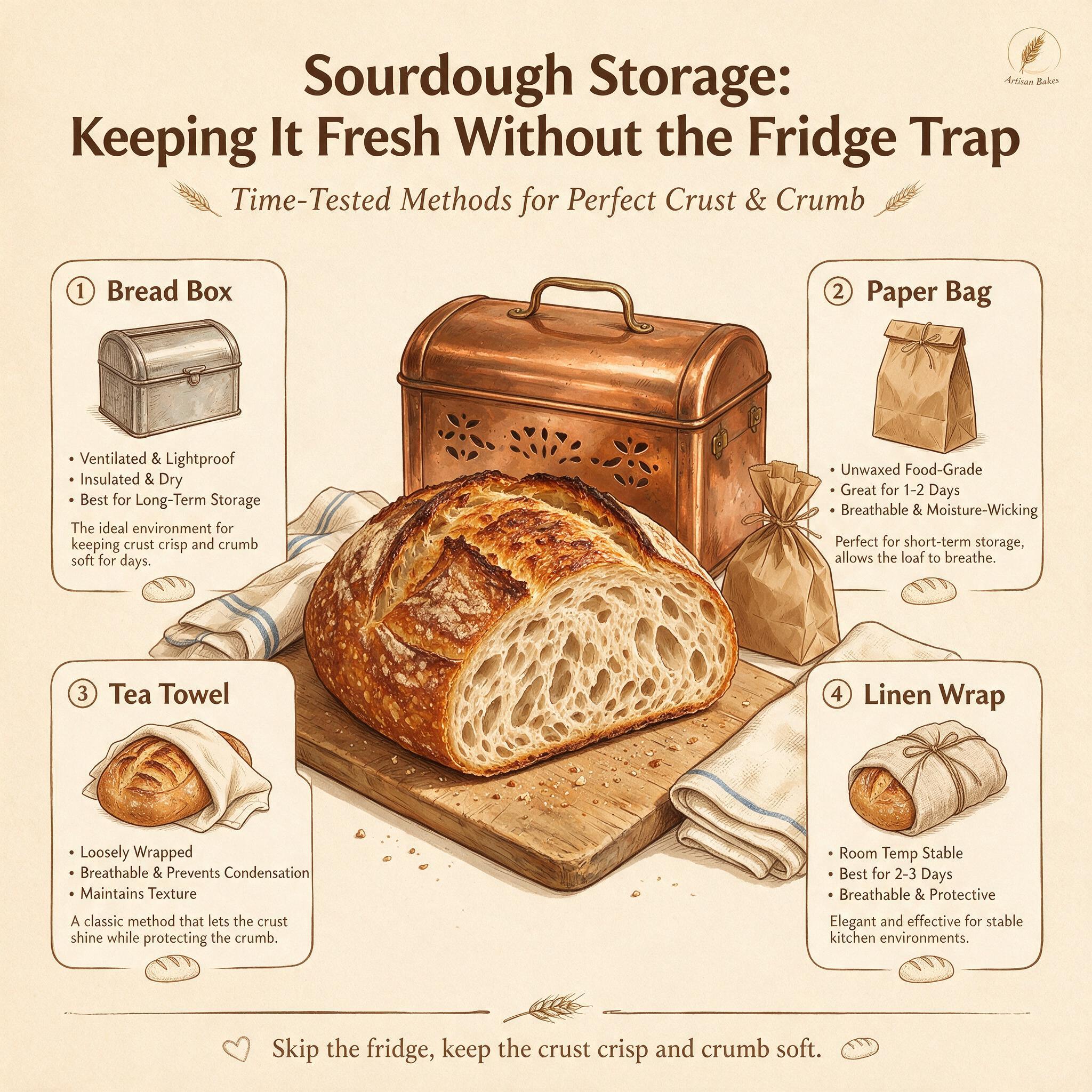
Everyone stores sourdough wrong. Not most people — everyone, including me when I first started baking. We've all done it: slice a beautiful loaf, put the rest in the fridge "to keep it fresh," and three days later discover that the bread has gone dry and crumbly even though it was perfectly moist on day one.
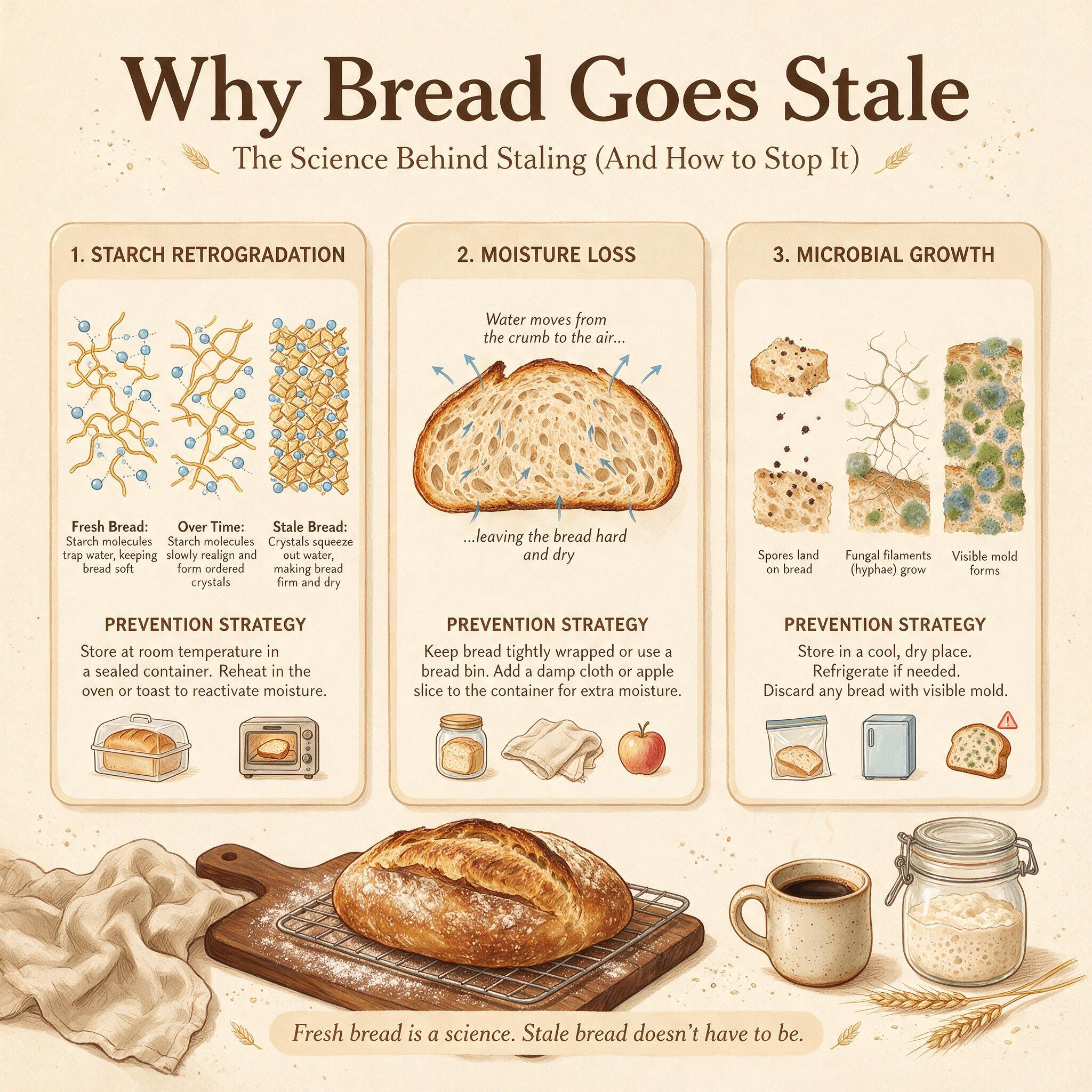
Here's why: bread stales from retrogradation, not moisture loss. The starch molecules in your bread reorganize into a crystalline structure at refrigerator temperature — a process called retrogradation — which makes the crumb firm and dry regardless of how well you wrap it. The fridge is literally the worst place to store fresh bread because cold accelerates this process dramatically.
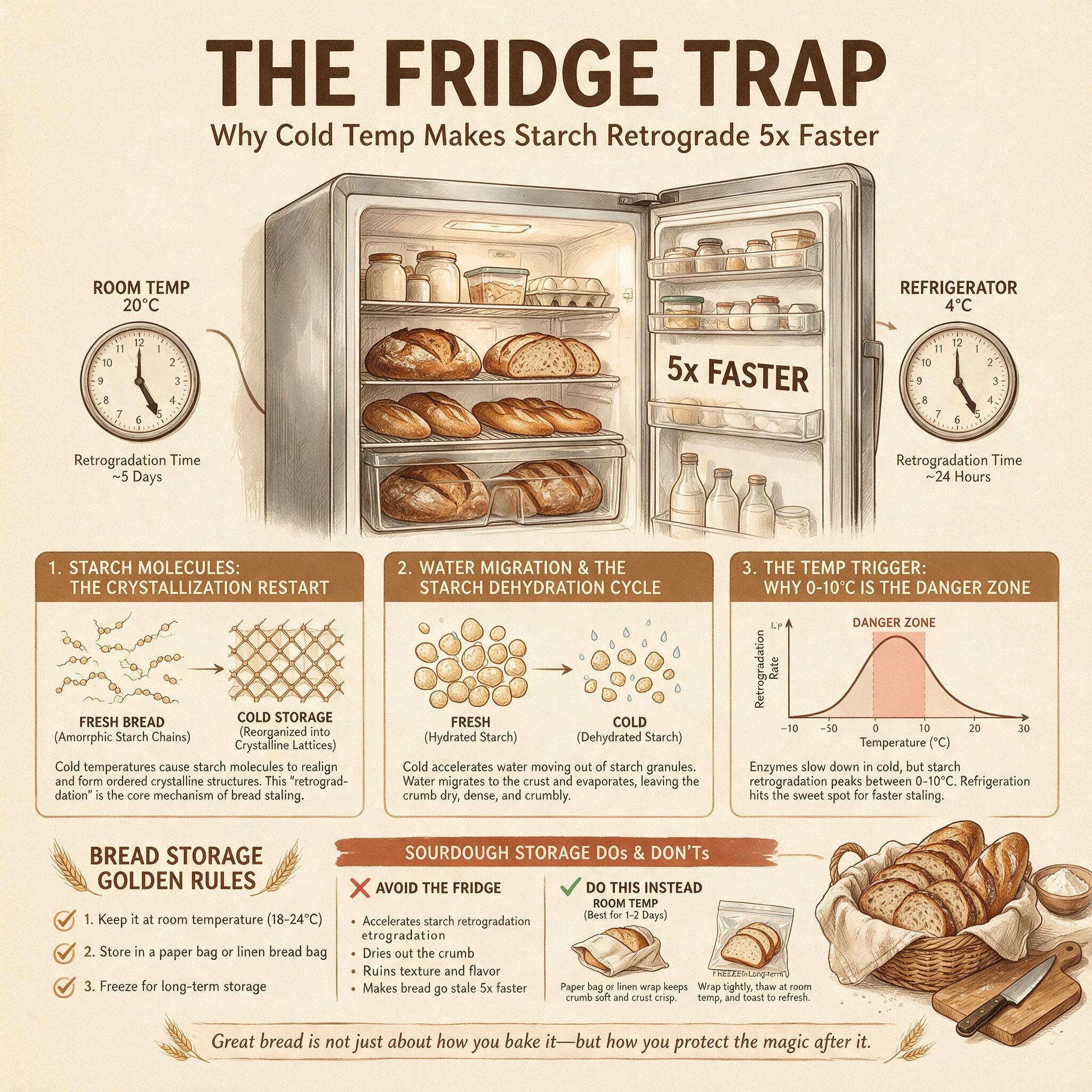
Room-temperature storage keeps bread fresh for 2–3 days. Freezing preserves it for weeks without any texture loss. The fridge? It's a sourdough killer that everyone falls into at least once.
This guide covers why the fridge ruins bread, how to store it properly at room temperature, the freezing technique that actually works, and how to revive day-old loaf so it tastes fresh again.
What You'll Learn
By the end of this post, you'll understand:
- •Why retrogradation (not moisture loss) is what makes bread go stale
- •Why the fridge accelerates staling instead of preventing it
- •Proper room-temp storage methods for maximum freshness
- •The freezing technique that preserves bread indefinitely
- •How to revive day-old bread so it tastes freshly baked
Let's fix your bread storage habits once and for all.
The Science of Staling: Retrogradation, Not Moisture Loss
Here's the thing most people don't know about bread staling: it has nothing to do with moisture evaporating. You can seal bread in an airtight bag at room temperature and it will still go stale within two or three days. Conversely, an unwrapped loaf on the counter loses surface moisture (making the crust hard) but the interior stays soft for longer than refrigerated bread.
What actually causes staling is retrogradation — a process where starch molecules that were gelatinized during baking begin reorganizing into crystalline structures. During baking, heat and water break down starch granules and they absorb moisture (gelatinization). As the bread cools and ages, those starch molecules slowly rearrange back into ordered crystalline forms — a process that squeezes water out of the starch matrix and makes the crumb firm, dry, and unpleasant to eat.
Temperature Matters More Than Wrapping
Retrogradation happens fastest at refrigerator temperatures (35–40°F / 2–4°C). At room temperature, it occurs more slowly — which is why an unwrapped loaf on your counter stays fresh longer than a wrapped one in the fridge. The cold literally accelerates starch crystallization.
At freezing temperatures (0°F / -18°C), retrogradation nearly stops. Starch molecules are locked in place and can't reorganize. This is why frozen bread stays fresh for weeks — the process is essentially paused until you thaw it.
Why Wrapping Doesn't Fix Fridge Storage
Wrapping bread tightly in plastic or putting it in a ziplock bag prevents moisture loss, but it doesn't prevent retrogradation. The crumb will still firm up and dry out from within because starch molecules are reorganizing regardless of external humidity. You're solving the wrong problem.
Room-Temperature Storage: 2–3 Days of Freshness
For bread you'll eat within a couple days, room-temperature storage is the gold standard. Here's how to do it right:
Whole Loaf vs. Sliced
Whole loaf: Store uncut in a paper bag or bread box at room temperature. The loaf will stay fresh for 2–3 days this way. Paper allows minimal moisture exchange — enough to prevent crust from getting soggy but not so much that the interior dries out. Bread boxes provide similar protection with a more controlled microclimate.
Sliced loaf: Once you cut into bread, expose the crumb to air and staling accelerates dramatically. Slice only what you need for each meal. If you must slice in advance, wrap tightly in plastic wrap (not paper — the interior needs moisture retention) and store at room temperature for up to 2 days.
What NOT to Use at Room Temperature
- •Plastic bags: Trap too much moisture, making crust soft instead of crackly. Fine if you prefer soft crust, but not ideal for artisan sourdough where that crispy exterior is half the appeal.
- •Airtight containers: Same problem as plastic — crust goes soft and stays there.
- •Direct on counter (unwrapped): Crust dries out within hours while interior stays fine. Not terrible, but wasteful of your beautiful crust.
The Paper Bag Method (My Go-To)
A simple paper grocery bag is the single best room-temp storage solution for whole loaves:
- Place uncut loaf inside a clean paper bag
- Fold the top closed (don't seal tightly — bread needs minimal airflow)
- Store in a cool, dark place away from direct sunlight and heat sources
- Eat within 2–3 days
The paper bag lets excess moisture escape from the crust (keeping it crackly) while retaining enough humidity to protect the crumb. It's simple, free, and works better than most purpose-built bread boxes.
Freezing: The Best Way to Preserve Sourdough
Freezing is hands-down the best way to keep sourdough fresh long-term. Properly frozen bread retains nearly all of its original texture and flavor for 3–6 months (sometimes longer — I've baked with 8-month-old frozen sourdough that was still excellent).
The Golden Rule: Slice Before Freezing
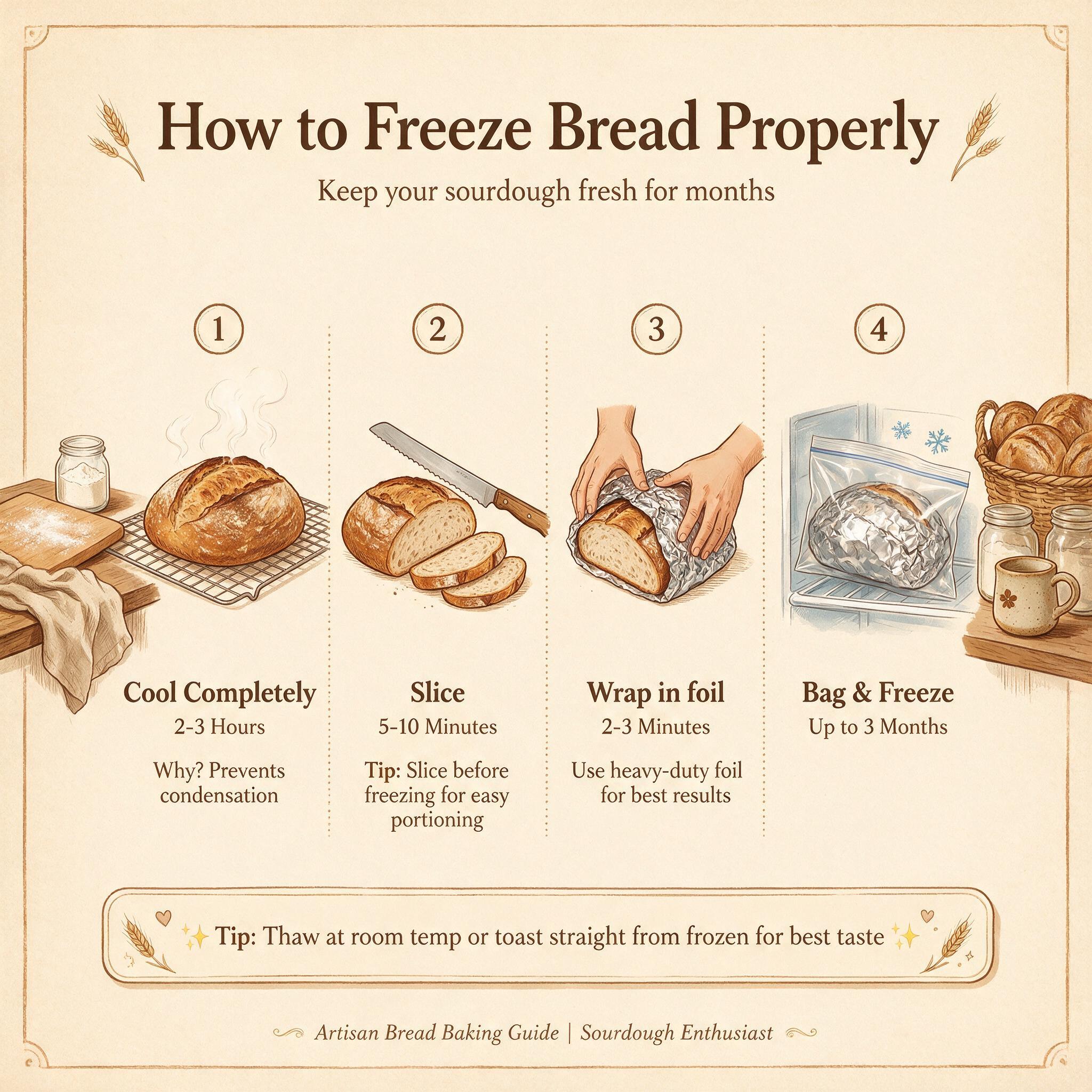
This is the single most important step. Freeze your bread in individual slices or meal-sized portions so you can pull out exactly what you need without thawing the whole loaf. Every time you take a whole loaf out of the freezer to slice one piece, you degrade the rest through repeated freeze-thaw cycles.
How to Freeze Sourdough Properly
- Slice first: Cut the loaf into individual sandwich slices or 2–3 inch portions (whatever works for how you'll eat it)
- Wrap tightly: Wrap each slice or portion in plastic wrap, pressing out as much air as possible. For maximum protection, double-wrap: plastic first, then foil or a freezer bag.
- Label with date: Frozen bread is best within 3 months, acceptable up to 6 months, still edible but declining after that. Write the date on the package so you know what's oldest.
- Store flat in freezer: Lay wrapped portions flat — don't stack heavy items on top of them. Freezer temperature should be 0°F / -18°C or below.
What NOT to Do When Freezing
- •Don't freeze whole loaves (unless you eat a loaf every three days). You'll waste bread by thawing more than you need.
- •Don't skip wrapping. Exposed bread in the freezer develops freezer burn within weeks — dry, tasteless patches where moisture has sublimated from the surface.
- •Don't freeze bread that's already stale. Freezing preserves what's there; it doesn't reverse staling. Freeze while bread is still fresh.
Thawing and Reviving Frozen Sourdough
For individual slices: Toast directly from frozen. No thawing needed — a toaster or toaster oven at medium heat will revive frozen sourdough better than most room-temperature bread. This is the easiest, best method for sandwich slices.
For portions (not individual slices): Thaw wrapped at room temperature for 2–3 hours, then unwrap and let come to room temperature completely before eating. The crust may be slightly soft from condensation — if you want it crackly again, pop the loaf in a 350°F oven for 5 minutes to re-crisp.
For a whole thawed loaf: If you've thawed an entire loaf (wrapped at room temperature), use within 24 hours. Once thawed, bread returns to normal staling — it won't last longer than fresh bread stored the same way.
The Fridge: When It Works and When It Doesn't
The fridge isn't always wrong for sourdough — context matters. Here's when each approach makes sense:
Don't Refrigerate Fresh Bread
Fresh, warm-to-room-temperature sourdough goes stale fastest in the fridge due to retrogradation. A fresh loaf stored at 37°F will be drier and firmer within two days than one left unwrapped on the counter for three days. Rule of thumb: if you'll eat it within a couple days, room temperature (paper bag) or freezer is always better than fridge.
When Fridge Makes Sense
Sliced sandwich bread: If your sourdough has added fat (butter, oil), the crumb structure is tighter and less prone to retrogradation. A enriched sourdough sandwich loaf stored in the fridge for 4–5 days will stay acceptable longer than one left at room temperature. The fat slows starch reorganization.
Very humid climates: In kitchens above 75% humidity, a crusty loaf left on the counter may soften its crust within hours. Refrigeration prevents this, though the crumb will still stale faster. Trade-off: soft crust but moist interior vs. crackly crust that's already dry inside by day two.
Bread with perishable add-ins: Sourdough containing cheese, fresh herbs, or other refrigerated ingredients should be stored in the fridge regardless of staling concerns — food safety takes priority over texture.
If You Must Refrigerate
Wrap tightly in plastic wrap first (to minimize moisture loss), then place in an airtight container or ziplock bag. Use within 3–4 days and plan to toast slices before eating — refrigerated sourdough revives beautifully in a toaster even if it doesn't taste great straight from the fridge.
Reviving Day-Old Sourdough: Making It Taste Fresh Again
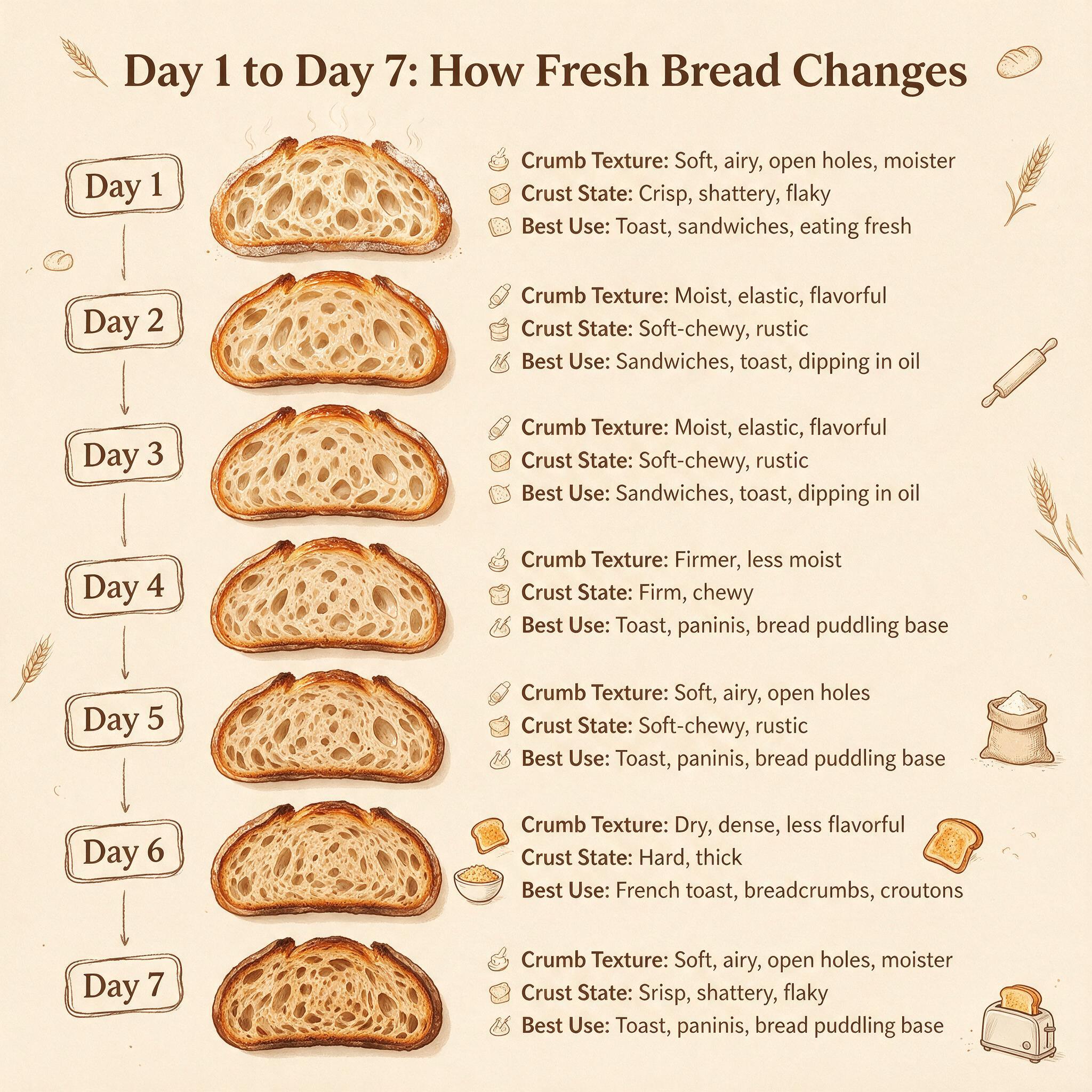
Even with perfect storage, sourdough has a finite window of peak freshness. When your loaf is past its prime — stale crust, firm crumb, or just "meh" — here's how to bring it back:
The Oven Revive (Best for Whole Loaves)
- Preheat oven to 350°F / 175°C
- Lightly wet the entire surface of the loaf with running water (or spray generously with a spray bottle)
- Place directly on oven rack (no baking sheet needed)
- Bake for 8–12 minutes until crust is crackly and hot throughout
The water re-gelatinizes surface starches, restoring crispness to the crust. The heat rewets the interior slightly through steam production. Result: a loaf that tastes like it came out of the oven an hour ago. This works on bread that's been at room temperature for up to 3 days — not stale beyond repair, just past its peak.
The Toaster Revive (Best for Slices)
Frozen or day-old slices go straight into the toaster at medium setting. No thawing needed. Toast until golden and crisp. This is my daily method for sandwich bread — frozen sourdough toast tastes nearly identical to fresh.
French Toast and Bread Pudding
If your loaf is beyond saving for regular eating (too dry, too firm), it's still perfect for French toast or bread pudding — dishes where stale bread is actually preferred because it absorbs custard better than fresh bread. This isn't a failure state; it's a feature of sourdough's dense crumb structure that makes it ideal for soaking up egg mixtures.
Shelf Life Summary by Storage Method
| Method | Whole Loaf | Sliced | Best For |
|---|---|---|---|
| Paper bag (room temp) | 2–3 days | N/A | Loaves you'll eat within a couple days |
| Plastic wrap (room temp) | 1–2 days | 2 days | Quick consumption, softer crust acceptable |
| Freezer (wrapped tightly) | 3–6 months | 3–6 months per slice | Long-term storage, meal prep |
| Fridge (plastic sealed) | 3–4 days | 4–5 days (enriched only) | Humid climates, enriched loaves |
Frequently Asked Questions
Can I freeze sourdough without slicing it first?
Yes, but it's less convenient. A whole frozen loaf will stay fresh for 3 months, but you'll need to thaw the entire thing to slice one piece — and each thaw degrades quality. If you know your household eats a whole loaf in about three days, freezing uncut is fine. Otherwise, pre-slicing is worth the effort.
Does sourdough last longer than commercial yeast bread?
Generally yes. The lactic acid in sourdough acts as a natural preservative — it lowers pH and slows mold growth compared to commercially leavened bread. Sourdough can stay fresh at room temperature for 2–3 days before significant staling, while white sandwich bread often goes stale or molds within one day. That said, both are subject to retrogradation regardless of leavening method.
Should I wrap sourdough in anything special for freezing?
Plastic wrap is the minimum — press it tight against every surface of the bread, removing as much air as possible. For maximum protection (especially if freezing beyond one month), add a second layer: foil or a heavy-duty freezer bag. The goal is zero air exposure between the bread and its wrapping. Every pocket of air is a spot where freezer burn will develop.
My sourdough goes moldy before it goes stale. Why?
Mold growth depends on humidity, temperature, and your local spore count (yes, every kitchen has different mold spores). Sourdough's acidity slows mold compared to commercial bread, but in humid climates or warm kitchens, mold can appear within 2–3 days even at room temperature. If this happens consistently, refrigerate after day one or freeze immediately. Moldy spots can be cut out of sourdough (unlike soft commercial bread where mycelium penetrates deep) — just remove the affected area and an inch around it.
Closing Thoughts
The single biggest mistake I see home bakers make is putting fresh sourdough in the fridge because "that's how you keep food fresh." Bread isn't food storage; it's a living product that changes rapidly after baking. The cold of your refrigerator accelerates staling faster than room temperature does — so if you're going to store bread, choose between paper-bag-at-room-temperature (for 2–3 days) or freezer-tight-wrap (for weeks).
My personal system: I slice my loaf on day one, wrap individual portions in plastic, and freeze everything except what I'll eat that day. Each morning, I pull out the slices I need for lunch sandwiches and toast them directly from frozen. It takes zero planning, zero effort, and the bread tastes fresh every single time. No waste, no stale bread, no fridge mistakes.
The best sourdough storage system is the one you actually use consistently. Start simple — paper bag for today's loaf, freezer for everything else. Once that becomes habit, experiment with other methods. But always remember: if it's fresh and you'll eat it within a couple days, room temperature beats fridge every time.
Happy baking (and storing)!