
Sourdough pizza is one of the biggest trends in home baking — and for good reason. The tang from sourdough starter adds depth that commercial yeast alone can't match. It creates a more complex crust flavor, better fermentation development, and a texture that's simultaneously chewy and light. Once you've had sourdough pizza, regular pizza dough feels flat.
But sourdough pizza requires a different approach than sourdough bread. The fermentation schedule, hydration, and baking method all need adjustment to work with pizza's unique demands: high heat, short bake times, and the need for dough that's both extensible (easy to stretch) and sturdy enough to hold toppings.
This guide covers the dough formula, cold fermentation timing (24–72 hours for maximum flavor), stretching technique, baking on steel vs. stone, and topping strategies that work with sourdough's behavior under extreme heat.
What You'll Learn
By the end of this post, you'll understand:
- •The ideal hydration and flour choice for sourdough pizza dough
- •Cold fermentation timing and why it matters more than you think
- •How to stretch pizza dough without tearing or shrinking back
- •Baking on steel vs. stone — which gives you the best results
- •Topping strategies that work with sourdough's unique crust development
Let's build the perfect sourdough pizza dough.
The Dough Formula
Pizza dough needs to be both extensible (easy to stretch thin) and sturdy enough to support toppings without sagging. This requires a specific balance of hydration, flour, and fermentation.
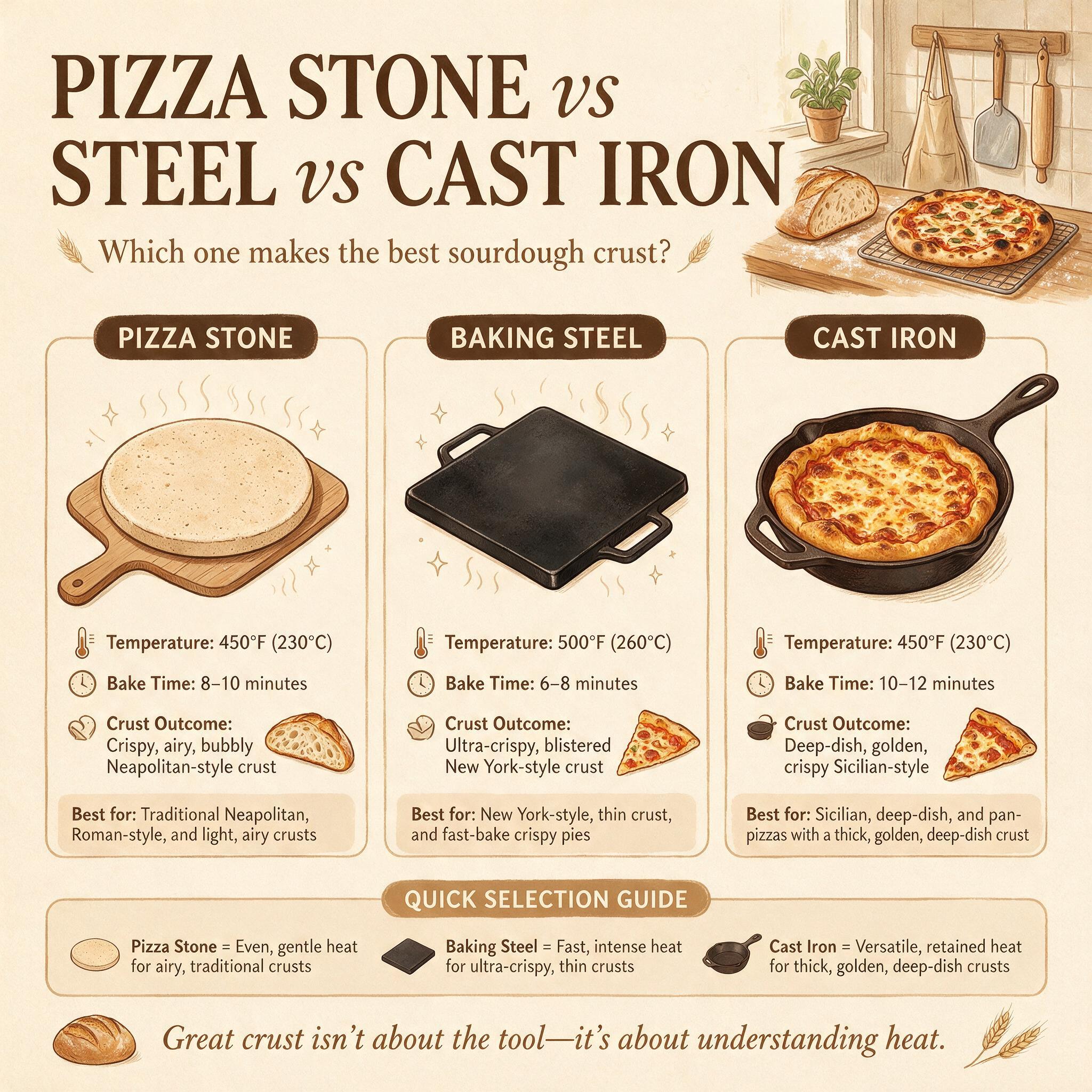
Base Formula
| Ingredient | Amount | Notes |
|---|---|---|
| Bread flour (high-protein) | 500g | 12–13% protein — critical for pizza |
| Water | 350–375g | 70–75% hydration — slightly stiffer than artisan bread |
| Active sourdough starter (ripe) | 75g | 15% — enough for leavening without overpowering |
| Salt | 10g | 2% |
| Olive oil (optional) | 15g | 3% — adds tenderness and shelf life |
Hydration note: Pizza dough should be slightly stiffer than standard artisan bread dough (70–75%). Too wet and it sticks to everything and tears when you stretch. Too dry and it springs back when you try to shape it. Start at 72% and adjust from there.
Why Bread Flour Specifically?
Pizza dough needs high-protein bread flour (12–13% protein) because the gluten network must stretch thin without tearing, and it needs enough strength to hold heavy toppings under high heat. All-purpose flour (10–11% protein) won't hold up as well. If you only have AP flour, reduce hydration to 68–70%, but spring for bread flour if pizza is a regular thing for you.
Cold Fermentation: The Secret to Great Sourdough Pizza
This is the most important technique for sourdough pizza, and the one most home bakers skip: cold fermentation for 24–72 hours.
Why Cold Fermentation Works
Cold fermentation does two things simultaneously. First, it develops complex flavor — long, slow fermentation at refrigerator temperature (37–40°F) allows acetic and lactic acid bacteria to produce more of the compounds that create depth and complexity. Twenty-four hours minimum; 48–72 hours is ideal. Second, it improves dough texture — cold fermentation relaxes gluten gradually, making the dough more extensible (easier to stretch) without weakening it structurally.
The Fermentation Timeline
| Fermentation Time | Flavor Profile | Dough Behavior |
|---|---|---|
| 0–12 hours | Mild, almost commercial-yeast-like | Stiffer, springs back when stretched |
| 24 hours | Noticeable tang, complex | More extensible, holds shape better |
| 48 hours | Pronounced sourness, deep flavor | Very extensible, easy to stretch thin |
| 72 hours | Very tangy, intensely complex | Very extensible but may be fragile |
My recommendation: 48 hours is the sweet spot for most people — deep sourdough character without being overpowering, and dough that's easy to work with.
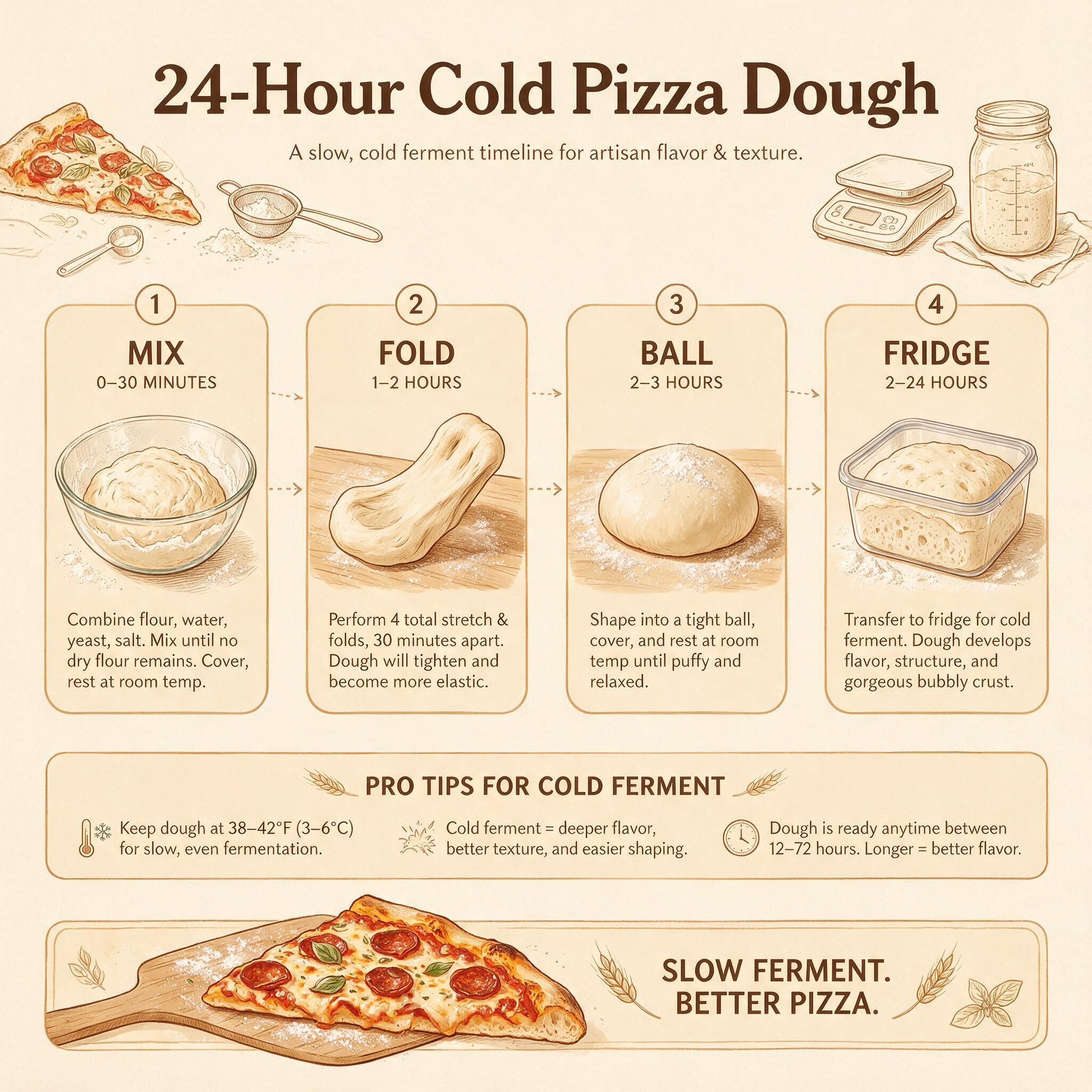
Building the Dough
- Mix: Combine flour and water, autolyse 30 minutes.
- Add starter and salt: Mix thoroughly until incorporated.
- Bulk ferment at room temp: 2–4 hours until dough feels puffy and slightly risen (20–30% increase).
- Divide and ball: Portion into 3 balls (roughly 300g each for large pizzas). Round each into a smooth ball.
- Cold ferment: Place each ball in an oiled container or covered bowl. Refrigerate for 24–72 hours.
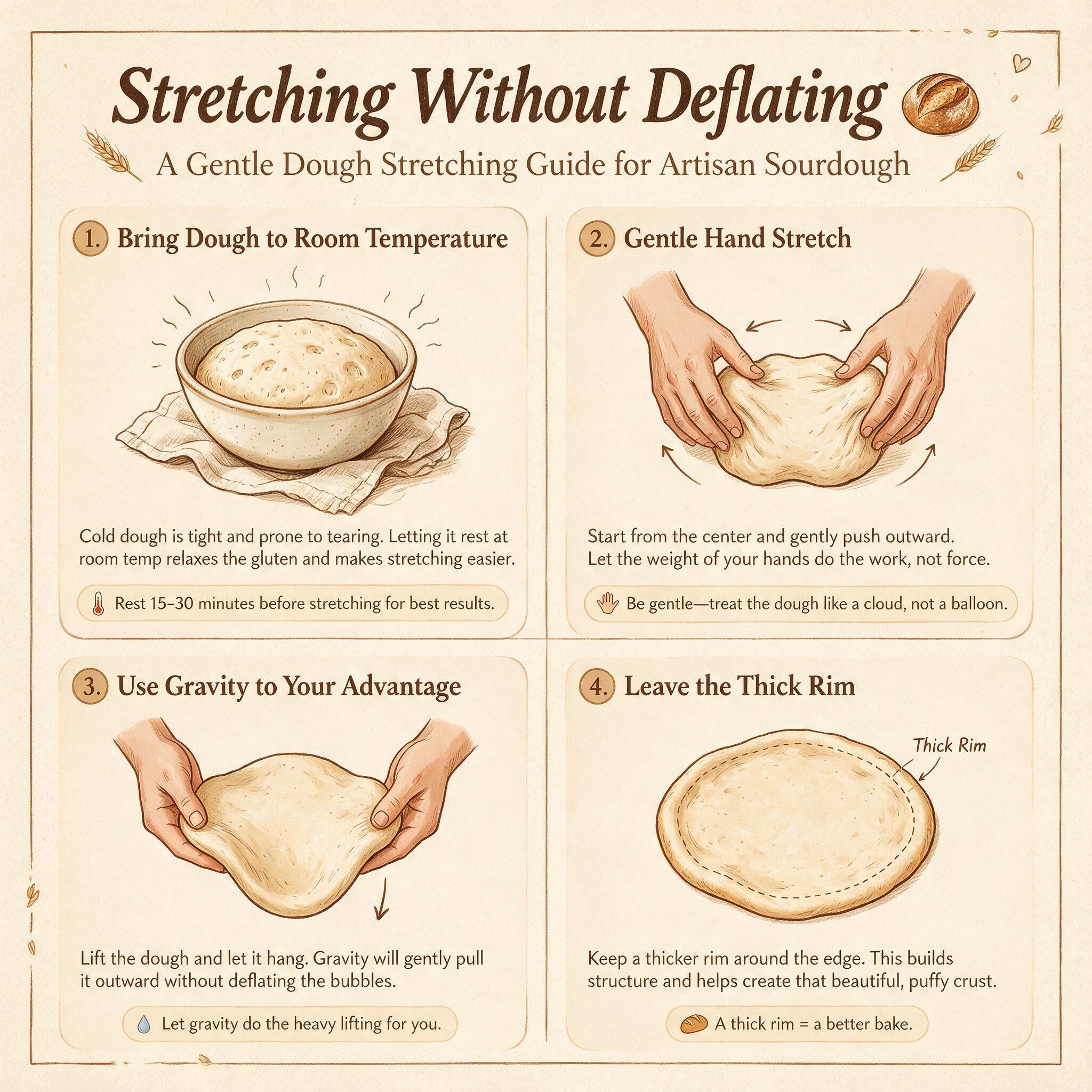
Stretching Sourdough Pizza Dough
This is where most home bakers struggle. Sourdough pizza dough, especially cold-fermented, has a tendency to spring back when you stretch it.
The Cold Dough Trick
Take your cold-fermented dough ball from the fridge and let it warm up at room temperature for 30–60 minutes before stretching. Cold dough is firmer and will spring back more aggressively. Room-temperature dough is more relaxed and easier to work with.
The Stretching Process
- Dimpling: On a floured surface, press your palm firmly into the center of the dough ball, pushing air toward the edges. This creates a thick rim and thin center — the basic pizza shape.
- Centering: Lift the dough, hold it by the edge, and let gravity stretch it. Rotate as you stretch, keeping the center thin.
- Hand stretching: If the dough springs back, set it down and let it rest 5 minutes. Gluten relaxes with rest. Come back and stretch again. Two or three rest-stretch cycles are normal — don't fight it.
- Final shaping: Once the dough is roughly 12 inches in diameter with a slightly thicker edge, it's ready.
Baking: Steel vs. Stone
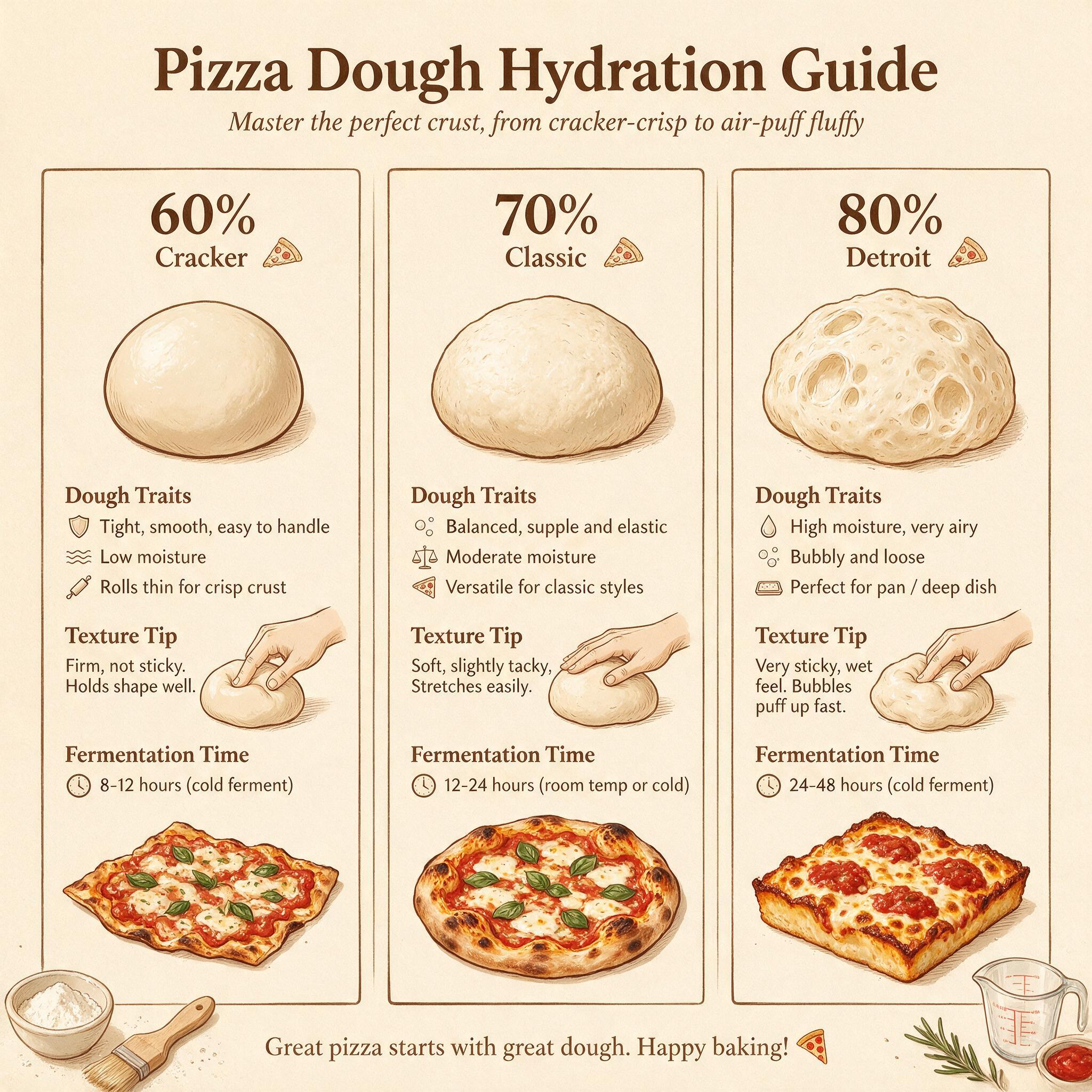
Pizza demands very high heat — 500°F minimum, ideally 550°F+ — to get the right crust: charred on the bottom, baked through in the center, with the cheese melted and bubbling.
Baking Steel
A baking steel is the gold standard for home pizza ovens. It conducts heat 18× faster than ceramic stone, holds massive thermal mass, and produces the best bottom char and crisp crust of any home option.
Preheat: Place steel on highest rack, preheat oven to maximum for 45–60 minutes. The steel needs to be screaming hot.
Baking time: 4–7 minutes at 550°F, depending on thickness.
Baking Stone
Ceramic baking stones are the traditional home pizza surface. They absorb moisture from the dough surface and provide even heat distribution, but require less preheating time than steel (30–45 minutes) and don't conduct heat as aggressively.
Baking time: 6–10 minutes at 500°F.
Which Is Better?
Steel produces crispier, more intensely browned crusts with better char. Stone produces softer-bottomed pizza with good browning. For sourdough pizza with its thicker, more developed crust, steel wins — you want that aggressive bottom heat to set the crumb structure quickly. But either works.
Topping Strategies
Keep sauce simple and minimally cooked: crushed San Marzano tomatoes, salt, a drizzle of olive oil. Don't overcook the sauce — it finishes in the oven. Use good mozzarella — fresh if possible, low-moisture if not. Don't overload with cheese — too much traps steam and prevents the crust from crisping. A thin, even layer is better than a heavy one.
Troubleshooting
| Problem | Cause | Fix |
|---|---|---|
| Dough springs back aggressively | Too cold OR under-fermented | Let warm to room temp longer; ferment longer |
| Dough tears when stretched | Too dry OR over-fermented | Add water; reduce fermentation time |
| Bottom crust is soggy | Steel/stone not hot enough | Preheat longer; use steel instead of stone |
| Crust burns before cheese melts | Oven too hot OR placed too close to element | Reduce temperature slightly; move to lower rack |
Frequently Asked Questions
Can I use discard for pizza dough?
Yes — sourdough discard works perfectly for pizza. Since cold fermentation develops flavor anyway, the starter's activity level matters less than it would for bread. Discard gives you tang without needing a ripe starter on hand. Use discard at 15–20% of flour weight, reduce salt slightly, and ferment cold for 24–72 hours.
How long does pizza dough last in the fridge?
Cold-fermented pizza dough is best within 72 hours (3 days). After that, it becomes increasingly fragile and may tear easily when stretched. You can freeze dough balls for up to a month — thaw overnight in the fridge before using.
Can I bake pizza without a steel or stone?
Yes — a preheated Dutch oven works surprisingly well. Preheat oven to maximum with Dutch oven inside for 45–60 minutes, drop pizza onto the hot base, bake covered for first 4 minutes (steam helps top cook), then uncovered until done. Not as good as a steel, but better than a cold baking sheet.
Closing Thoughts
Sourdough pizza is one of the most rewarding things you can bake with a starter. The depth of flavor from cold fermentation — that tangy, complex crust that you just can't get from commercial yeast — makes every pizza night worth the planning. The two-day timeline (mix day one, bake day two) is the only real commitment, and it's worth every hour of waiting.
My approach: I make three dough balls every Friday, cold-ferment for 48 hours, and bake on Sunday afternoon. The routine is as satisfying as the pizza itself. By the time the dough is ready, it's perfectly tangy, stretches like a dream, and bakes into a crust that's crisp on the bottom, tender in the middle, and complex in a way that makes people ask what your secret is.
Happy baking!