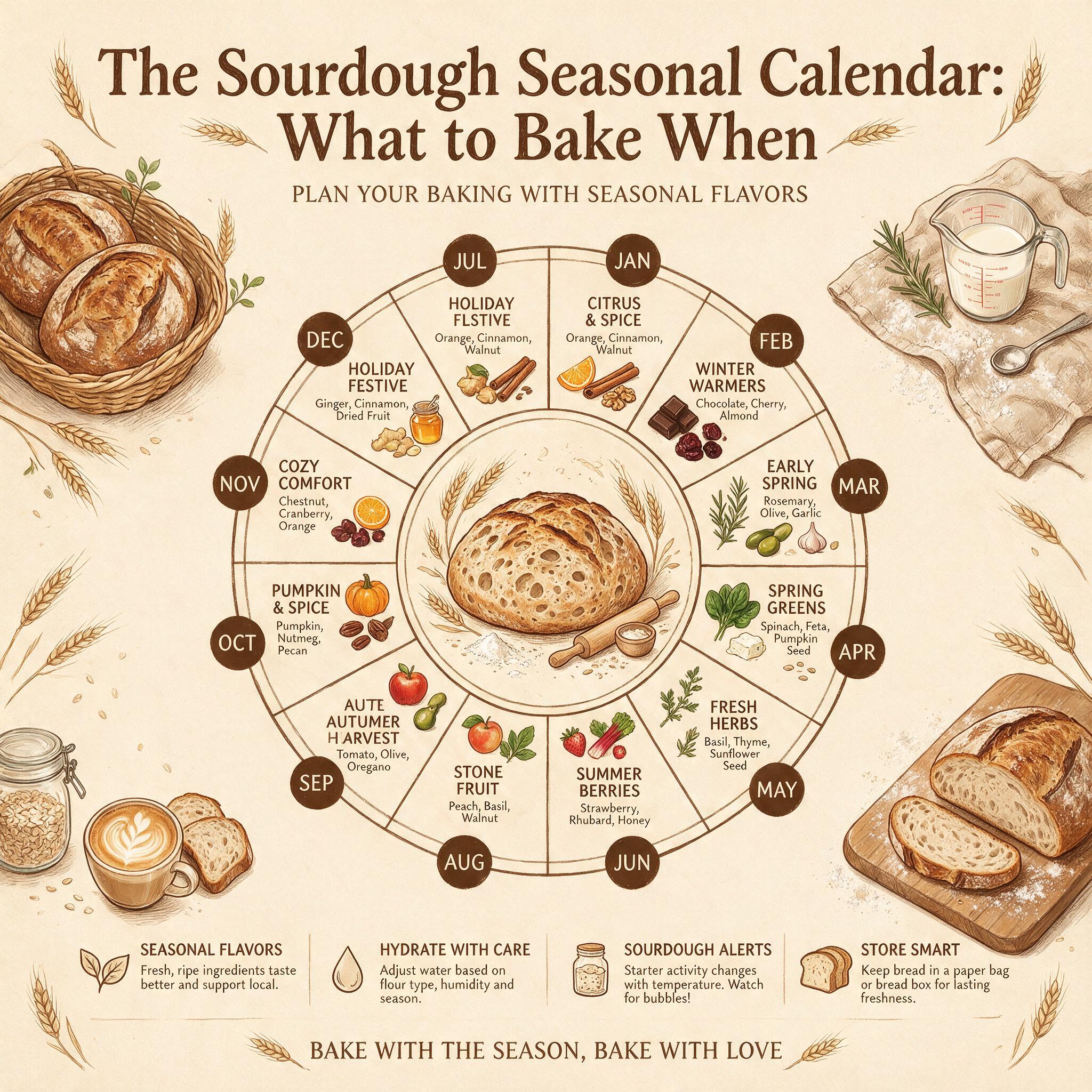
Fermentation is temperature-driven, so your bread changes with the seasons. The same recipe that takes five hours in July might take eight in January. Your starter behaves differently at 80°F versus 60°F. Even the flavor profile shifts — warmer temperatures favor lactic acid (mild, creamy), cooler ones push toward acetic acid (sharp, vinegary).
Most bakers treat sourdough as a year-round constant, but the best approach is seasonal awareness: adjusting your technique, timing, and even recipe choices based on what your kitchen is doing. This isn't about following rigid rules — it's about working with the seasons instead of fighting them.
This guide covers spring (moderate temps, reliable fermentation), summer (fast bulk, lighter loaves, morning baking), fall (perfect conditions, longer cold proofs for complex flavors), and winter (slow fermentation, need for warm proofing spots). Each season includes recipe recommendations and schedule adjustments so you can bake confidently no matter what your kitchen is doing.
What You'll Learn
By the end of this post, you'll understand:
- •How each season affects fermentation speed and flavor profile
- •Recipe adjustments for hot weather (summer) vs cold kitchens (winter)
- •Schedule strategies that work with seasonal rhythms instead of against them
- •Which loaves suit each season based on temperature and timing needs
- •Year-round principles that never change regardless of season
Let's walk through the year, season by season.
Spring: Moderate Temps, Reliable Fermentation (March–May)
Spring is sourdough's sweet spot — temperatures settle into a range where fermentation is predictable without being aggressive. Your kitchen sits somewhere between 65–72°F (18–22°C), which means bulk fermentation takes roughly four to six hours at standard hydration. This is the season where your technique from last year feels like it works again, and new bakers can build consistency quickly because the conditions are forgiving.
Fermentation Characteristics
- •Bulk time: 4–6 hours at room temperature (72°F / 22°C baseline)
- •Flavor profile: Balanced — neither lactic-dominant nor acetic-dominant, just clean sourdough character
- •Starter activity: Predictable doubling within 4–6 hours of feeding
- •Humidity: Often higher in spring (rainy season), which can affect dough surface moisture
Schedule Strategy
Spring is the ideal time for weekday baking. Your kitchen temperature allows you to mix in the evening, do stretch-and-folds over two hours, shape before bed, cold-proof overnight, and bake next morning — all without a proofing box or warm spot. This is when most bakers find their groove because the timing works naturally with daily life.
Sample weekday schedule:
- •7:00 PM: Mix dough (autolyse → add starter/salt)
- •7:30–9:30 PM: Stretch-and-folds every 30 minutes (4 sets)
- •10:00 PM: Shape and place in banneton
- •10:00 PM – 8:00 AM: Cold retard overnight (10 hours)
- •8:00 AM: Bake straight from fridge
This is the schedule that works for most people most of the year — and spring is the season where it's easiest to stick to.
What to Bake in Spring
Spring is excellent for whole wheat and multigrain breads. The moderate fermentation temperature allows whole grain flours to develop without rushing past their ideal window. Try a 25–50% whole wheat loaf with spring-harvested grains, or experiment with heritage wheat varieties (einkorn, emmer) that pair well with spring's mild character.
Summer: Fast Bulk, Morning Baking (June–August)
Summer is actually one of the best seasons for sourdough — ambient heat accelerates fermentation and reduces proofing time — but it's also where most bakers' systems break down because their standard schedule suddenly doesn't work. The same five-hour bulk that worked in April takes three hours in July. Your overnight schedule finishes by midnight instead of morning. The starter that doubled in six hours is overripe in four.
Fermentation Characteristics
- •Bulk time: 2.5–4 hours at room temperature (78–82°F / 26–28°C baseline)
- •Flavor profile: Lactic-dominant — milder, creamier sourness due to warm fermentation favoring lactic acid bacteria
- •Starter activity: Doubles in 2–4 hours — window of peak is much narrower
- •Humidity: Often lower in summer (dry air), which can dry out dough surfaces faster during bulk
Schedule Strategy
The key to summer baking is timing your bulk to end early in the morning — before your kitchen heats up for the day. Start mixing at 7–8 AM so bulk finishes by 10–11 AM, then cold-proof through the hottest part of the day. Alternatively, go the opposite direction: mix late evening (9–10 PM) so bulk finishes around midnight, shape, and bake first thing in the morning when your kitchen is coolest.
Key adjustments for hot kitchens:
- •Use cold water for mixing (55–60°F / 13–16°C) to bring dough temperature down
- •Cold-retard your shaped dough immediately — don't let it sit at room temp overnight
- •Reduce starter percentage from 20% to 15% to slow initial fermentation
- •Watch your aliquot jar closely — the perfect-proof window is much narrower when warm
What to Bake in Summer
Summer favors lighter, fresher loaves — lower hydration doughs that are easier to handle in the heat, white breads with fresh herbs, lemon-rosemary sourdough, or strawberry sourdough that takes advantage of peak-season fruit. Avoid heavy whole wheat or rye breads that feel too warming for hot weather. Focaccia and flatbreads also shine in summer — they're quick to make, don't require a hot oven for long, and showcase summer produce.
Fall: Perfect Conditions, Complex Flavors (September–November)
Fall is sourdough's second sweet spot. Kitchen temperatures settle back into the 68–72°F (20–22°C) range, fermentation returns to predictable four-to-six-hour bulks, and the long cool nights make extended cold proofs possible for maximum flavor development. This is the season for baking more deliberately — taking time with overnight ferments, experimenting with longer cold proofs, and reaching for more complex whole grain and heritage wheat formulas.
Fermentation Characteristics
- •Bulk time: 4–6 hours at room temperature (70–72°F / 21–22°C baseline)
- •Flavor profile: Acetic-leaning — longer, cooler fermentation naturally favors sharper, more complex sourness
- •Starter activity: Doubles in 4–6 hours with a wide peak window — forgiving timing
- •Humidity: Moderate, consistent — dough behavior is stable across bakes
Schedule Strategy
Fall is when overnight cold proofs deliver their best results. A 12–16 hour retard in the refrigerator during September and October produces beautifully sour, complex loaves with no rush. This is the season to experiment: try 24-hour cold proofs, test stiff levains for deeper flavor, push whole wheat percentages higher, and play with heritage grains like spelt, emmer, and red fife.
Sample fall schedule (overnight):
- •8:00 PM: Mix dough
- •8:30–10:30 PM: Stretch-and-folds
- •11:00 PM: Shape and cold-proof
- •Next day, 8:00 AM: Bake after 9-hour cold retard — deeper, more complex flavor
What to Bake in Fall
Fall is perfect for whole grain and heritage wheat baking. The moderate fermentation temperature allows higher percentages of whole wheat and rye without rushing past the ideal flavor window. Try a 50/50 whole wheat loaf with fall harvest ingredients, experiment with ancient grains (einkorn, emmer, spelt), or bake a traditional sourdough rye bread for the first time. The longer nights and cooler temperatures also make overnight schedules forgiving and pleasant — baking becomes a weekend ritual rather than a time-pressured weekday task.
Winter: Slow Fermentation, Warm Spots (December–February)

Winter challenges every sourdough baker. Your kitchen sits at 60–65°F (16–18°C), fermentation slows dramatically (bulk may take eight to twelve hours), and your starter that doubled in four hours in July barely rises in twelve. The temptation is to turn up the heat or wait longer — but there are better strategies.
Fermentation Characteristics
- •Bulk time: 6–12 hours at room temperature (60–65°F / 16–18°C baseline)
- •Flavor profile: Acetic-leaning — long, cool fermentation naturally favors sharper, complex sourness
- •Starter activity: Slow — may take 8–12 hours to double, and peak window is wide
- •Humidity: Often very low (heated indoor air), which can dry out dough surfaces during long bulks
Schedule Strategy
Winter baking rewards patience and creative scheduling. The most reliable approach: embrace the long bulk. Mix in the morning, let fermentation run all day while you're at work, shape in the evening, cold-proof overnight, bake the next morning. Your dough ferments slowly and develops excellent flavor during the long room-temperature bulk — the extended time at cool temperatures builds more complex acids than a rushed warm ferment.
Sample winter schedule (embrace the long bulk):
- •7:00 AM: Mix dough
- •7:00 AM – 7:00 PM: Bulk ferment at 60–65°F (12 hours with negligible rise early, significant rise late)
- •7:00 PM: Shape and cold-proof
- •Next morning: Bake
Key adjustments for cold kitchens:
- •Use warm water for mixing (80–85°F / 27–29°C) to bring dough temperature to 76–78°F
- •Insulate your bulk bowl with a towel or blanket to retain warmth
- •Find your warm spot — top of refrigerator, near a radiator, in a turned-off oven with the light on (the bulb creates warmth)
- •Increase starter percentage from 20% to 25–30% to compensate for slow activity
What to Bake in Winter
Winter suits rich, warming breads: higher-percentage whole wheat and rye loaves that feel substantial on cold days, sourdough with additions like walnuts, dried fruits, and warming spices (cinnamon, cardamom). Enriched sourdough (with butter or oil) also bakes well in winter — the fat keeps crumb tender and extends shelf life for several days. Weekend baking is ideal for winter because you have time for the longer schedule.
Year-Round Principles That Never Change
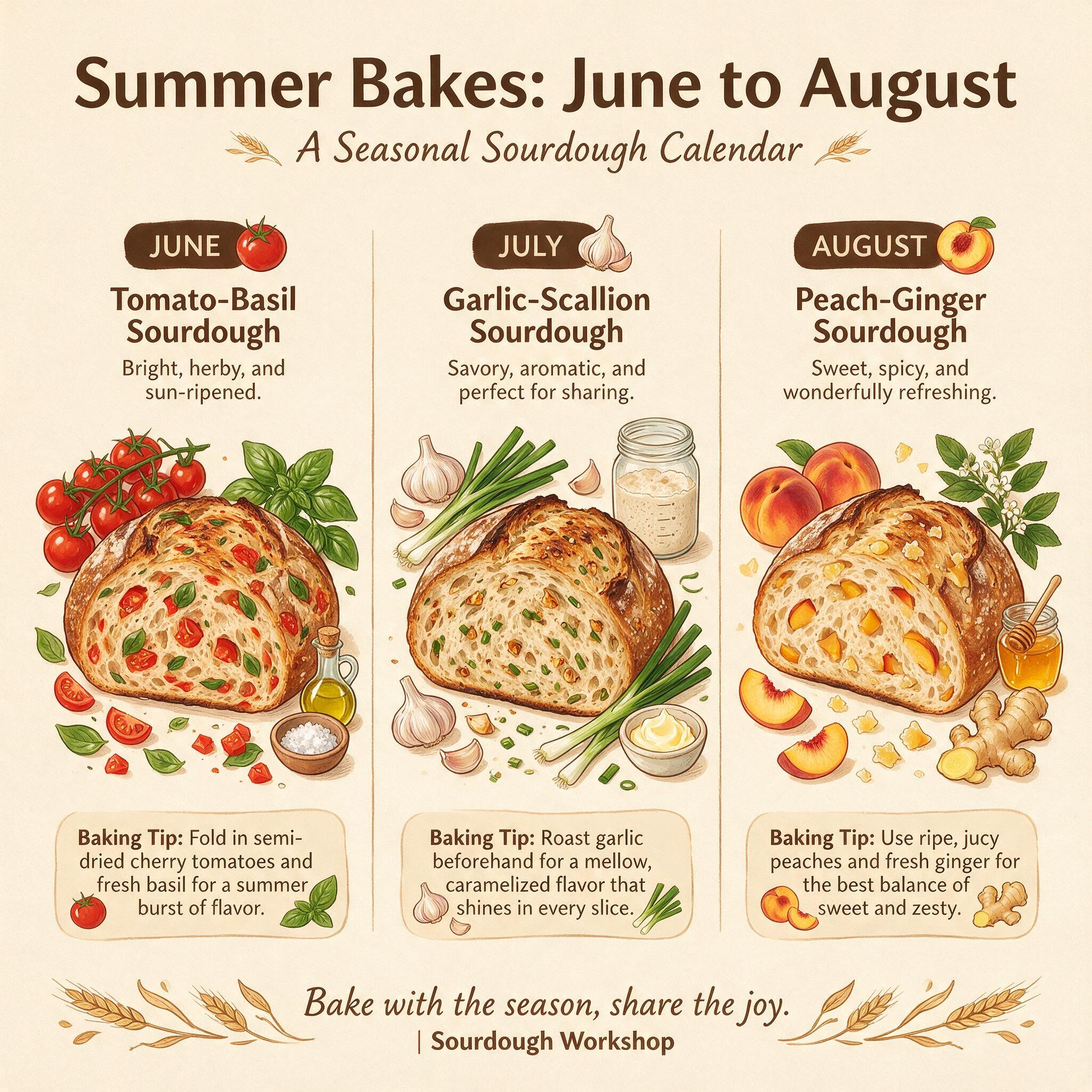
Some things are constant regardless of season:
Aliquot jar tracking works everywhere. The percentage rise method for tracking bulk fermentation is the single most reliable technique in sourdough baking, and it works at any temperature. Use a clear jar, track your dough's actual rise percentage, and target 60–75% rise at bulk end — not time. Time estimates change with every season; percentage doesn't.
Cold dough is always easier to shape. Whether it's summer or winter, cold-retarding your shaped dough for at least 30 minutes (ideally 2–12 hours) firms up the gluten and makes shaping dramatically easier. In winter, a cold-proofed dough is more manageable at shaping time.
The poke test is universal. Press a floured finger ½" into shaped dough. It should spring back slowly and incompletely. This works in every season, every kitchen, every hydration level.
Bread storage doesn't change. Regardless of season, room temperature (paper bag) is always better than refrigerator for fresh bread. Freezing is always the best long-term storage method. The science of retrogradation doesn't care about the season.
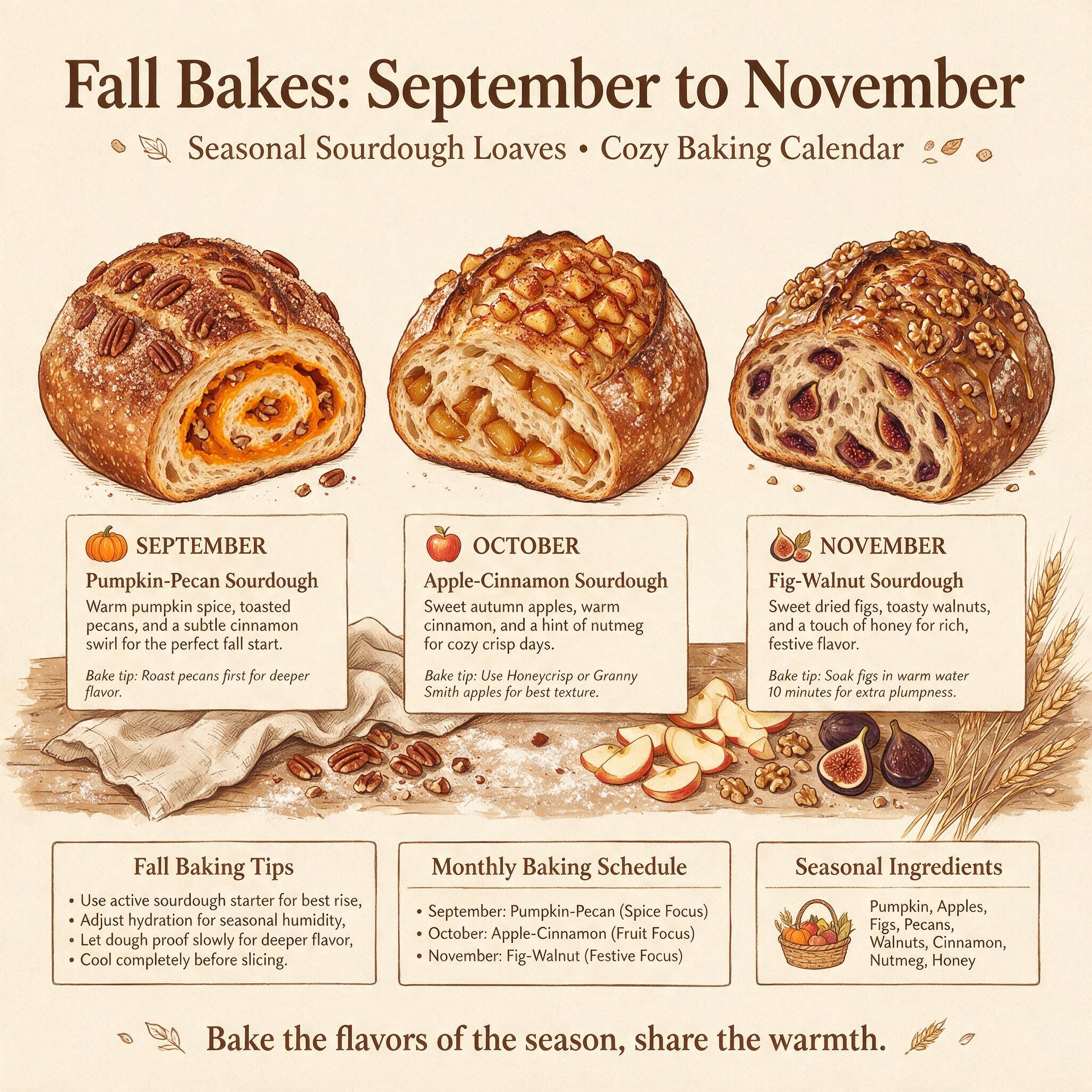
Seasonal Adjustments Quick Reference
| Factor | Spring | Summer | Fall | Winter |
|---|---|---|---|---|
| Kitchen temp | 65–72°F | 78–82°F | 68–72°F | 60–65°F |
| Bulk time | 4–6 hrs | 2.5–4 hrs | 4–6 hrs | 6–12 hrs |
| Flavor tendency | Balanced | Mild/lactic | Complex/acetic | Complex/acetic |
| Mix water | Room temp | Cold (55°F) | Room temp | Warm (80–85°F) |
| Starter % | 20% | 15% | 20% | 25–30% |
| Cold proof | 8–12 hrs | 8–12 hrs | 12–24 hrs | 8–16 hrs |
| Best time to mix | Evening | Early AM or late PM | Evening | Morning |
| Best for baking | Whole wheat, multigrain | Light loaves, focaccia | Heritage grains, overnight proof | Enriched breads, weekend bakes |
Frequently Asked Questions
My bulk takes much longer in winter. Is something wrong?
Nothing is wrong — your starter is simply responding to temperature. Every 10°F drop roughly doubles fermentation time (confirmed by Modernist Bread's research). A bulk that took 5 hours at 72°F might take 10 hours at 60°F. This isn't a problem; it's biology. Use an aliquot jar to track actual rise percentage rather than relying on time, and embrace the longer schedule — long, slow fermentation produces excellent flavor.
Should I adjust my hydration by season?
Not by season directly — adjust by your kitchen's humidity level. In dry winter (heated indoor air), doughs can feel stiffer because more moisture evaporates during bulk. In humid summer, doughs might feel wetter even at the same hydration. Judge by feel: if your dough seems stiffer than expected, add a splash of water; if it's wetter than expected, add a splash of flour. Hydration is relative to what your dough needs in the moment.
Does sourdough sourness change with seasons?
Yes — and this is one of sourdough's beautiful qualities. Warm fermentation (summer) favors lactic acid bacteria, producing milder, creamier bread. Cool fermentation (winter and fall) favors acetic acid bacteria, producing sharper, more complex sourness. You can counteract this by adjusting fermentation temperature — cool your summer dough or warm your winter dough if you want different sourness profiles — but many bakers enjoy the seasonal variation as part of the craft.
Closing Thoughts
The seasons teach you something every sourdough baker eventually learns: there's no perfect sourdough recipe, only the right recipe for today. What worked in June may not work in January, not because your technique regressed but because your kitchen is a different environment. This isn't a failure — it's the craft deepening.
My personal approach: I follow the seasonal calendar loosely. I bake more whole wheat in fall (the long cold proofs are forgiving and the flavor is excellent), lighter white loaves in summer (quick to make, pleasant to eat in heat), and enriched breads on winter weekends (comfort food that lasts). But I don't change my core method — the aliquot jar, the poke test, the cold-proof routine — because those principles are universal.
Pay attention to what your kitchen is telling you. Watch your dough more than your clock. And remember: sourdough is patient. If your bulk takes twelve hours in January instead of four in July, that's not a problem — that's your bread telling you it had time to develop flavors that the summer loaf never would.
Happy baking!