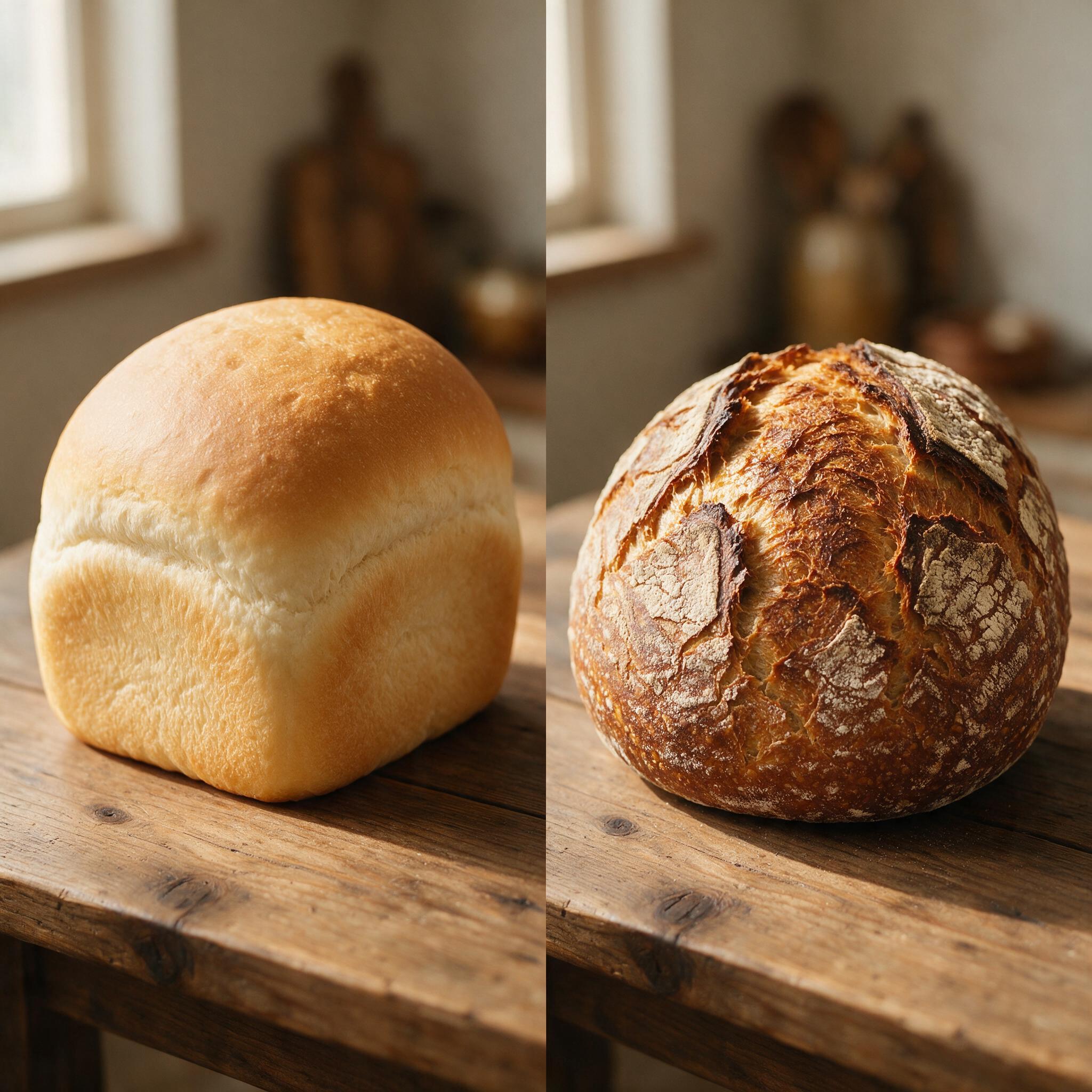
Sourdough is often pitched as the "healthy" bread. Some of that is grounded in how the dough ferments. Some is marketing. And some of what people credit to sourdough really comes from the flour. This comparison sorts out which is which from a baker's point of view.
> Not nutrition or medical advice. This is a bread-baking guide, not written by dietitians. For dietary needs, allergies or conditions such as celiac disease or diabetes, ask a qualified professional.
What "Sourdough" Means (Legally, Not Much)
In the US there is no legal definition of sourdough. A store loaf can carry the name with commercial yeast, flavoring and a short rise. In this post, "sourdough" means bread leavened with a live starter and given a long ferment, with no added commercial yeast. If your loaf doesn't fit that description, the differences below shrink.
What a Long Sourdough Ferment Changes
Flavor and keeping quality
Organic acids from the starter give sourdough its tang and help the loaf stay fresh a little longer. This is the clearest, least disputed difference.
Phytates
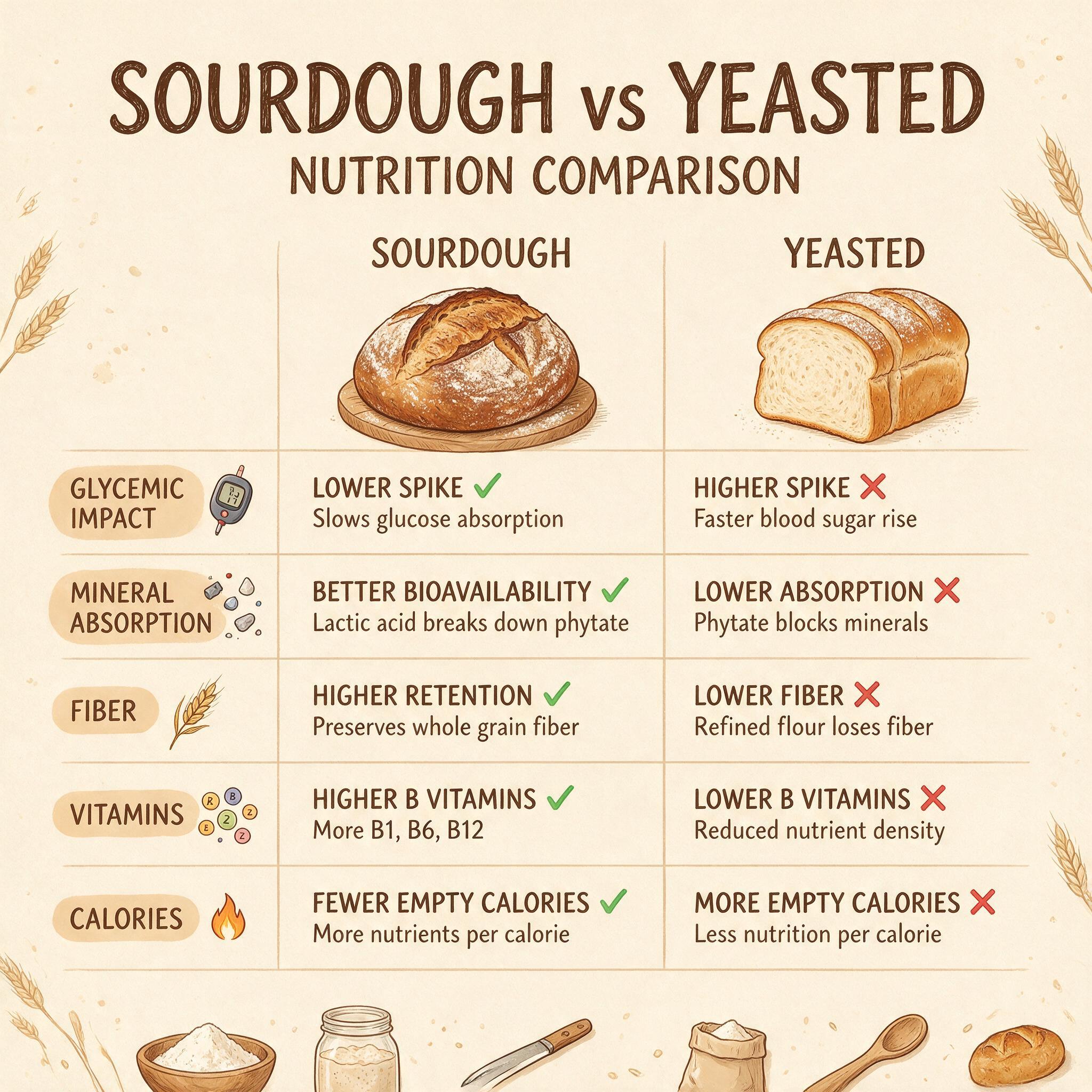
Long fermentation lowers phytic acid in whole-grain dough. Phytic acid binds minerals, so less of it may mean the minerals are easier to absorb. How much that matters depends on how much of your diet comes from bread.
Blood sugar response
Some studies suggest sourdough produces a gentler glucose response than yeasted bread; others find little difference. The evidence is mixed, and individual responses vary.
Gluten
Fermentation partly breaks down gluten, and some people with mild sensitivity say they tolerate sourdough better. The evidence is limited, and sourdough made from wheat is not safe for celiac disease.
What Comes From the Flour, Not the Sourdough
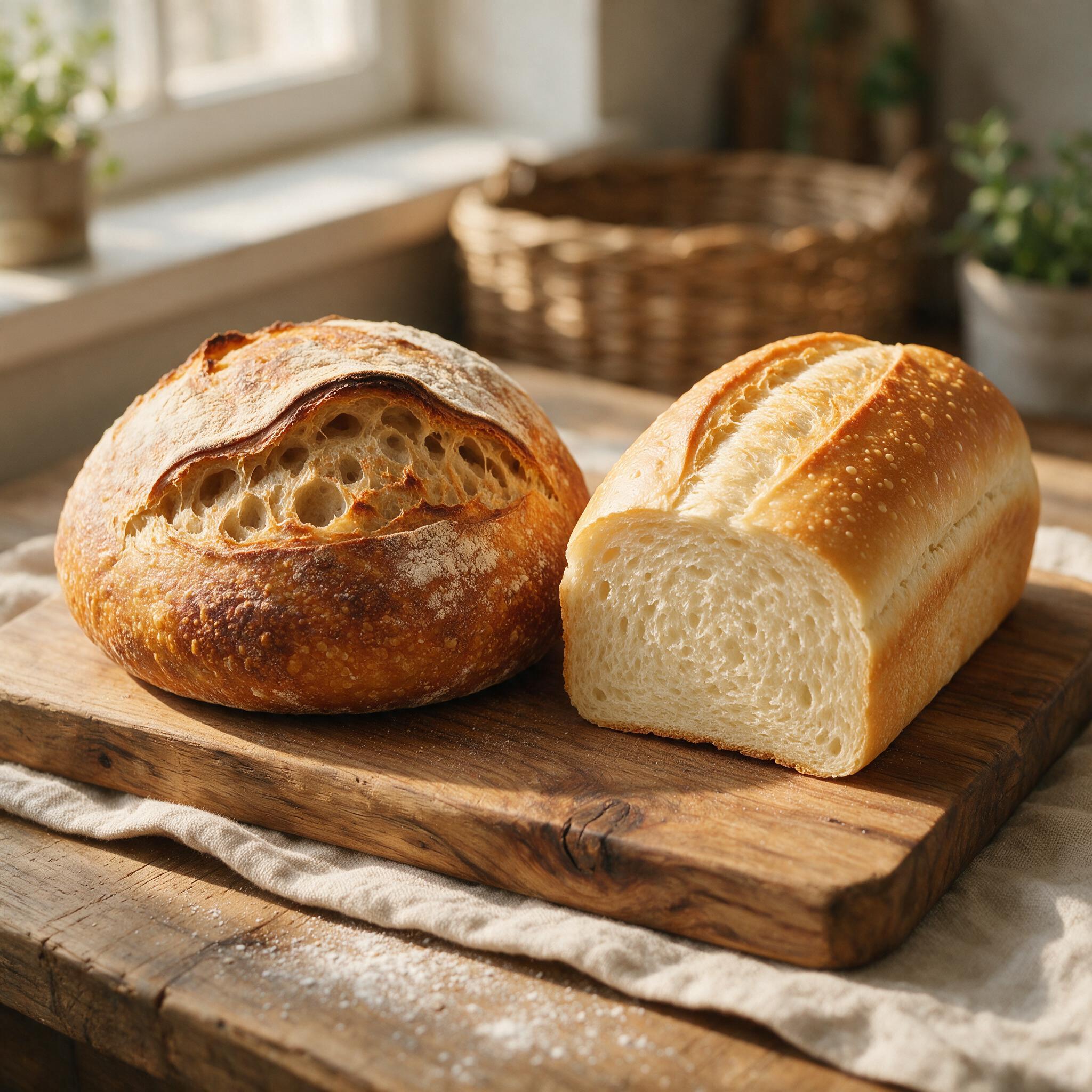
- •Fiber. Fiber depends on the flour. A white-flour sourdough has about as little as white-flour yeasted bread; a whole-wheat loaf has more either way.
- •Vitamins and minerals. Set largely by the flour, and by enrichment in commercial flours.
- •Calories. Roughly the same for the same weight of the same flour. Fermentation doesn't remove them.
When someone calls sourdough "high fiber," they are usually describing whole grain. Sourdough is a process; whole grain is an ingredient. The best of both is a whole-grain sourdough, which our starter guide can get you started on.
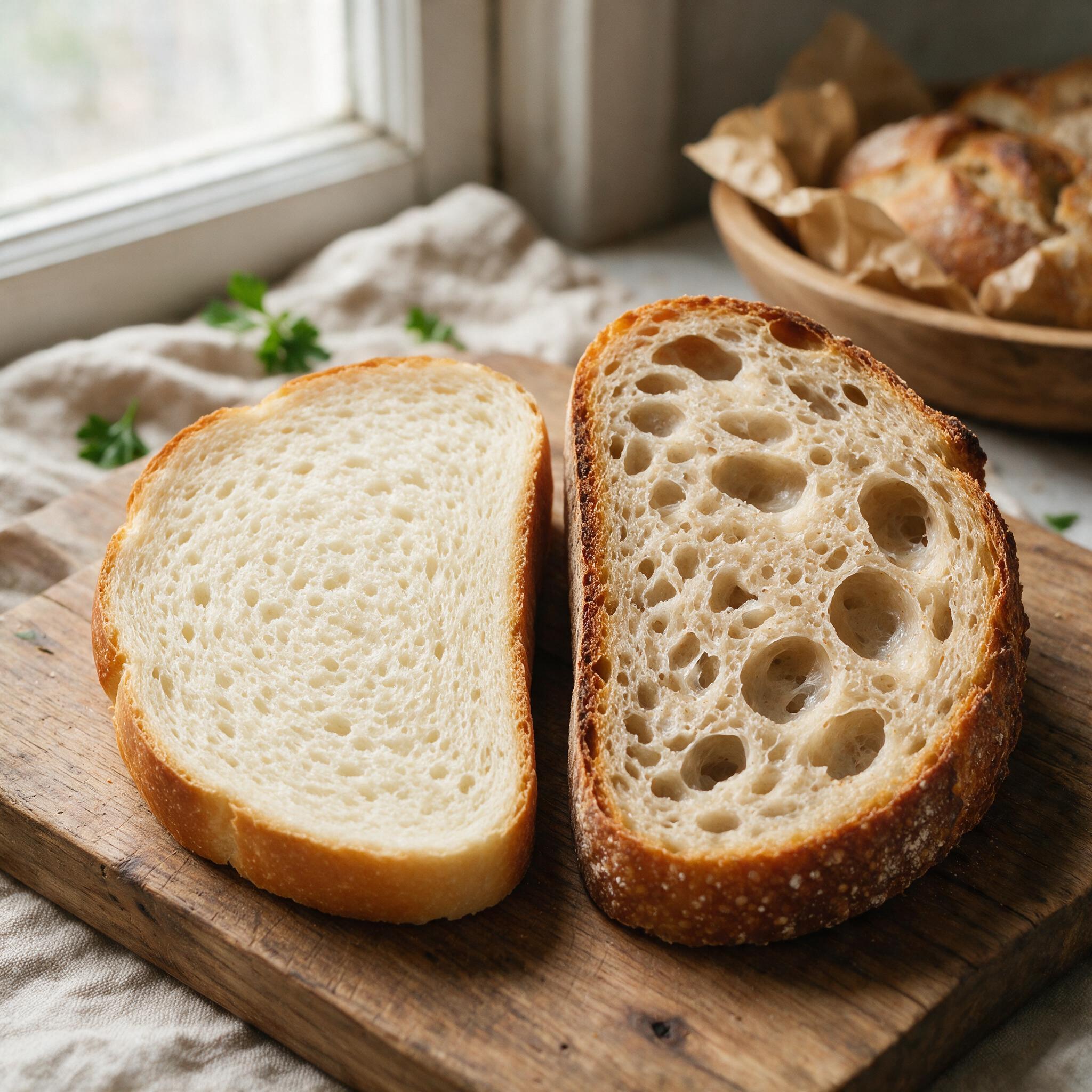
Whole Wheat Yeasted vs White Sourdough
People often ask which is "better." They're different trade-offs: the whole-wheat loaf brings fiber from the flour; the sourdough brings fermentation effects. A whole-wheat sourdough has both, which is why many bakers lean that way, at the cost of a denser crumb and a bit more learning.

When Sourdough Isn't Worth the Effort
Sourdough takes time and attention. For some bakes a yeasted dough is simply the better tool:
- •Soft sandwich loaves and burger buns where you want a plush, uniform crumb.
- •Same-day bakes when you don't have 12 to 24 hours.
- •Enriched doughs like brioche, where butter and sugar dominate the character.
If flavor and texture are your goals, sourdough is worth it. If speed is, it often isn't. For a realistic timeline, see our baking schedules guide.
The Short Version
Sourdough's real, uncontroversial advantages are flavor, keeping quality and, with whole grains, possibly better mineral availability. Health claims beyond that are less settled, and many of them belong to the flour rather than the fermentation. Bake it because you like the bread.