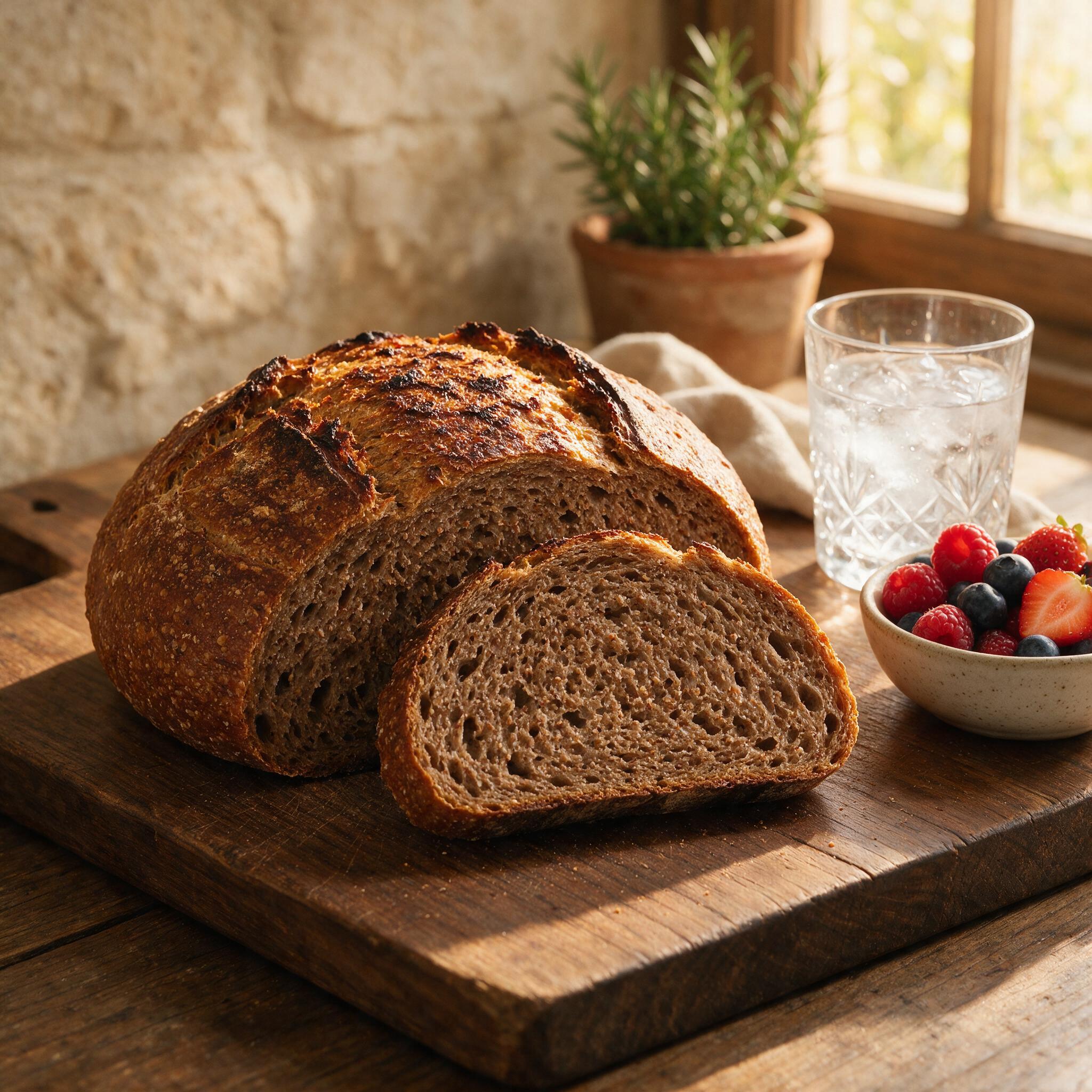
Sourdough bread has a measurably lower glycemic impact than yeasted bread, and the difference is large enough that the American Diabetes Association and most diabetes educators now point to it as a "better" bread choice. But the catch is that not all sourdough is created equal — and some of the "sourdough" loaves sold in stores are no better than yeasted bread.
This guide covers the actual science (what makes sourdough different, and how big the difference really is), the breads that are best for blood sugar control, and the sourdough loaves to skip. The short version: a long-fermented, whole-grain sourdough is genuinely better for blood sugar than a yeasted white bread. A short-fermented, white-flour "sourdough" is barely different.
The honest part: portion control still matters more than bread type. A small piece of whole-grain sourdough is fine for most people with type 2 diabetes. A large piece of "sourdough" made with white flour is not.
The Science: Why Sourdough Has a Lower Glycemic Impact
Three things happen during sourdough fermentation that change how the bread affects blood sugar. None of them happen in yeasted bread.
1. Lactic Acid Slows Starch Digestion
Lactic acid (produced by lactobacillus during fermentation) slows the rate at which your digestive system breaks down starch into glucose. This means the glucose enters your bloodstream more slowly after eating sourdough, and your blood sugar rises less and more gradually.
A 2022 study in the American Journal of Clinical Nutrition found that true sourdough bread produced a 25% lower blood sugar spike than yeasted white bread made with the same flour. The mechanism is the lactic acid — it partially hydrolyzes the starch during fermentation, leaving a more resistant structure that takes longer to break down in your gut.
The longer the ferment, the more lactic acid, the slower the digestion. A 24-hour cold retard produces noticeably more lactic acid than a 4-hour room-temp bulk. A 48-hour cold retard produces even more.
2. Phytate Reduction Improves Mineral Absorption
Phytates (phytic acid) are compounds in whole grains that bind to minerals like zinc, iron, and magnesium, making them harder to absorb. Sourdough fermentation breaks down about 60-70% of the phytates in the dough.
For people with diabetes, this matters because mineral deficiencies (especially magnesium) are common and make blood sugar harder to control. The phytate reduction isn't a blood sugar fix on its own, but it does make sourdough a more nutritionally complete food than yeasted bread.
3. Resistant Starch Forms During Fermentation
Resistant starch is starch that resists digestion in your small intestine and instead feeds the bacteria in your large intestine. It functions like fiber, slowing glucose absorption and feeding your gut microbiome. Sourdough fermentation increases the resistant starch content of bread by 30-50% compared to yeasted bread, especially with longer cold ferments.
The resistant starch content also increases after baking as the bread cools and ages. A sourdough loaf that's been cooled completely and then sliced has more resistant starch than a warm slice. This is another reason to wait before cutting your loaf.
The "But": What Makes Sourdough WORSE for Blood Sugar
The benefits above come from traditional, long-fermented sourdough — the kind you make at home with a slow ferment and a long cold retard. The "sourdough" you buy in stores is often very different.
Store-bought "sourdough" to be cautious of:
- •Sourdough with commercial yeast added. Many commercial "sourdough" breads use a tiny amount of starter for flavor but rely on commercial yeast for the rise. The ferment is short, the lactic acid is low, and the glycemic difference from yeasted bread is minimal. Look at the ingredient list — if "yeast" or "yeast extract" is listed, it's mostly yeasted.
- •"Sourdough flavor" added artificially. Some commercial breads use a sourdough flavor paste or extract to get the tangy taste without the actual fermentation. These have no blood sugar benefit.
- •Sourdough made with white flour. A 100% white-flour sourdough has lower phytates than 100% whole wheat, but the fiber content is still low and the glycemic impact is still higher than a whole-grain version. White-flour sourdough is better than white yeasted bread, but whole-grain sourdough is better than white-flour sourdough.
- •Sourdough made with added sugar. Some "sourdough" recipes include honey, sugar, or malt to speed up the rise. Check the ingredient list. Real sourdough has only flour, water, salt, and starter.
The bottom line on store-bought: If the ingredient list is short (flour, water, salt, starter) and the bread is dense/heavy, it's probably real sourdough. If the bread is light and fluffy with a long ingredient list including "yeast" or "sourdough flavor," it's mostly yeasted bread with a tangy taste.
The Best Sourdough for Blood Sugar
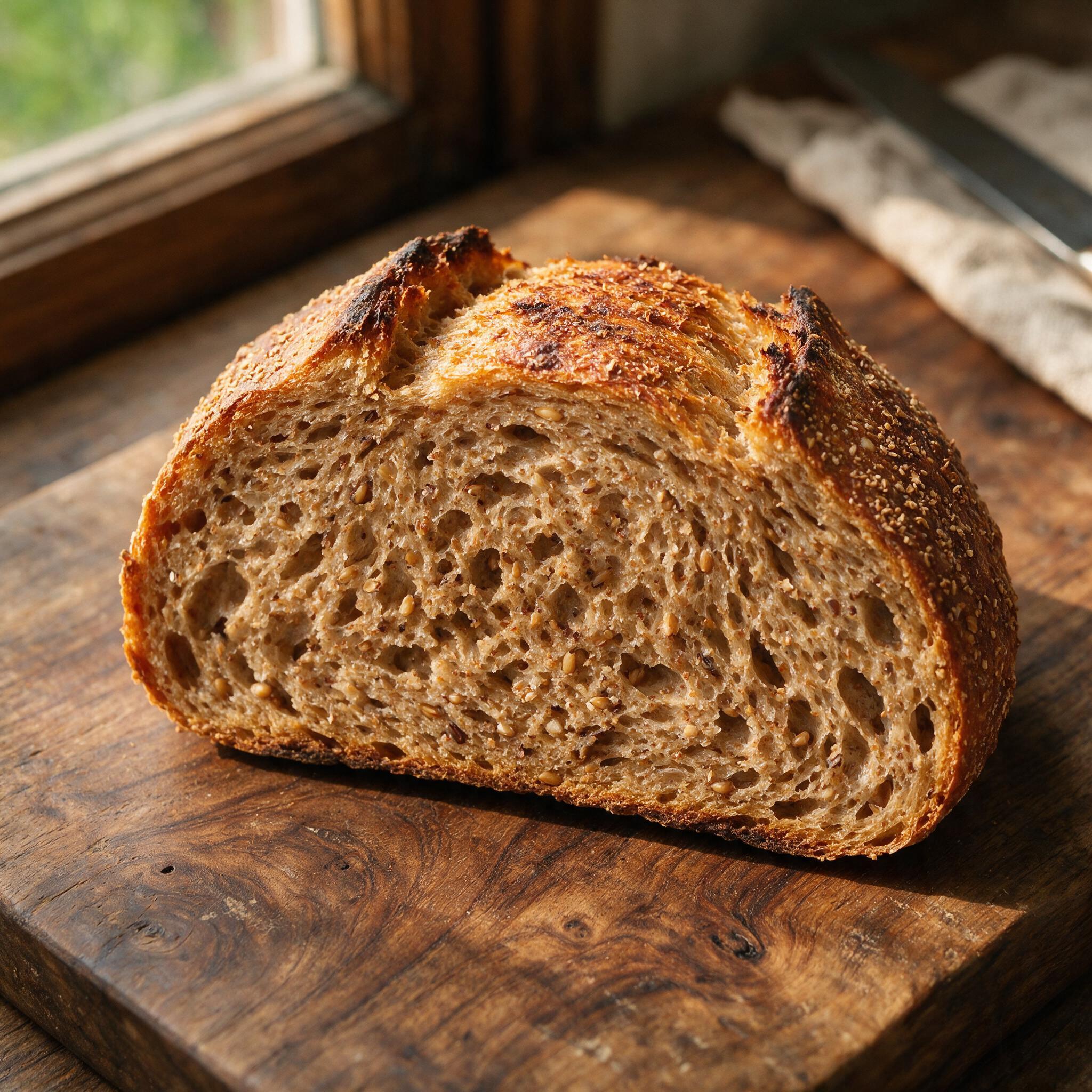
If you have diabetes or are watching your blood sugar, here are the loaves that are genuinely better choices.
100% Whole Wheat Sourdough
The single best option. Whole wheat flour has more fiber than white, the bran slows digestion, and the long sourdough ferment further reduces the glycemic impact. A 100% whole wheat sourdough produces a blood sugar rise about 50% lower than a yeasted white bread.
The challenge: 100% whole wheat sourdough is dense. It's not the lightest sandwich bread. If you want a sandwich loaf with whole grain, try a 50/50 blend of whole wheat and white flour, or use a 100% whole wheat sourdough for toast and denser applications.
A specific recipe that works well for diabetes: 100% whole wheat, 80% hydration, 20% starter, 2% salt, 6-hour bulk at 78°F, 14-hour cold retard. The crumb is moderately open and the flavor is rich.
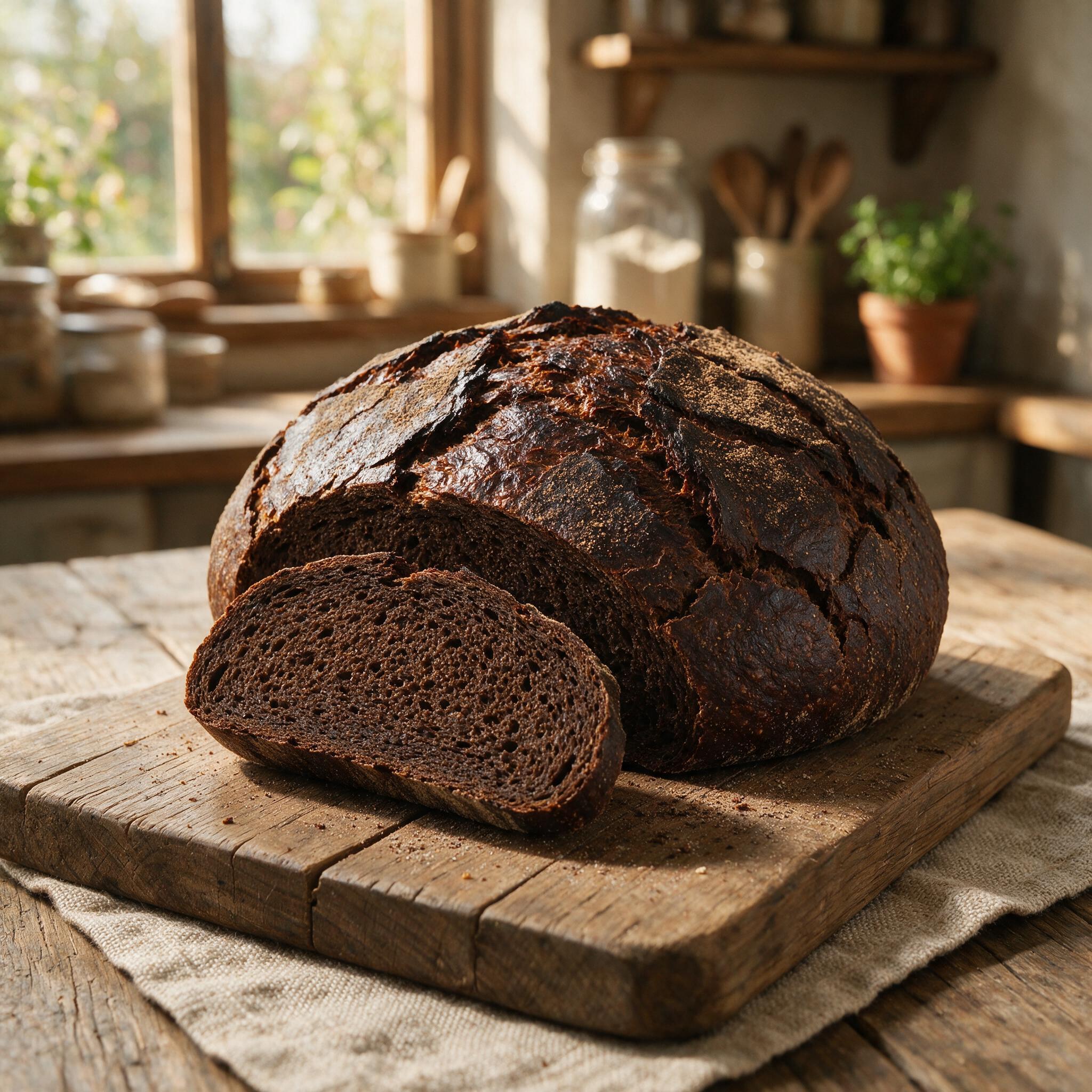
100% Rye Sourdough
Rye has the lowest glycemic index of any common bread flour. A 100% rye sourdough produces a blood sugar rise about 60% lower than a yeasted white bread. Rye also has more fiber and minerals than wheat.
The challenge: rye doesn't develop gluten the way wheat does, so the bread is dense and sticky. It's an acquired taste. A 50/50 rye and whole wheat blend is a more approachable entry point.
Rye is also higher in FODMAPs (fermentable oligosaccharides), so people with IBS or sensitive digestion may need to limit it.
Spelt and Ancient Grain Sourdough
Spelt, einkorn, emmer, and kamut are all "ancient" wheats with a different gluten structure than modern wheat. They tend to have a lower glycemic impact than modern wheat (though the difference is modest) and a more complex flavor. Spelt in particular is a good "transition" from white wheat to whole grain — it's lighter than whole wheat but more nutritious.
A spelt sourdough is a good choice for someone who wants whole-grain benefits but doesn't love the heavy texture of 100% whole wheat.
Sourdough Discard Recipes (Lower Glycemic Than Yeasted Discard)
Discard recipes like pancakes, waffles, and crackers have a much shorter fermentation than true sourdough (the discard has been fermented, but the final product isn't). They're slightly better than yeasted versions of the same recipe, but the difference is small.
If you love discard recipes, use 100% whole wheat flour in them. That makes a much bigger difference than the discard itself.
The Sourdough to Skip
These loaves are the worst choices for blood sugar, even if they're "sourdough":
- •White-flour sourdough with sugar or honey. Adds carbs without fiber.
- •Sourdough discard recipes that are mostly sugar. Cookies, sweet breads, etc.
- •Sourdough made with enriched white flour (cake flour, pastry flour). Lowest fiber, highest glycemic impact.
- •Any "sourdough" made with added isolated wheat gluten. Higher protein but also higher glycemic impact.
- •Croissants, brioche, and enriched sourdough. High in fat and sugar regardless of fermentation.
A specific thing to watch for: breads marketed as "low-carb sourdough" that use sugar alcohols or alternative flours. The blood sugar impact varies widely — some are genuinely lower, others use marketing-speak to dress up standard bread. Read the label.
The Honest Take: Portion Control Still Matters
The single biggest determinant of blood sugar response to bread is portion size, not bread type. A 30g slice of any bread is going to produce a smaller blood sugar rise than a 100g slice, regardless of whether it's sourdough or yeasted.
For most people with type 2 diabetes, the practical advice is:
- Choose whole-grain sourdough when you can. It's genuinely better for blood sugar.
- Limit portions. 1-2 slices per meal, not 4.
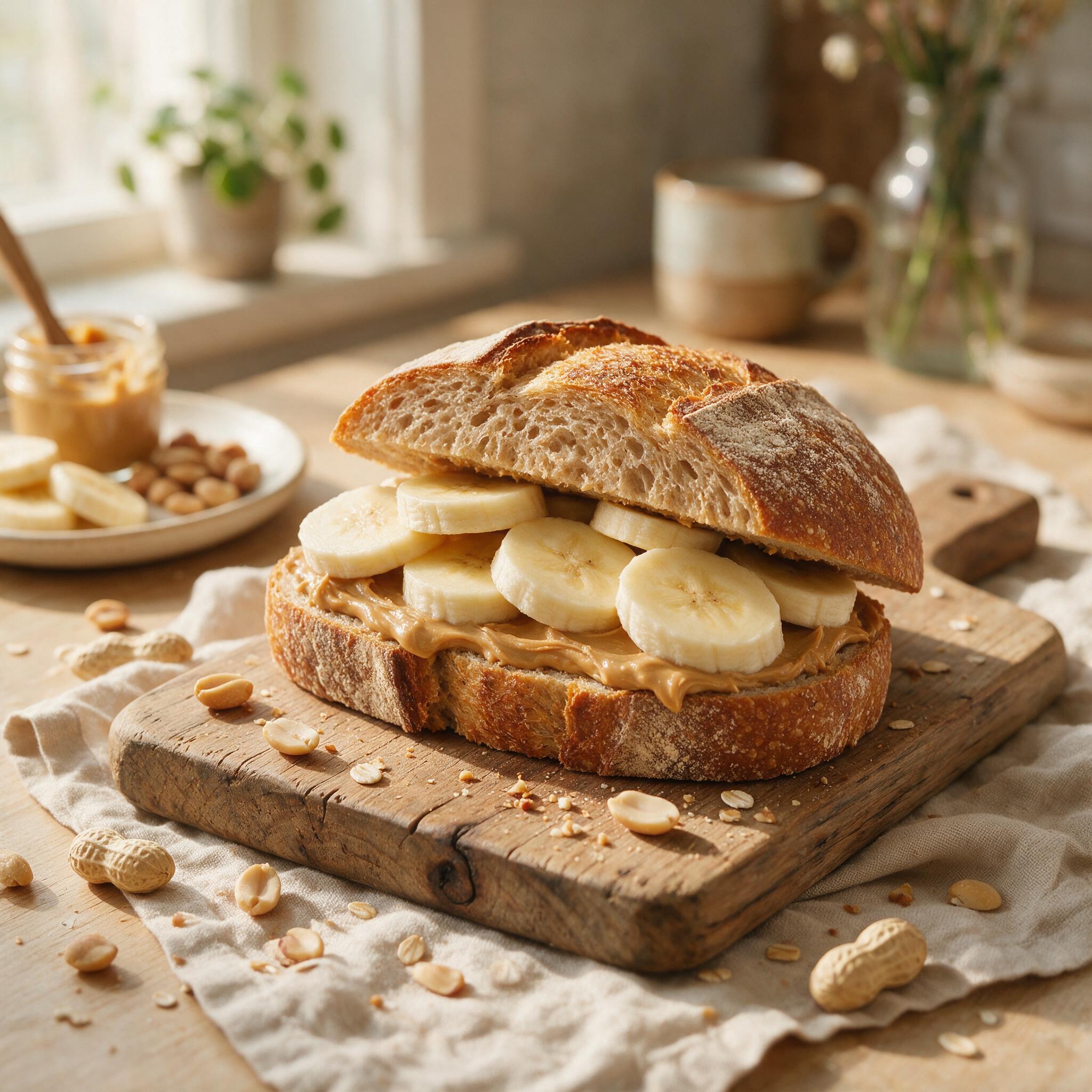
- Pair with protein and fat. Sourdough + cheese or sourdough + nut butter produces a much smaller blood sugar spike than sourdough alone.
- Avoid the "sourdough is healthy, so I can eat unlimited" trap. It's healthier than yeasted white bread, but it's still bread.
Sourdough is a genuinely better choice for blood sugar, but the difference is incremental, not transformative. If you have type 2 diabetes and you're eating large portions of "healthy" sourdough, you're going to have a hard time controlling your blood sugar regardless of the bread type.
The Master Question: Is This Real Sourdough?
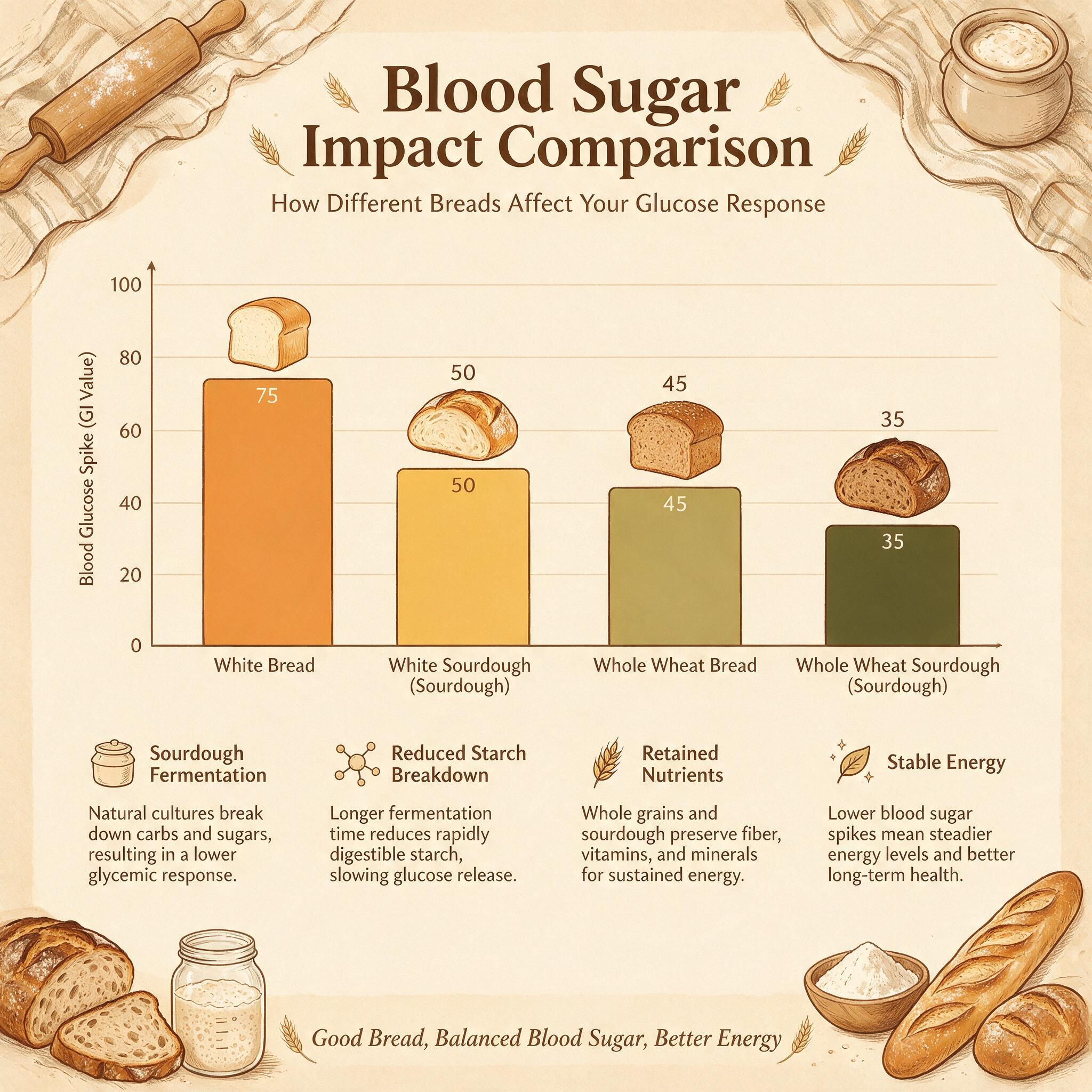
Whether sourdough is good for blood sugar depends entirely on whether the bread is real sourdough. Real sourdough is flour, water, salt, and a live starter, fermented long enough for the lactic acid to develop. Anything else is just bread with a tangy taste.
If you bake at home, you know what you're making. If you buy from a store, look at the ingredient list and the bread itself. Real sourdough is dense, has an irregular crumb, and tastes complex. Industrial "sourdough" is light, uniform, and tastes like flavored bread. The real thing is genuinely better for you. The fake thing is mostly marketing.
Related Posts
Keep going with these related guides.