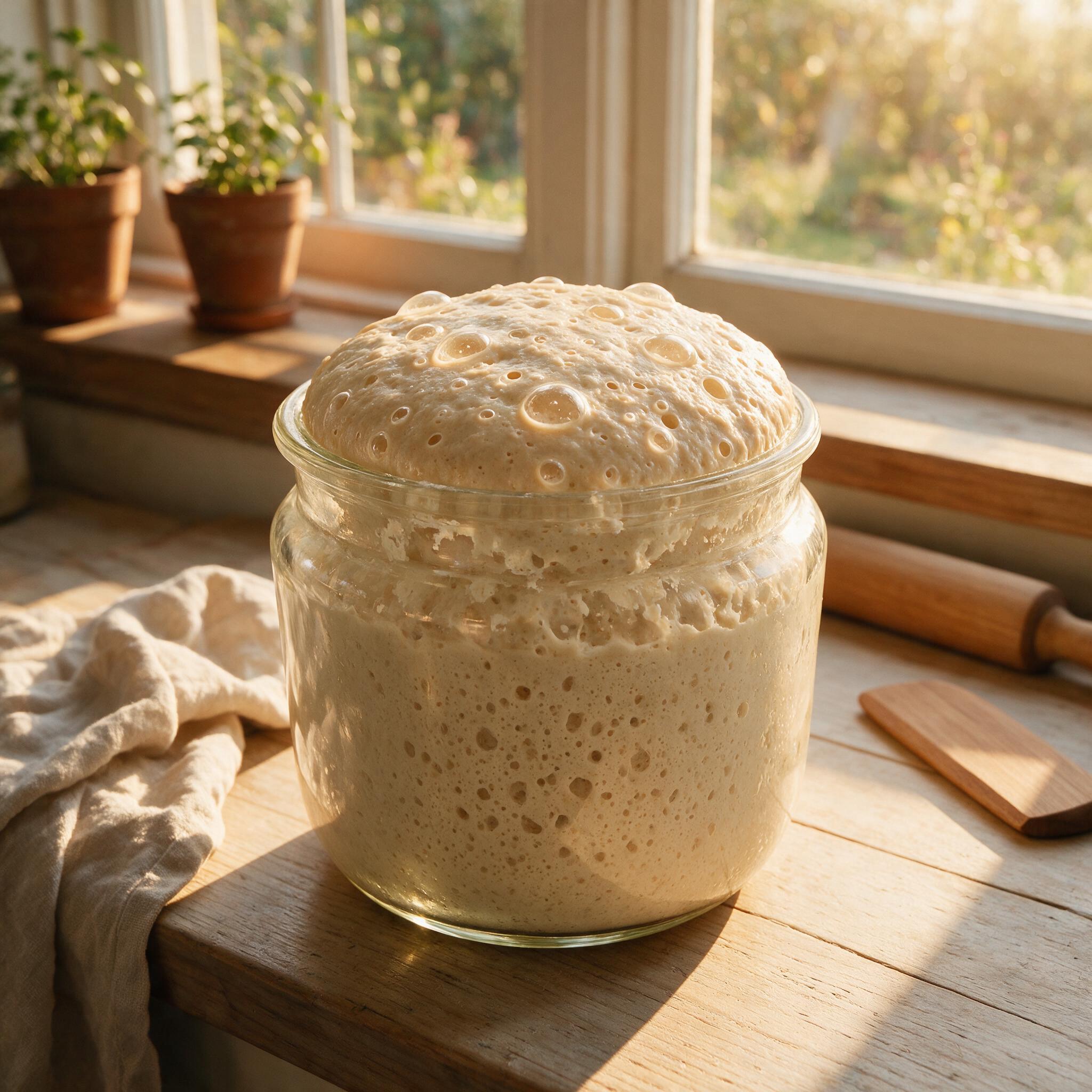
A sourdough starter that isn't behaving — no bubbles, weird smell, won't rise — is one of the most stressful things for a new baker. The starter is alive, it's a culture, and when it goes quiet, you worry you've killed it. The good news: most of the time, the starter is fine, just dormant. A few adjustments and it's back.
This guide covers what a healthy starter looks and smells like, the 5 most common reasons a starter won't bubble, and what each smell means. Most starter problems are diagnosed by smell and surface texture — both of which are easy to read once you know what to look for.
If your starter is less than a week old, also read the new starter section at the bottom — young starters have a different set of issues than established ones.
What a Healthy Starter Looks Like
A healthy sourdough starter has a specific look and smell. If yours matches, you don't have a problem.
Visual signs of a healthy starter:
- •Surface texture: Domes and falls. Right after feeding, the surface is flat. As fermentation progresses (4-8 hours at room temp), the surface domes upward as gas builds. At peak, it domes significantly and may have surface bubbles. After peak, it falls back down.
- •Bubbles throughout: Not just on the surface — visible bubbles distributed through the starter, especially at the edges where the starter meets the jar.
- •Texture: Thick and stretchy, like thick pancake batter or yogurt. Not thin and watery (underfed or wrong flour) and not stiff and clumpy (overfed or too much flour).
- •Volume: Approximately doubles at peak. Some starters triple; that's also fine. A starter that barely moves is a problem.
Smell signs of a healthy starter:
- •Mildly tangy, like plain yogurt. This is the baseline. If yours smells like this, the starter is healthy.
- •Slight vinegar note. A small amount of acetic acid smell is normal. It should be in the background, not dominant.
- •Slight fruity or floral notes. A well-established starter can have a faintly sweet or fruity smell, like ripe apple or stone fruit. This is from the wild yeasts producing esters.
If your starter smells like any of the above, you don't have a problem. The smells in the next section are the ones that indicate something is off.
What Each Smell Means
Smell is the fastest way to diagnose a starter. Here's a smell-by-smell guide.
Smells Like Acetone or Nail Polish Remover
This is the most common "weird smell" complaint, and it's almost never a problem.
Acetone (or nail polish remover) smell means your starter is hungry. The bacteria have run out of food and started producing acetone as a byproduct. This is the same reason a person gets "keto breath" when they haven't eaten — when the easy sugars are gone, the metabolism shifts.
The fix: feed the starter. Within 1-2 feedings, the acetone smell will be replaced by the normal tangy smell. If you've been storing the starter in the fridge and just pulled it out, the acetone smell is from the cold storage — feed it, let it come to room temp, and it'll cycle back to normal in 8-12 hours.
Don't throw the starter out. Acetone is a sign of an active culture that's just out of food. It's recoverable.
Smells Like Vinegar (Strong)
A strong vinegar smell means your starter is over-fermented and acidic. The lactobacillus have run wild, converting sugars into acetic acid (the same acid in vinegar).
The fix: discard most of the starter (down to a tablespoon or two), then feed it fresh flour and water. The new feeding dilutes the acid. Repeat 2-3 times over 12-24 hours and the vinegar smell should fade.
If your starter always smells like vinegar, your feeding schedule is too long between feedings. A starter at room temp needs feeding every 8-12 hours. A starter in the fridge needs feeding every 1-2 weeks.
Smells Like Beer or Alcohol
A faint alcohol smell is normal. A strong alcohol smell means your starter has been fermenting for too long without feeding. The yeast is producing ethanol.
The fix: Same as the vinegar smell — discard and feed. Repeat 2-3 times.
Smells Bad / Like Rot
This is the only smell that means trouble. A putrid, rotting, or chemical smell (different from acetone — think sewage, not nail polish) can mean:
- •Contamination from another culture (mold, bacteria). Look for colored mold (pink, black, green) on the surface or floating in the starter.
- •Wrong flour — flour with too much oil or bran can go rancid, especially in warm conditions.
The fix: If you see mold, throw the starter out and start a new one. If the smell is just off (not visible contamination), try a few feedings with a different flour. Sometimes switching from whole wheat to all-purpose fixes the issue.
Smells Like Cheese (Faint)
A slightly cheesy smell is normal for a starter, especially a mature one. It comes from the lactic acid bacteria. If it's very strong, your starter is over-fermented and needs feeding. If it's mild, it's fine.
Smells Like Nothing
A starter that smells like nothing (just flour and water) is usually a starter that hasn't fermented enough yet. It may also be a very young starter that hasn't developed its acid-producing bacteria yet. Either way: wait. The smell will develop as the starter matures.
The 5 Reasons a Starter Won't Bubble
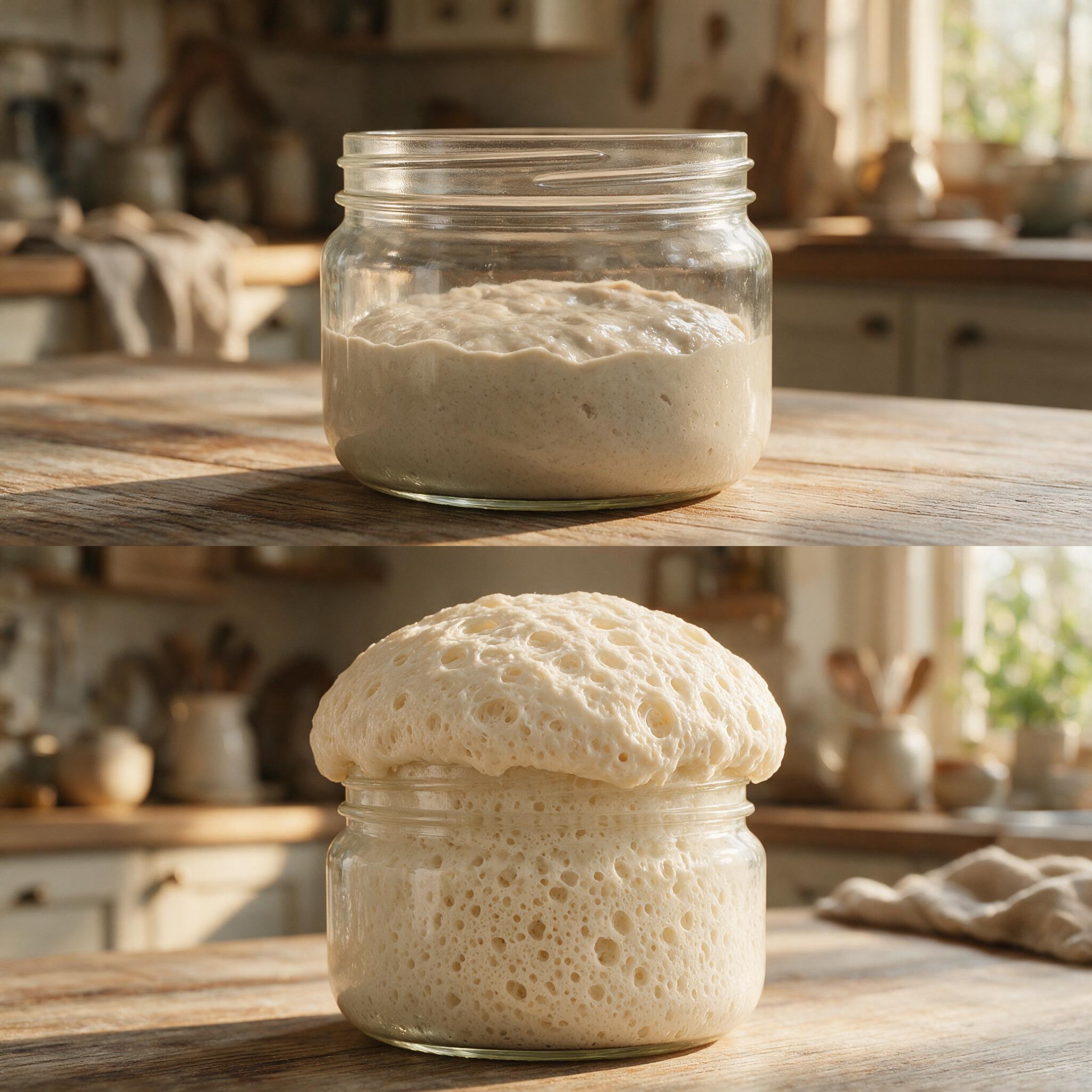
A starter that won't rise is the most common and most fixable problem. Here are the causes in order of likelihood.
1. Cold Kitchen
This is the most common reason, especially in winter. A starter at 60°F ferments very slowly — it may take 24+ hours to see any rise. A starter at 75°F ferments in 4-8 hours.
Diagnostic: If your house is below 70°F, the starter is probably just slow, not dead. Test by putting it somewhere warm — inside the oven with the light on (not the oven itself, just the cavity with the light), on top of the fridge, near a heating vent, in a proofing box, or wrapped in a towel with a hot water bottle.
Fix: Find a warmer spot. Aim for 75-78°F. The starter should start rising within 2-4 hours.
2. Weak or Immature Starter
A starter less than 2-3 weeks old often doesn't have the microbial balance to fully leaven bread. The lactobacillus are established early, but the wild yeast community takes time to mature.
Diagnostic: Note when you started your starter. If it's been less than 3 weeks, your starter is probably just immature, not dead. Look for some bubbling and a tangy smell — that's the lactobacillus doing their job. The yeast will follow.
Fix: Keep feeding on schedule (every 12 hours at room temp, or every 1-2 weeks in the fridge). Don't give up. A 4-week-old starter is dramatically more active than a 1-week-old starter.
3. Old Flour
If your flour has been in the pantry for 6+ months, it's oxidized and the gluten has weakened. Sourdough can ferment on old flour, but the starter won't rise as much.
Diagnostic: Check the best-by date on your flour. If it's been more than 6 months, that's probably the issue.
Fix: Use fresh flour. Whole wheat and rye are particularly important to use fresh for the starter — they have more oils that can go rancid.
4. Chlorinated Water
Some municipal water has enough chlorine to inhibit or kill yeast. If your starter works fine when you use filtered or bottled water but not when you use tap water, that's the cause.
Diagnostic: Try feeding with filtered water (or let tap water sit out for 24 hours — chlorine evaporates) and see if the starter recovers.
Fix: Switch to filtered or unchlorinated water permanently.
5. You Killed It (Rarely)
It's actually hard to kill a sourdough starter. The high acidity of an active starter (pH 3.5-4.5) makes it inhospitable to most contaminants. The only ways to actually kill a starter are:
- •Starvation for months with no feeding, even in the fridge.
- •Extreme heat — above 130°F will kill the yeast.
- •Visible mold growth — pink, black, or green mold means the starter is contaminated and should be discarded.
If your starter doesn't fit any of these, it's almost certainly not dead, just dormant. Feed it, give it time, and it'll come back.
How to Revive a Dormant Starter
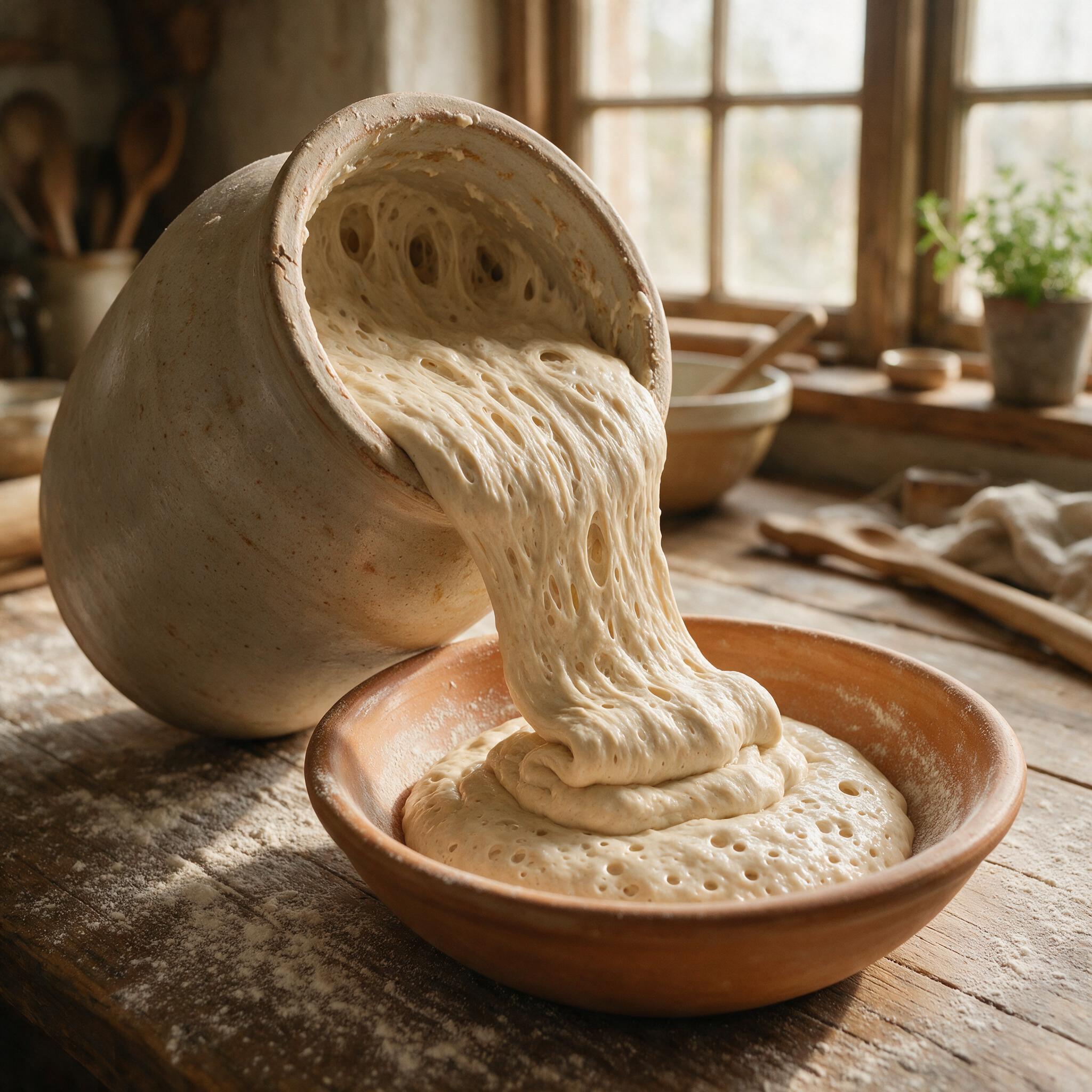
If your starter is sluggish or has been sitting for a while, here's a 3-day revival protocol.
Day 1: Discard all but 2 tablespoons. Feed with 50g flour (mix of white and whole wheat works well) and 50g water. Let sit at room temp for 24 hours.
Day 2: Look for some bubbling or a slightly tangy smell. If you see it, discard all but 2 tablespoons again and feed with 50g flour + 50g water. If you see no activity, try again in 12 hours.
Day 3: You should be seeing reliable doubling. If so, the starter is revived — feed it on your normal schedule. If you're still not seeing reliable doubling, repeat the day 2 feeding one more time.
For really stubborn starters, you can use unbleached white flour with a touch of whole wheat or rye (a 4:1 white:whole wheat ratio), feed at a 1:5:5 ratio (1 part starter, 5 parts flour, 5 parts water) for a thinner starter that ferments faster, and find a warm spot.
New Starter Issues
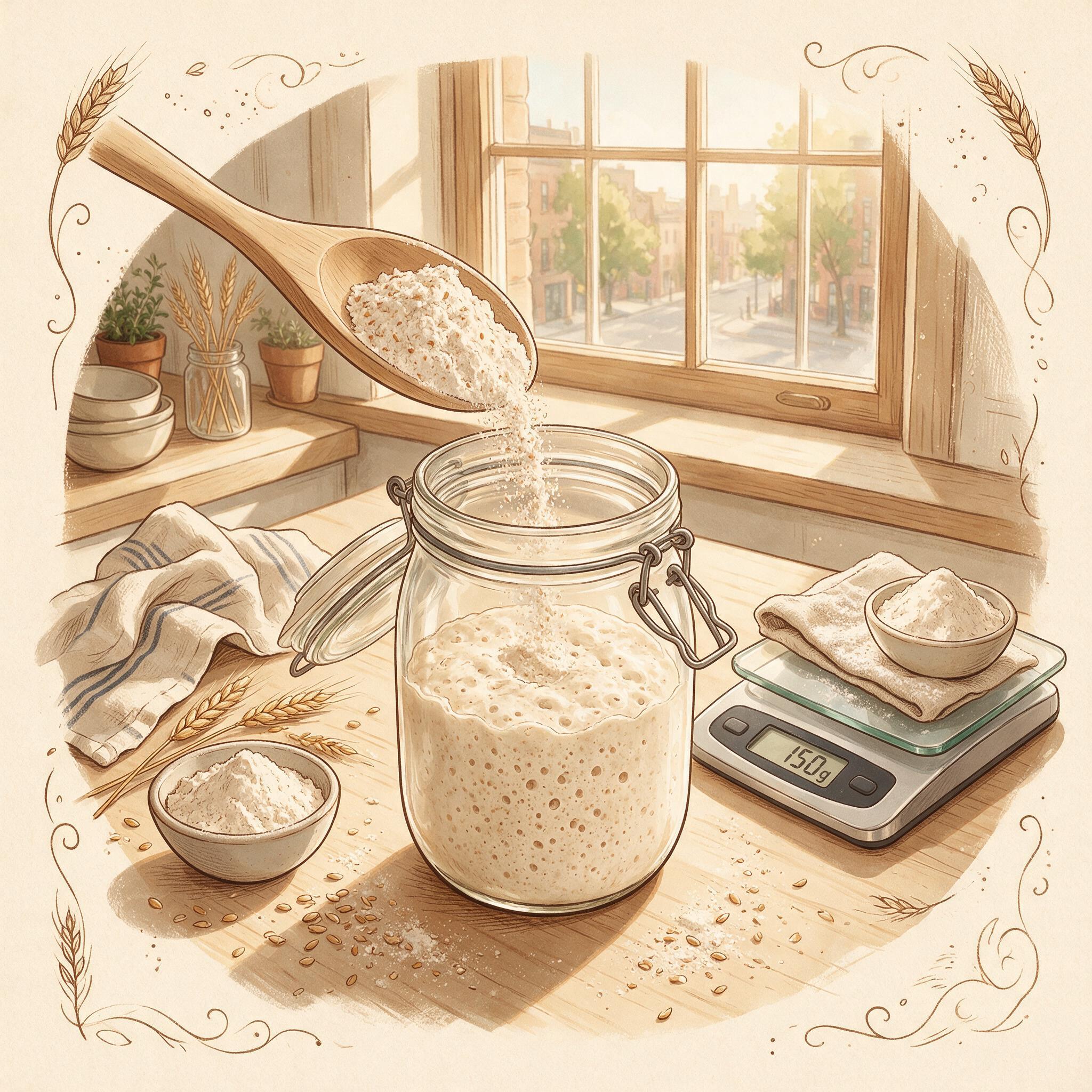
If your starter is less than 2 weeks old, it has a different set of issues:
- •Day 1-3: Just flour and water mixed. Some bubbles, possibly some smell. No rise yet. This is normal. The lactobacillus are establishing.
- •Day 4-7: Some bubbling and rising. Often a strong vinegar or "off" smell. This is also normal. The wild yeast is establishing but not yet dominant. Don't give up.
- •Day 8-14: More reliable doubling. Smell is starting to mellow. The starter is approaching maturity.
- •Day 15-21: Reliable doubling in 4-8 hours. Mature starter. Ready for baking.
If your starter is on day 4 and you think "this isn't working," check the calendar. The first week is the hardest. By day 14, most starters are reliable. By day 21, they're robust.
The most common new-starter mistake: giving up too early. The second most common: feeding too much (which dilutes the microbes). If you're feeding 1:10:10 (1 part starter, 10 parts flour, 10 parts water), you're diluting too much. Stick with 1:1:1 to 1:2:2 for the first 2 weeks.
The Master Diagnostic

If your starter is misbehaving, ask these four questions in order:
- How old is the starter? Less than 3 weeks = probably immature. Just keep feeding.
- What's the temperature? Less than 70°F = probably too cold. Find a warmer spot.
- When did you last feed? More than 24 hours at room temp, or more than 2 weeks in the fridge = probably hungry. Feed it.
- What does it smell like? Acetone = hungry. Vinegar = over-fermented. Rotting = contaminated. Most other smells = normal.
If you answered 1-3 and the starter is still sluggish, it's almost certainly one of those. If it smells like rotting or you see mold, the starter is contaminated and needs to be replaced.
Most starter problems are solved by: feeding, warming up, waiting, and not giving up. A sourdough starter is one of the most resilient cultures in the kitchen.
Related Posts
Keep going with these related guides.