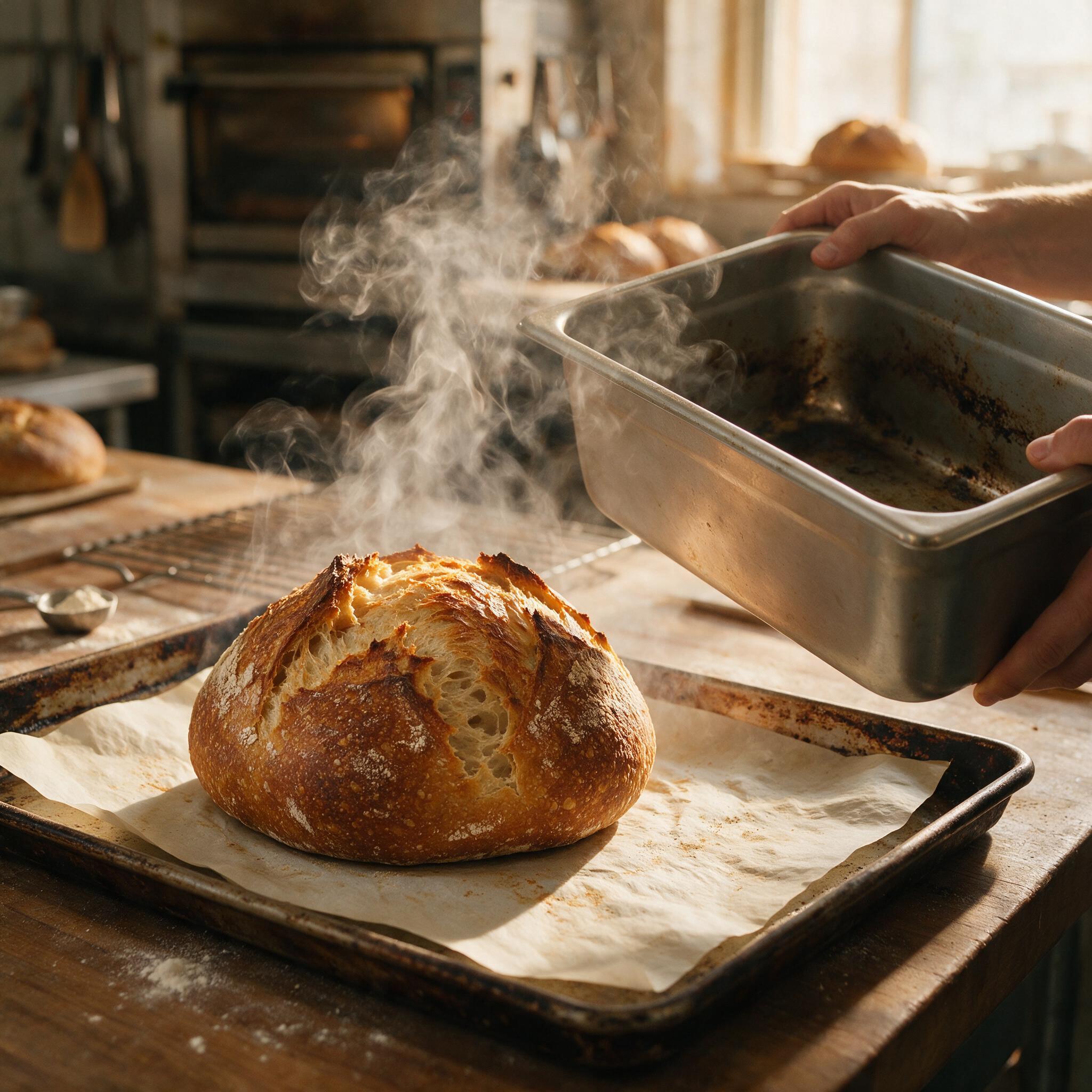
The Dutch oven is the gold standard for home sourdough baking because it traps the bread's own steam, creating a moist environment that lets the crust stay extensible long enough for dramatic oven spring. The result: that beautiful crackly crust and the "ear" bloom on a well-scored loaf.
But not everyone has a Dutch oven. Some people don't want to preheat a 7-pound cast iron pot for an hour. Some have a small oven that can't fit one. Some just want to bake two loaves at a time and a Dutch oven only fits one. The good news: the Dutch oven is one of several ways to trap steam, and the alternatives work well.
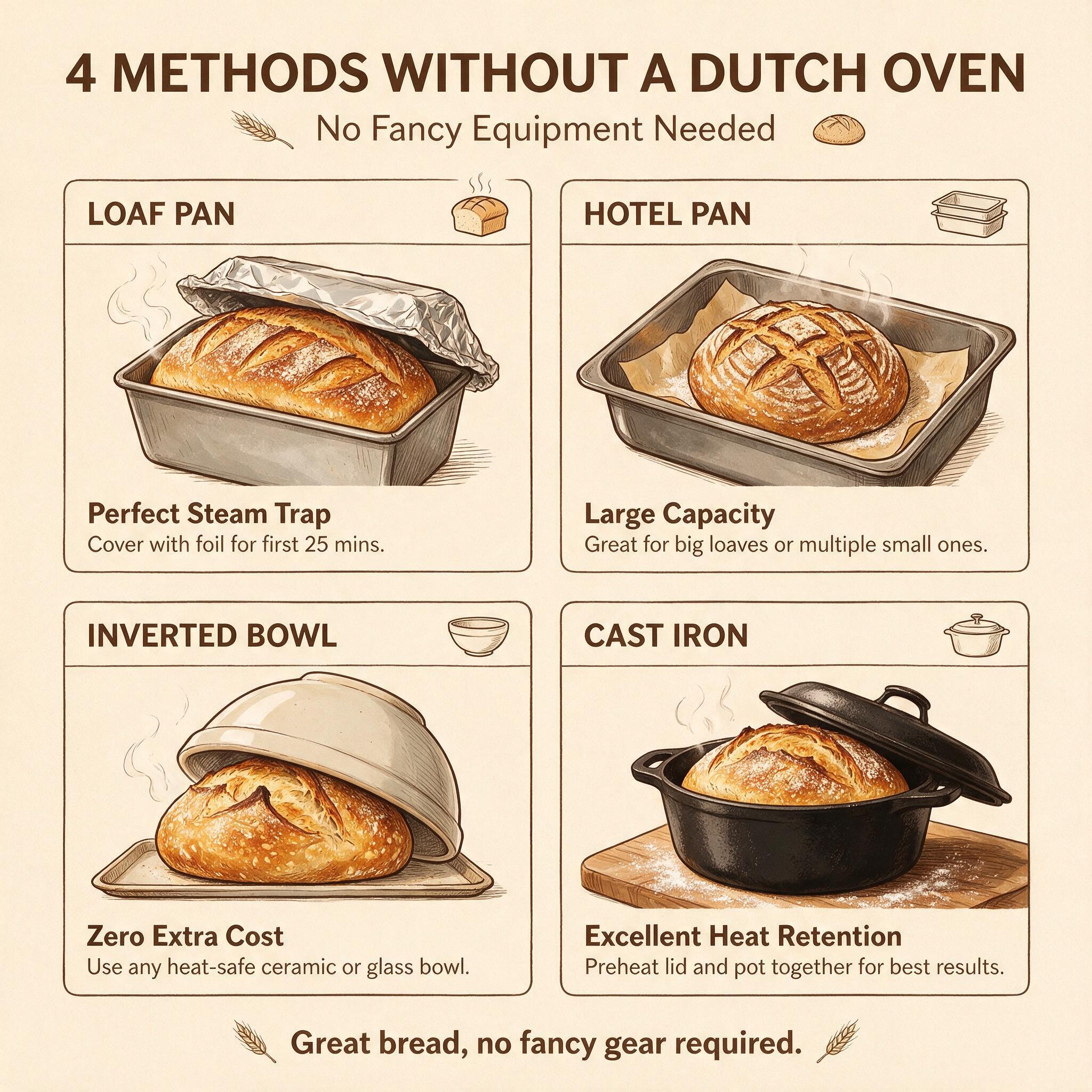
This guide covers four Dutch-oven-free methods, ranked by effectiveness, with the specific equipment and technique for each. I baked the same recipe four different ways so you can see the actual results. The bottom line: the loaf pan method is the easiest, the hotel pan + sheet pan method is the most versatile, and the inverted metal bowl method is the closest to a Dutch oven.
The recipe I used for testing was a 75% hydration white-flour sourdough at 20% inoculation. Bake temp 475°F, 20 minutes covered, 20-25 minutes uncovered.
Method 1: Loaf Pan (Easiest, Sandwich-Style)
The simplest way to bake sourdough without a Dutch oven. You bake the bread in a metal loaf pan, which provides structure, sides for the dough to climb, and a contained environment that produces a soft, even crumb. The downside: you don't get the dramatic artisan look (no ear bloom, no open crumb). The upside: it's the most foolproof method, the bread is perfect for sandwiches, and you can do 2-4 loaves at once.
Equipment: 1-pound metal loaf pan (8.5" x 4.5" x 2.75" is standard). Lightly grease or line with parchment.
Technique:
- Shape your dough as a tight log and place seam-up in the greased pan.
- Cover with a damp towel and let proof 30-60 minutes at room temp (or 8-12 hours in the fridge for more flavor).
- Preheat oven to 425°F.
- Score the top with a single deep slash down the length.
- Bake covered with foil for 25 minutes, then uncovered for 15-20 minutes until the internal temp is 205°F+.
The result: A soft, even-crumb sandwich loaf. Not artisan-looking, but a perfect everyday bread. The crumb is more uniform than a Dutch oven loaf and the slices are great for sandwiches.
Best for: Everyday sandwich bread, beginners, people who want foolproof results.
Method 2: Hotel Pan + Sheet Pan Steam (Most Versatile)
A hotel pan (also called a steam table pan) is a deep, rectangular metal pan used in restaurants. It's the right size to invert over a round loaf on a sheet pan, creating a steam-trapping dome. This method is what many professional bakers use for testing recipes because it gives nearly identical results to a Dutch oven but fits multiple loaves.
Equipment: Full-size hotel pan (12" x 20" x 4" deep is standard, but any 4"+ deep rectangular pan works). A sheet pan or pizza stone for the bottom. Optional: a second sheet pan for steam.
Technique:
- Place the dough (round or oval) on a parchment-lined sheet pan or pizza stone.
- Preheat oven to 500°F with the hotel pan on the middle rack and a separate empty sheet pan on the bottom rack.
- When ready to bake, score the dough.
- Place the loaf (on its parchment) on the preheated middle rack.
- Invert the hotel pan over the loaf. The pan should rest on the rack around the loaf, with the loaf underneath.
- Pour 1 cup of boiling water into the empty bottom sheet pan.
- Close the door immediately. Bake 20 minutes covered.
- Remove the hotel pan (carefully — it's hot and there's steam).
- Bake uncovered for another 20-25 minutes until the internal temp is 205°F+.
The result: Almost identical to a Dutch oven. The trapped steam produces a crackly crust, the trapped heat produces good oven spring, and the wider pan means you can bake 2-3 loaves at once.
Best for: Bakers who want Dutch-oven-quality bread without the Dutch oven. Multiple loaves at once. Larger loaves that don't fit in a Dutch oven.
Method 3: Inverted Metal Bowl (Closest to a Dutch Oven)
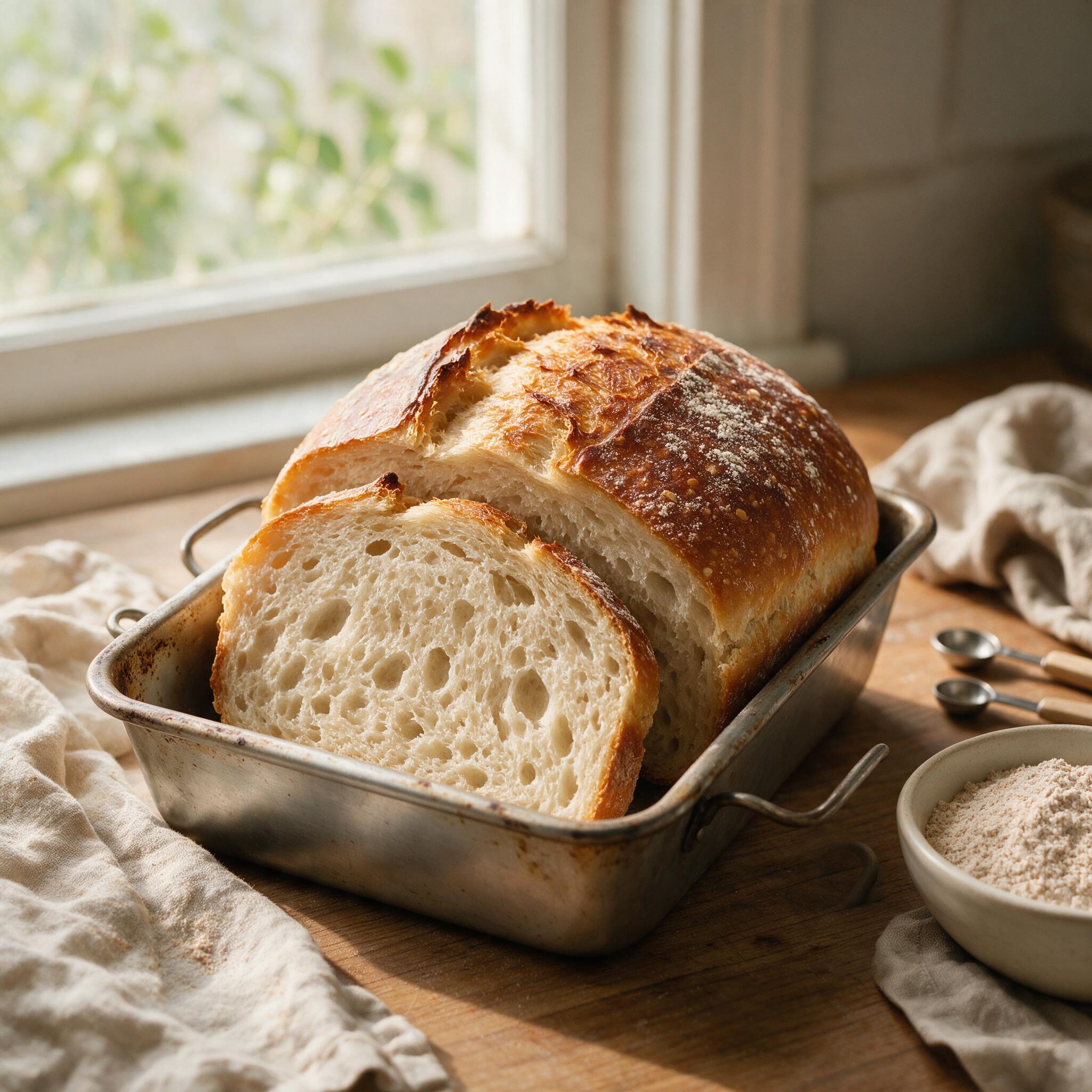
A large stainless steel mixing bowl inverted over the loaf creates a small, hot, steam-filled chamber — exactly what a Dutch oven does. The advantage over a hotel pan: the bowl is closer to the loaf, so the steam is more concentrated. The disadvantage: most mixing bowls are smaller than a hotel pan, so the loaf can only be so big.
Equipment: Large stainless steel mixing bowl (at least 10" diameter, ideally 12"). The bowl needs to be all-metal — ceramic or glass will crack from the temperature shock.
Technique:
- Place the dough on a parchment-lined sheet pan or pizza stone.
- Preheat the oven to 500°F with the bowl on the middle rack (preheating the bowl helps with oven spring).
- Score the dough.
- Place the loaf on the middle rack.
- Invert the hot bowl over the loaf.
- Optional but recommended: pour 1/2 cup of boiling water onto the sheet pan beside the loaf (not on the loaf).
- Close the door. Bake 20 minutes covered.
- Remove the bowl. Bake uncovered for another 20-25 minutes.
The result: Very close to a Dutch oven. The smaller chamber means the steam is more concentrated around the loaf. You get a crackly crust and good oven spring. The constraint is loaf size — anything over 800g won't fit.
Best for: Single loaves up to 800g. Bakers who want a Dutch-oven-equivalent result with equipment they already have.
Method 4: Cast Iron Skillet + Lid (Heavy, Hot, Versatile)
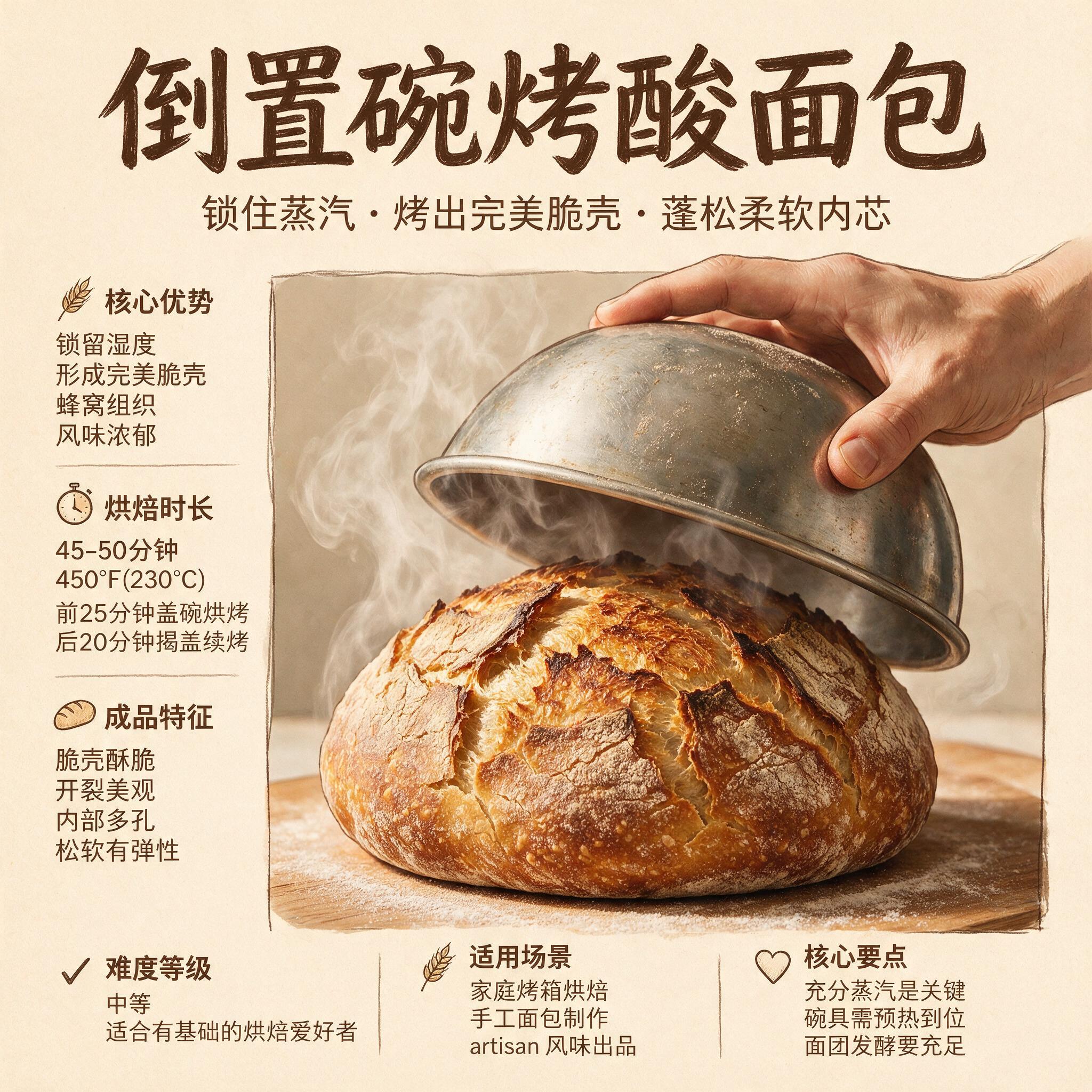
A 12" cast iron skillet with a domed lid (or a large round baking dish that fits as a lid) creates a Dutch-oven-like environment. The cast iron holds heat extremely well, and the domed lid allows for some oven spring. This method requires more equipment but produces excellent results.
Equipment: 12" cast iron skillet with domed lid (Lodge 12" with the glass lid removed and replaced with a metal one, or a Challenger Bread Pan which is purpose-built for this). Alternative: a deep round casserole dish.
Technique:
- Place the dough in a parchment-lined round (or oval) that fits inside the skillet.
- Preheat the oven to 500°F with the skillet and lid inside.
- Score the dough.
- Place the dough (still on parchment) into the hot skillet.
- Cover with the lid. Bake 20 minutes covered.
- Remove the lid. Bake 20-25 minutes uncovered until 205°F+ internal.
The result: Excellent. The cast iron holds heat so well that the bake is more even than the bowl or hotel pan methods. The crust develops deeply, and the crumb is open. Downside: the skillet is heavy and hot to handle.
Best for: Bakers who already have a large cast iron skillet. Anyone baking weekly who wants Dutch-oven quality without buying a Dutch oven.
The Loaf Pan Method: A Note on Crust
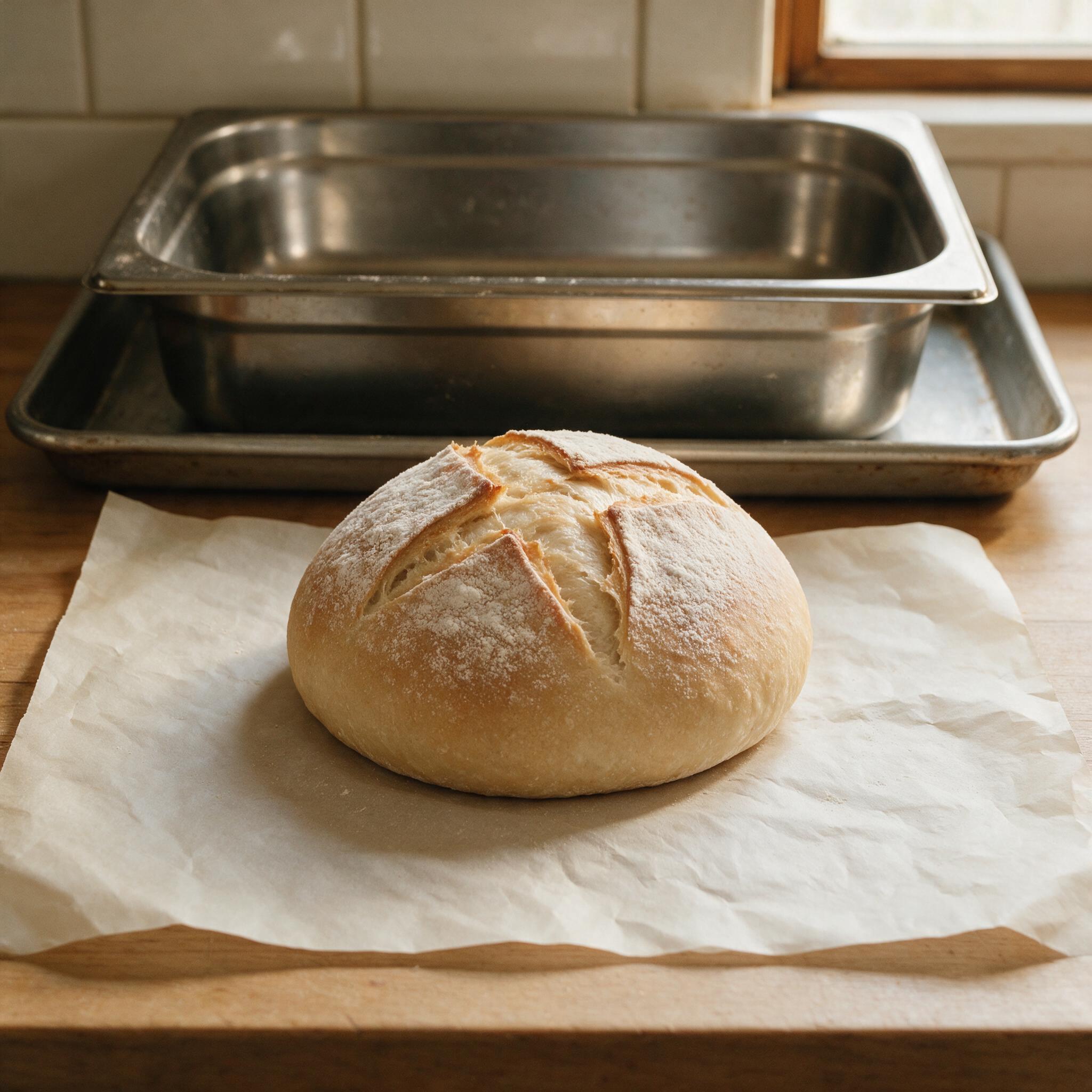
The loaf pan method is the only one of these that doesn't produce a crackly artisan crust. The pan keeps the crust soft, which is what you want for sandwich bread but not for an artisan boule.
If you want the artisan look AND the loaf pan convenience, there's a hybrid: bake the dough in a loaf pan for 25 minutes covered, then turn the loaf out onto a sheet pan and bake for another 10-15 minutes uncovered. The exposed sides develop a thin crust while the bottom (which was against the pan) stays soft. It's not as crusty as a Dutch oven loaf, but it's close, and you get the sandwich-friendly shape.
Which Method Should You Use?
| Method | Crust | Crumb | Ease | Multi-loaf |
|---|---|---|---|---|
| Loaf pan | Soft | Uniform, soft | Easiest | Yes (2-4) |
| Hotel pan | Crackly | Open | Medium | Yes (2-3) |
| Inverted bowl | Crackly | Open | Easy | No |
| Cast iron | Very crackly | Open | Hard (heavy) | No |
| Dutch oven (for reference) | Crackly | Open | Medium | No |
If you're a beginner or want sandwich bread: loaf pan. If you want artisan bread without a Dutch oven: hotel pan or inverted bowl. If you have a big cast iron skillet and bake weekly: cast iron. The method you use matters less than the bulk fermentation, the shaping, and the bake temperature.
A Note on Scoring
Without a Dutch oven, the oven spring is less reliable, so scoring matters more. Use a sharp blade (a fresh razor blade or a dedicated lame), and score at least 1/2 inch deep. A single deep slash is more reliable than complex patterns when the oven spring is uncertain. If the ear doesn't bloom on the first attempt, the scoring wasn't deep enough — score deeper next time.
For the loaf pan method, score the top with a single long slash down the length. For the open-bake methods (hotel pan, bowl, cast iron), score the top of the round loaf with a single curved slash or a wheat pattern.
Related Posts
Keep going with these related guides.