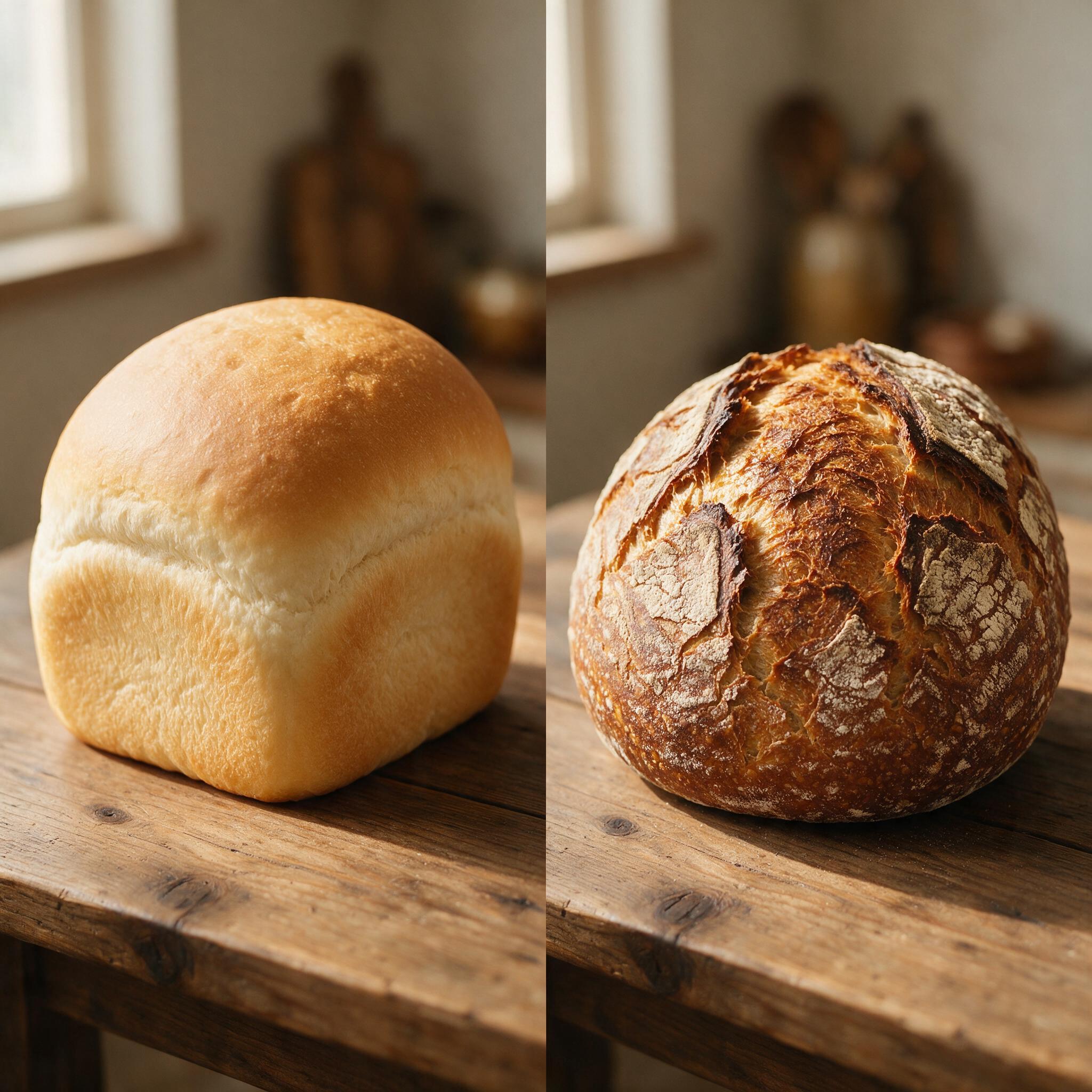
Sourdough is often pitched as the "healthy" bread — more nutritious, easier to digest, lower glycemic impact. Some of that is true. Some of it is marketing. And some of it applies to all bread, sourdough or not, so it's not a useful comparison.
This guide compares sourdough to regular bread (and to whole wheat bread) on the dimensions that actually matter: glycemic impact, nutrient absorption, fiber, additives, and effort. The honest answer: sourdough is meaningfully different in some ways, identical in others, and the comparison depends entirely on what kind of sourdough and what kind of "regular" bread you're talking about.
The headline: whole-grain sourdough is genuinely better than yeasted white bread on every meaningful metric. White-flour sourdough is better than yeasted white bread on a few metrics (mainly glycemic impact) but the difference is small. And sourdough is not worth the effort for some applications (sandwich loaves, burger buns) where yeasted bread is just as good.
What "Sourdough" Actually Means (Legally, Almost Nothing)
In the United States, the FDA has no legal definition of "sourdough." A bread can be called sourdough even if it's made with commercial yeast, has no live starter, and ferments for 30 minutes. This is a problem for the comparison because most "sourdough" in stores isn't really sourdough in the traditional sense.
For this guide, when I say "sourdough," I mean:
- •A live sourdough starter (not commercial yeast alone)
- •A long ferment (at least 4-8 hours bulk, plus 12+ hours cold retard)
- •No commercial yeast, no dough conditioners, no added acids
This is "true" sourdough. If your sourdough meets these criteria, the nutrition differences below apply. If not, the differences are smaller.
The 3 Things Sourdough Does Better
1. Lower Glycemic Impact
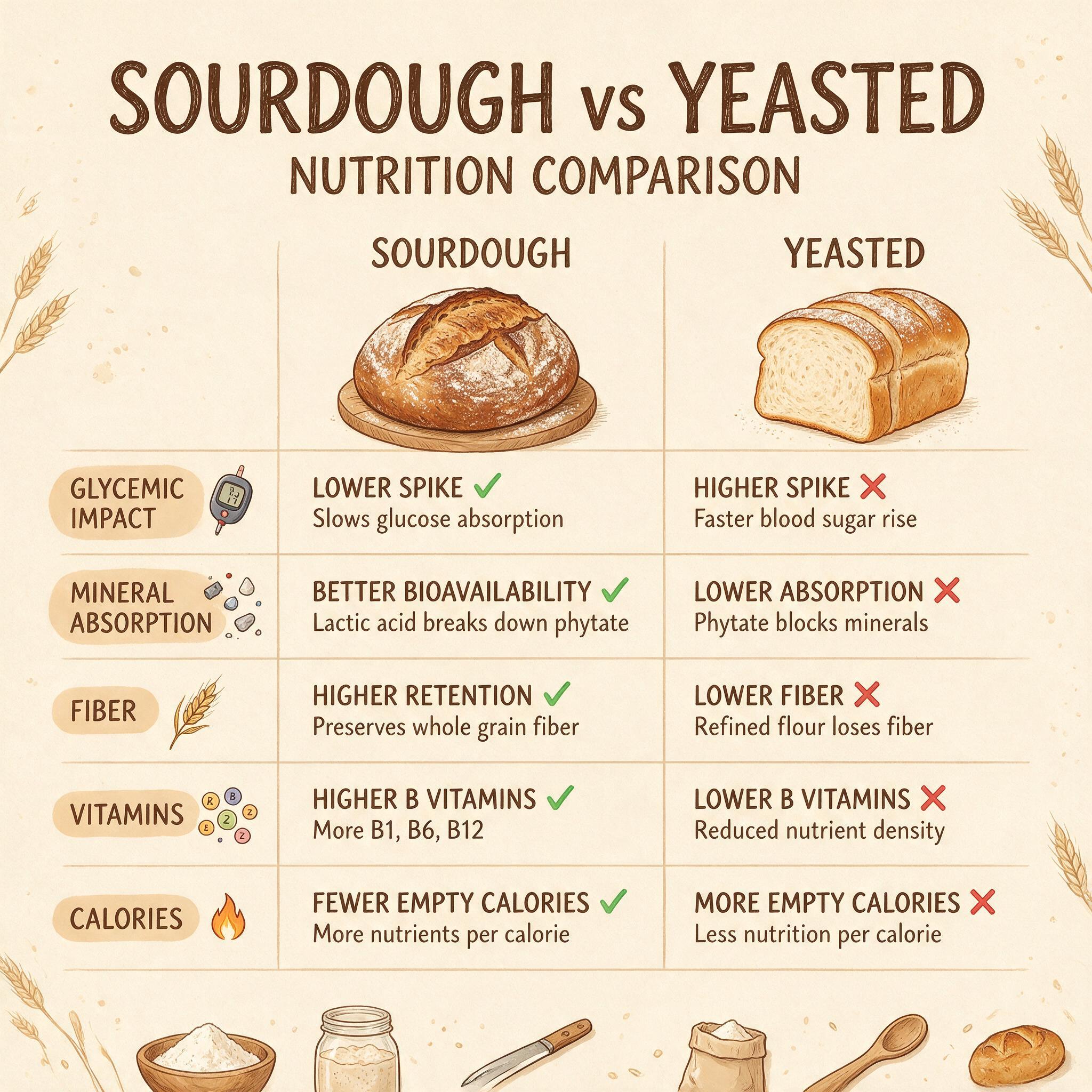
This is the most well-supported difference. Sourdough produces a measurably lower blood sugar rise than yeasted bread made with the same flour. The mechanism is the lactic acid produced during fermentation, which slows starch digestion.
Quantitatively: a true sourdough produces about a 25% lower blood sugar spike than a yeasted bread. For someone with type 2 diabetes or insulin resistance, this is a meaningful difference. For someone with normal blood sugar control, it's a small difference that adds up over time.
The longer the ferment, the bigger the difference. A 24-hour cold retard produces a noticeably lower blood sugar rise than a 4-hour room-temp bulk.
2. Better Mineral Absorption
Sourdough fermentation breaks down about 60-70% of the phytates in the dough. Phytates bind to minerals (zinc, iron, magnesium) and make them harder to absorb. Sourdough bread delivers more of these minerals to your body than yeasted bread made with the same flour.
The practical impact depends on your diet. If you eat a varied diet with plenty of other mineral sources, the difference is small. If you rely on bread for a meaningful portion of your daily minerals, sourdough is genuinely better.
3. Easier to Digest (For Some People)
Some people with mild gluten sensitivity find sourdough easier to digest than yeasted bread. The long fermentation partially breaks down some of the gluten proteins, which may reduce the immune response in sensitive individuals. The effect is real but modest — sourdough is not a solution for celiac disease or serious gluten intolerance, but it may be more tolerable for people with mild sensitivity.
The science here is less solid than the glycemic and phytate claims. Some studies show a benefit, others don't. If you have IBS or non-celiac gluten sensitivity, sourdough may be worth trying. If you have celiac disease, sourdough is not safe.
The 3 Things Sourdough Does NOT Do Better
1. Higher Fiber
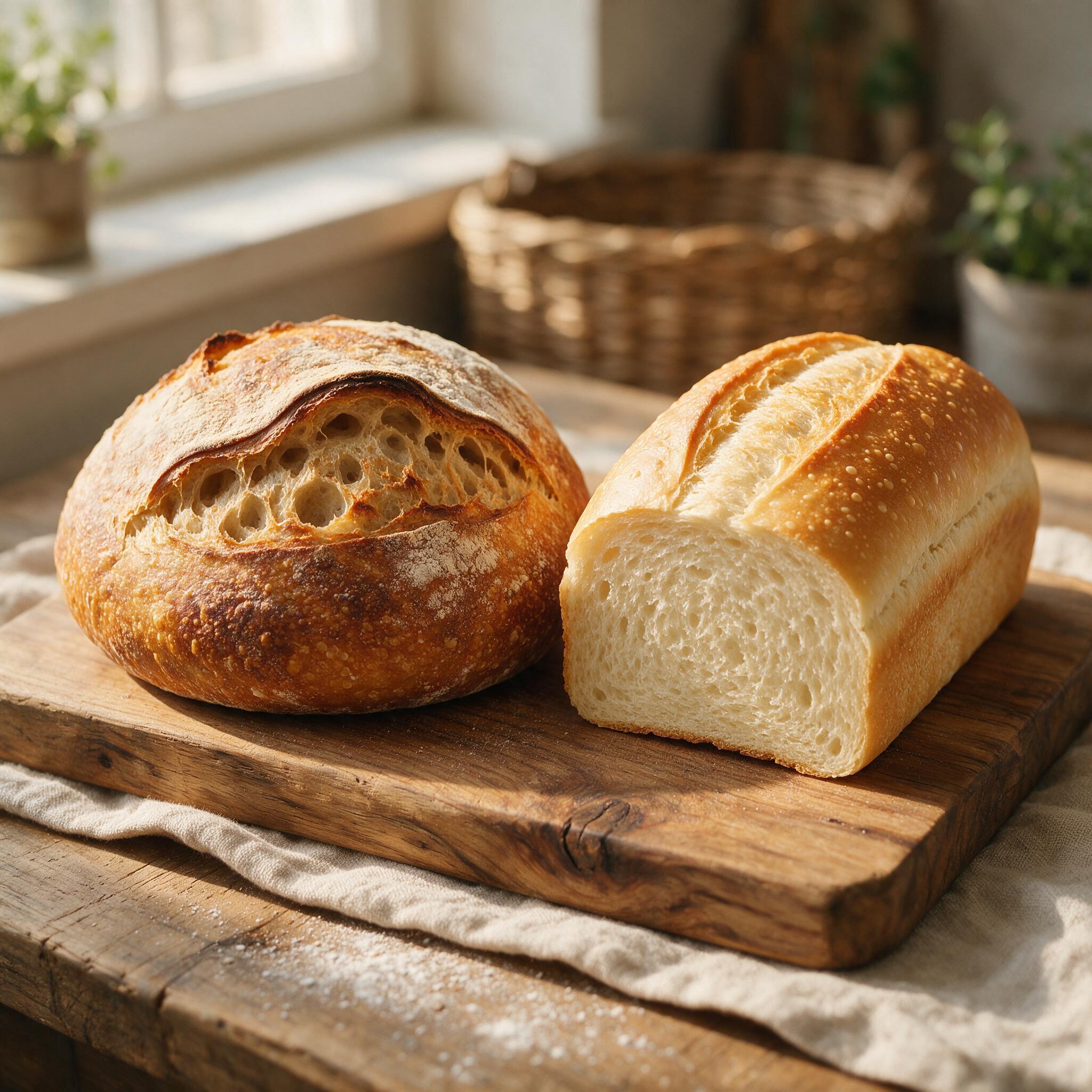
Sourdough bread has the same fiber content as the flour it's made from. A 100% white flour sourdough has the same fiber as a 100% white flour yeasted bread — not much. A 100% whole wheat sourdough has the same fiber as a 100% whole wheat yeasted bread — significantly more, but the fermentation didn't add the fiber, the whole wheat did.
If someone tells you sourdough is "high fiber," they're confusing sourdough with whole grain. Sourdough is a process. Whole grain is a category of flour. The two can overlap (whole-grain sourdough is high fiber), but they don't have to (white-flour sourdough is not high fiber).
2. More Vitamins
Sourdough fermentation doesn't add vitamins. Some B vitamins may be slightly reduced during fermentation (yeast consumes them), but the difference is small. The vitamin content of bread is determined by the flour, not the fermentation process.
If you see a sourdough marketed as "high in vitamins," check the ingredients. They're probably adding fortification (added vitamins, usually in commercial bread) or using enriched flour (which has added vitamins and minerals regardless of fermentation).
3. Lower Calorie
Sourdough has the same calorie content as yeasted bread made with the same flour. A slice of sourdough and a slice of yeasted bread, both made with 100% white flour, have the same number of calories. The fermentation doesn't burn calories.
If someone is selling "low calorie sourdough," they're either using less-refined flour (which can have slightly different calorie counts due to fiber content) or just making a marketing claim.
Sourdough vs Whole Wheat Bread: The Real Comparison
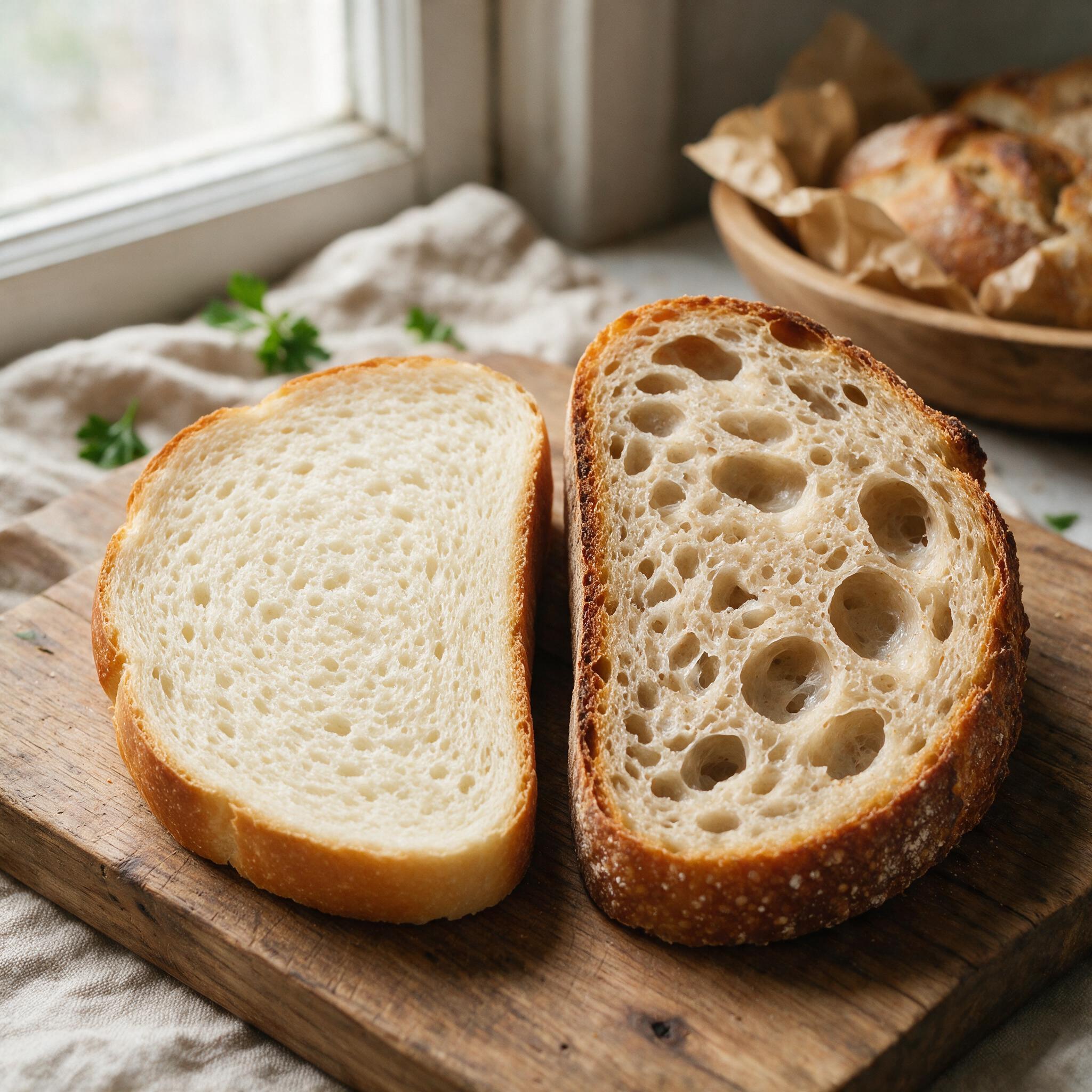
A more useful comparison is sourdough vs whole wheat bread, because flour type matters more than fermentation method.
100% whole wheat sourdough vs 100% whole wheat yeasted:
- •Same fiber (both are whole grain)
- •Slightly lower glycemic impact in the sourdough (lactic acid effect)
- •Better mineral absorption in the sourdough (phytate reduction)
- •More complex flavor in the sourdough (the long ferment develops flavor)
- •More effort to make the sourdough (12-24 hours vs 3-4 hours for yeasted)
The whole wheat sourdough is the winner on every metric except effort. The difference is real but small — about a 10-15% improvement on glycemic impact, and a meaningful improvement on flavor and mineral absorption. If you have time, the sourdough is better. If you don't, the yeasted whole wheat is still very good.
100% white flour sourdough vs 100% whole wheat yeasted:
This is the comparison that matters for people considering switching. The whole wheat yeasted bread is significantly higher in fiber, has a similar glycemic impact (whole grain fiber compensates for the lack of lactic acid), and is faster to make. The white flour sourdough is lower in fiber but might have slightly better mineral absorption.
In this comparison, the whole wheat yeasted is the better choice for most people. Switching from white-flour sourdough to whole-wheat yeasted is a bigger upgrade than switching from white yeasted to white sourdough.
The takeaway: if you're choosing between whole wheat and white flour, whole wheat wins. If you're choosing between sourdough and yeasted, sourdough (with long ferment) wins by a small margin. Combine the two — whole wheat sourdough — and you get the best of both.
When Sourdough is NOT Worth the Effort

Sourdough is great for crusty boules, hearty country loaves, and special-occasion bakes. It's not great for everything. Here are cases where yeasted bread is just as good or better:
- •Sandwich loaves. The crust of a sourdough boule is too tough for sandwiches. If you want sandwich bread, use yeasted white or whole wheat in a loaf pan, or use a soft-crusted sourdough pan loaf (which loses most of the sourdough benefit because the soft crust doesn't allow the same caramelization).
- •Burger buns and hot dog rolls. Same as above — the chewy sourdough crust fights with soft sandwich fillings.
- •Tortillas and wraps. Sourdough doesn't make good tortillas. Use masa or flour.
- •Quick breads. Banana bread, zucchini bread, etc. The sourdough flavor doesn't add to these, and the long ferment doesn't develop the right texture.
- •Croissants, brioche, enriched breads. The butter and eggs dominate. Sourdough adds little and complicates the process.
For these applications, use yeasted bread. Sourdough's advantages (flavor complexity, lower glycemic impact, easier digestion) come from the long ferment, and that long ferment works against the soft, enriched textures these breads need.
The Decision Framework
When you're choosing bread, ask:
- What flour are you using? Whole grain beats white regardless of fermentation. Always.
- Do you have time? Sourdough takes 12-24 hours. Yeasted takes 3-4. Both are fine; the sourdough is slightly better for you.
- What texture do you want? Soft sandwich loaf = yeasted in a pan. Crusty artisan = sourdough in a Dutch oven. Choose the texture you want, then pick the bread that fits.
- Does the bread matter nutritionally? If you're eating bread for nutrition (fiber, minerals, lower glycemic impact), choose whole-grain sourdough. If you're eating bread for taste and convenience, any bread you enjoy is fine.
Sourdough is genuinely better than yeasted bread for some applications. It's not a magical health food. It's a slow-fermented bread with measurable advantages in glycemic impact and mineral absorption, plus a more complex flavor that some people love. If those advantages matter to you, the effort is worth it. If they don't, yeasted bread is a fine choice.
Related Posts
Keep going with these related guides.