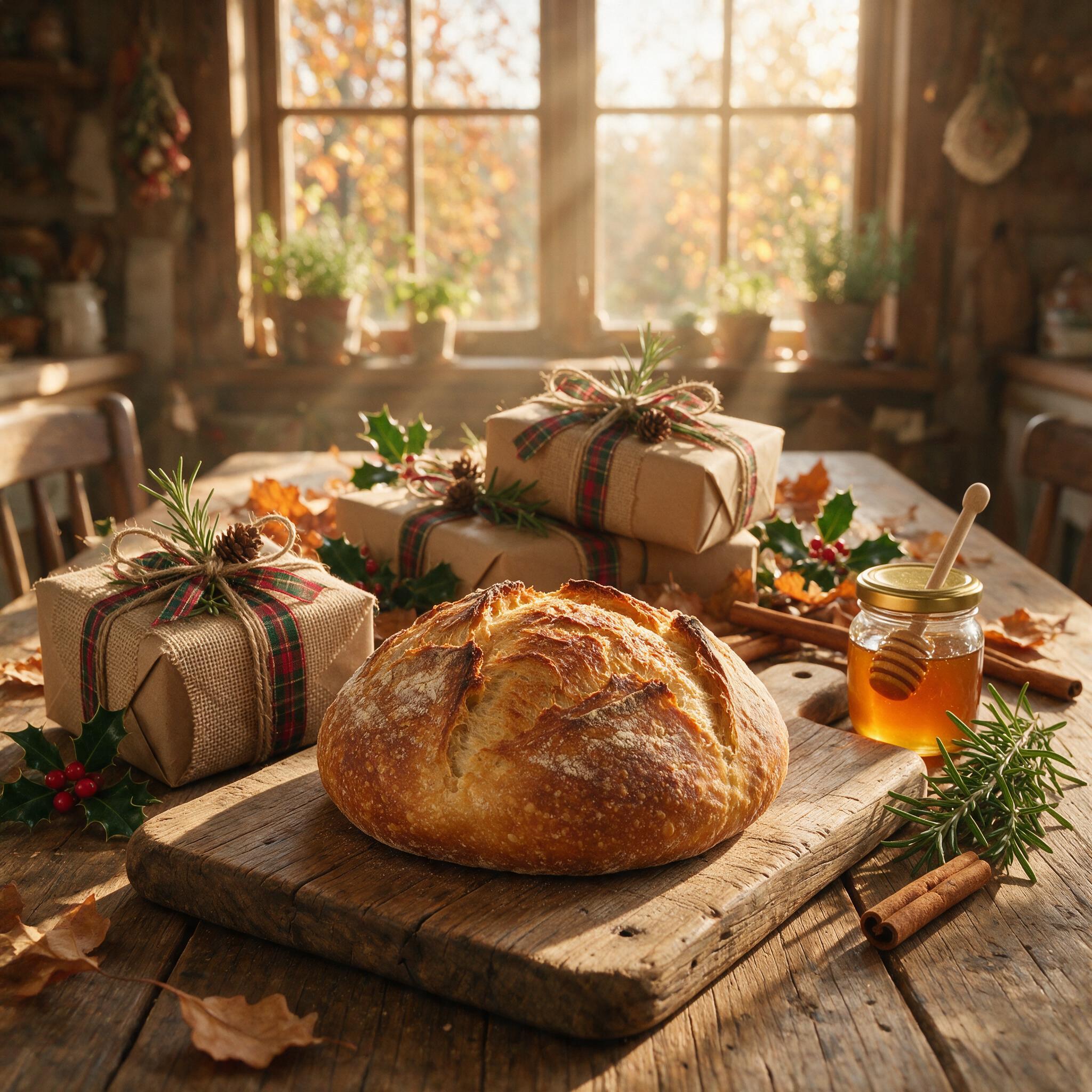
Three topics in one post because they're all the kind of "decision-stage" content people Google in the moment they need it: a gift guide for the sourdough baker in your life, a reference for using ancient grains in sourdough, and a recipe for the Thanksgiving stuffing sourdough you're already thinking about in October.
If you're shopping for a baker, jump to the first section. If you want to try spelt or einkorn, jump to the second. If you're planning Thanksgiving, jump to the third.
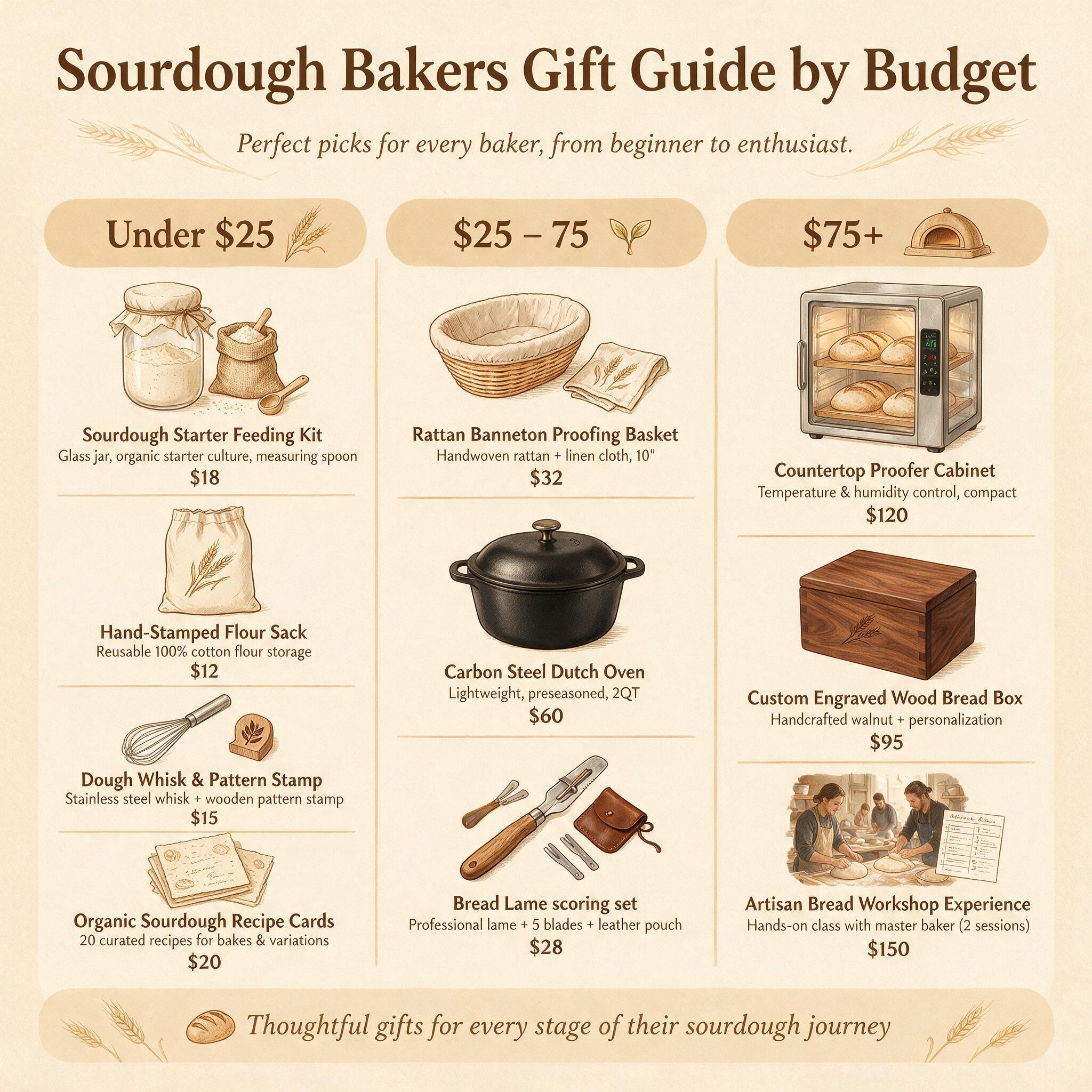
Part 1: Sourdough Bakers Gift Guide (10 Gifts by Budget)
The sourdough bakers in your life are notoriously hard to shop for. They already have a digital scale, a Dutch oven, and a lame they like. They probably have a sourdough starter they named. The good news: there are gifts that go beyond the basics and that serious bakers actually want.
Under $25
1. A good bread knife ($20-25). A serrated bread knife with a long blade (8-10") and a comfortable handle. Most bakers have a knife but are still using a cheap one. The difference between a $15 knife and a $25 knife is huge.
2. Linen bread bags ($15-20 for a set of 3). Linen lets bread breathe while keeping it from drying out. Way better than plastic bags. Most bakers use tupperware or dish towels; linen is the upgrade.
3. Specialty flour sampler ($20-25). A 1-2 lb bag each of high-protein bread flour, whole wheat, rye, and spelt from a mill like King Arthur or Bob's Red Mill. Bakers go through flour fast and appreciate quality sources.
4. A lame with replaceable blades ($15-20). Most bakers use a razor blade in a pencil handle. A purpose-built lame with a swappable blade is a small but real upgrade.
$25-75
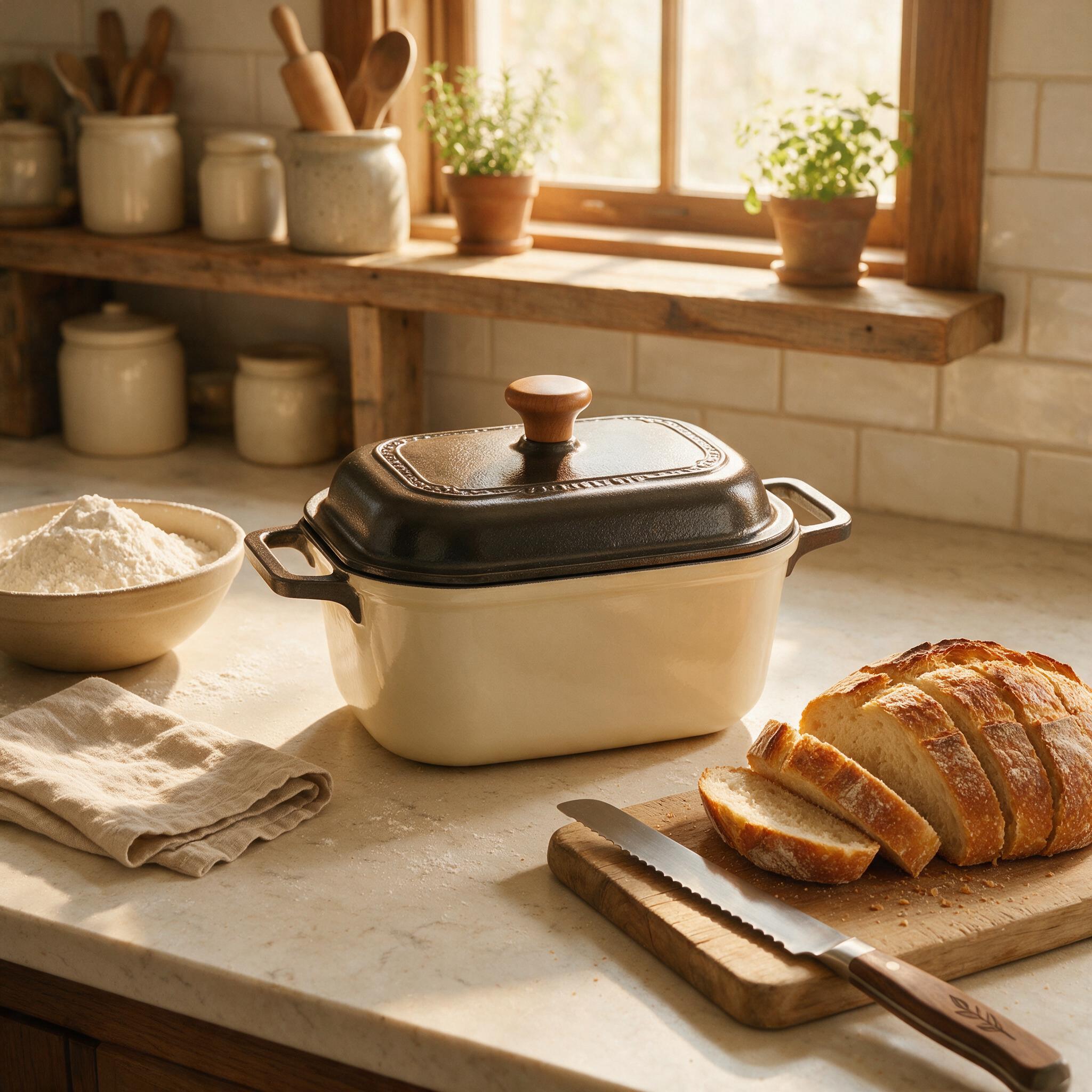
5. The Challenger Bread Pan ($40-50). A purpose-built home baker's pan that mimics a Dutch oven without the weight and preheating time. Designed specifically for sourdough. Most bakers who try one never go back.
6. A digital kitchen scale with 0.1g resolution ($30-50). Most bakers have a 1g scale. A 0.1g scale lets you measure starter precisely, which matters for sourdough more than for any other bread.
7. A bread proofing basket ($30-50). A rattan or bamboo banneton. Pair with linen-lined baskets for a beautiful gift set.
8. The Perfect Loaf or Tartine Bread book ($25-40). Maurice Leo's blog is the gold standard for home sourdough; his book is the printed version. Chad Robertson's Tartine Bread is the book that started the modern sourdough movement. Either is a meaningful gift for a serious baker.
$75+
9. A home grain mill ($150-500). Mockmill, Komo, or Wondermill. Fresh-milled flour makes a noticeable difference in sourdough flavor. This is the upgrade gift that bakers will use weekly for years.
10. A sourdough baking class ($100-300). Many bakeries now offer sourdough classes. A local one is great (date + skill + experience), but there are also excellent online options from places like King Arthur, Breadtopia, and the San Francisco Baking Institute.
If you're not sure which one: the linen bread bags ($20) are the gift that almost every baker will use daily. The Challenger Bread Pan ($50) is the gift that will change their baking.
Part 2: The Ancient Grain Cheatsheet for Sourdough
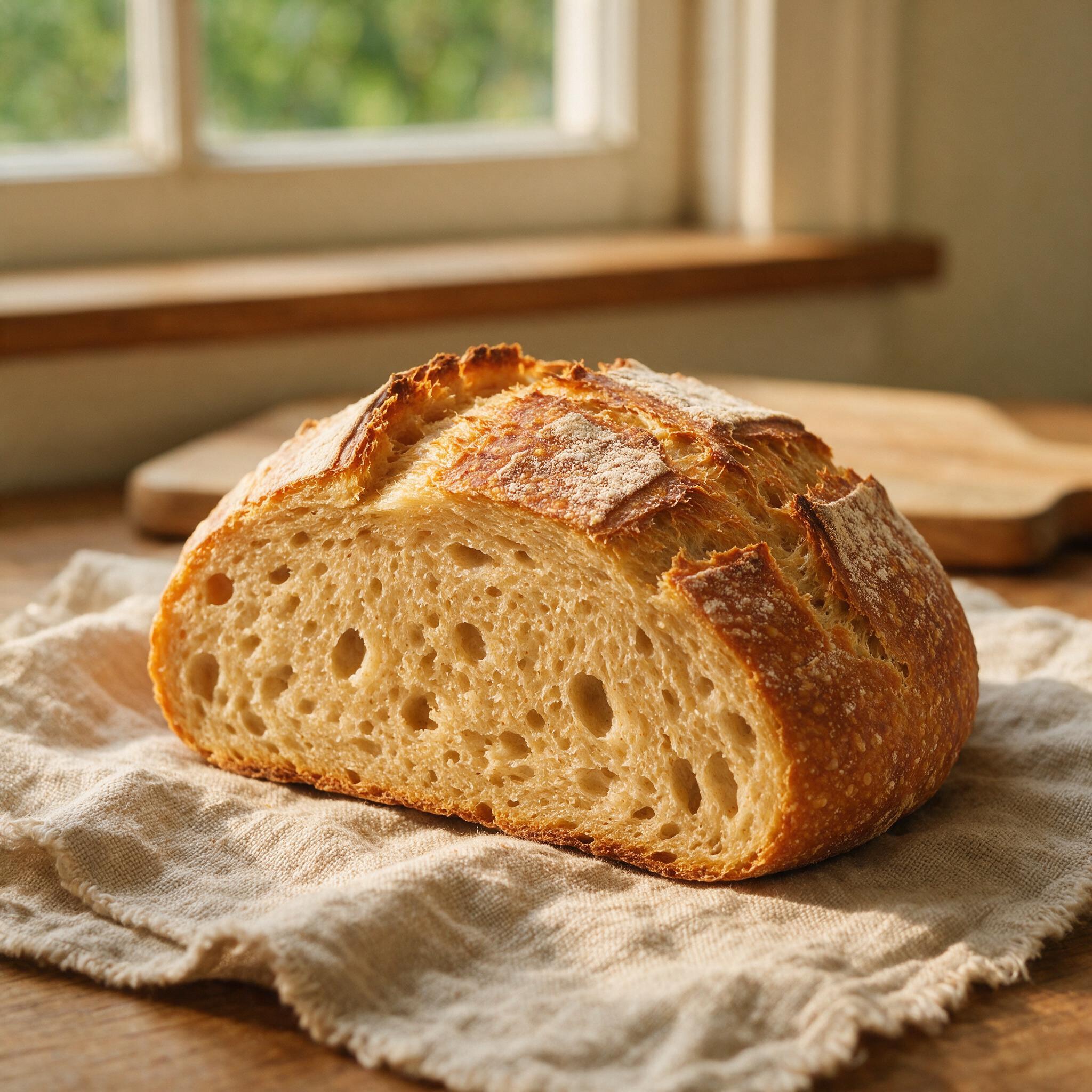
Spelt, einkorn, emmer, and kamut are all "ancient" wheats — varieties that were cultivated before modern wheat breeding. They have different protein structures, different flavors, and different behaviors in sourdough. This section covers when to use them and what changes to make.
Spelt
The easiest ancient grain to bake with. Spelt behaves a lot like modern wheat but with a slightly lower gluten strength and a more complex, slightly sweet flavor. It ferments a bit faster than modern wheat, so shorten your bulk by 30 minutes.
- •Substitution: Can replace up to 100% of bread flour in most recipes. Start with 50% to compare.
- •Hydration: Use 70% hydration (slightly less than modern wheat).
- •Flavor: Slightly sweet, nutty, more complex than modern wheat.
- •Best for: Everyday bread, sandwich loaves, first ancient grain to try.
Einkorn
The oldest cultivated wheat. Einkorn has a different gluten structure (only the A genome, where modern wheat has ABD) and significantly weaker gluten. It's harder to shape, doesn't trap gas as well, and produces a denser, more open crumb. But the flavor is exceptional — sweet, almost chestnut-like.
- •Substitution: Start with 25-30% of total flour, work up to 50%. Above 50% gets hard to handle.
- •Hydration: Use 65% (less than modern wheat — the bran absorbs a lot).
- •Flavor: Sweet, nutty, almost chestnut-like. Distinct.
- •Best for: Blended breads, special loaves, dense sandwich bread. Not for first-time users.
Emmer (Farro)
Similar to einkorn in structure but with a more complex flavor. Emmer produces a denser crumb and a darker crust. The flavor is more "earthy" than einkorn — closer to whole wheat than to white.
- •Substitution: Up to 50% of total flour. Higher than 50% and the crumb gets too dense.
- •Hydration: 70% (slightly less than modern wheat).
- •Flavor: Earthy, complex, less sweet than einkorn.
- •Best for: Whole-grain style breads, dense country loaves.
Kamut (Khorasan)
The largest-kerneled ancient grain. Kamut behaves more like modern wheat than einkorn or emmer — it has stronger gluten and produces a more open crumb. The flavor is distinctly buttery and rich. Good for special-occasion loaves.
- •Substitution: Up to 100% of total flour. The strong gluten means it can stand alone.
- •Hydration: 75% (similar to modern wheat).
- •Flavor: Buttery, rich, almost sweet. Distinct.
- •Best for: Special loaves, sandwich bread, when you want to impress.
A Quick Comparison
| Grain | Gluten strength | Max sub % | Hydration | Flavor |
|---|---|---|---|---|
| Modern wheat | Strong | 100% | 75% | Neutral |
| Spelt | Medium | 100% | 70% | Slightly sweet, nutty |
| Einkorn | Weak | 30-50% | 65% | Sweet, chestnut |
| Emmer | Medium-weak | 50% | 70% | Earthy, complex |
| Kamut | Medium-strong | 100% | 75% | Buttery, rich |
| Rye | None (use with wheat) | 30-50% | 80% | Distinct, sharp |
Rye is in a different category. Rye has no gluten-forming proteins, so it's always blended with wheat (typically 20-30% rye, 70-80% bread flour). Pure rye is dense and sticky; 30% rye adds a distinct flavor without making the bread unworkable. The fermentation is faster with rye, so shorten the bulk.
If you want to try ancient grains, start with spelt at 50% substitution. It behaves the most like modern wheat and the flavor is a clear step up. From there, experiment with higher percentages and the more unusual grains.
Part 3: The Thanksgiving Stuffing Sourdough
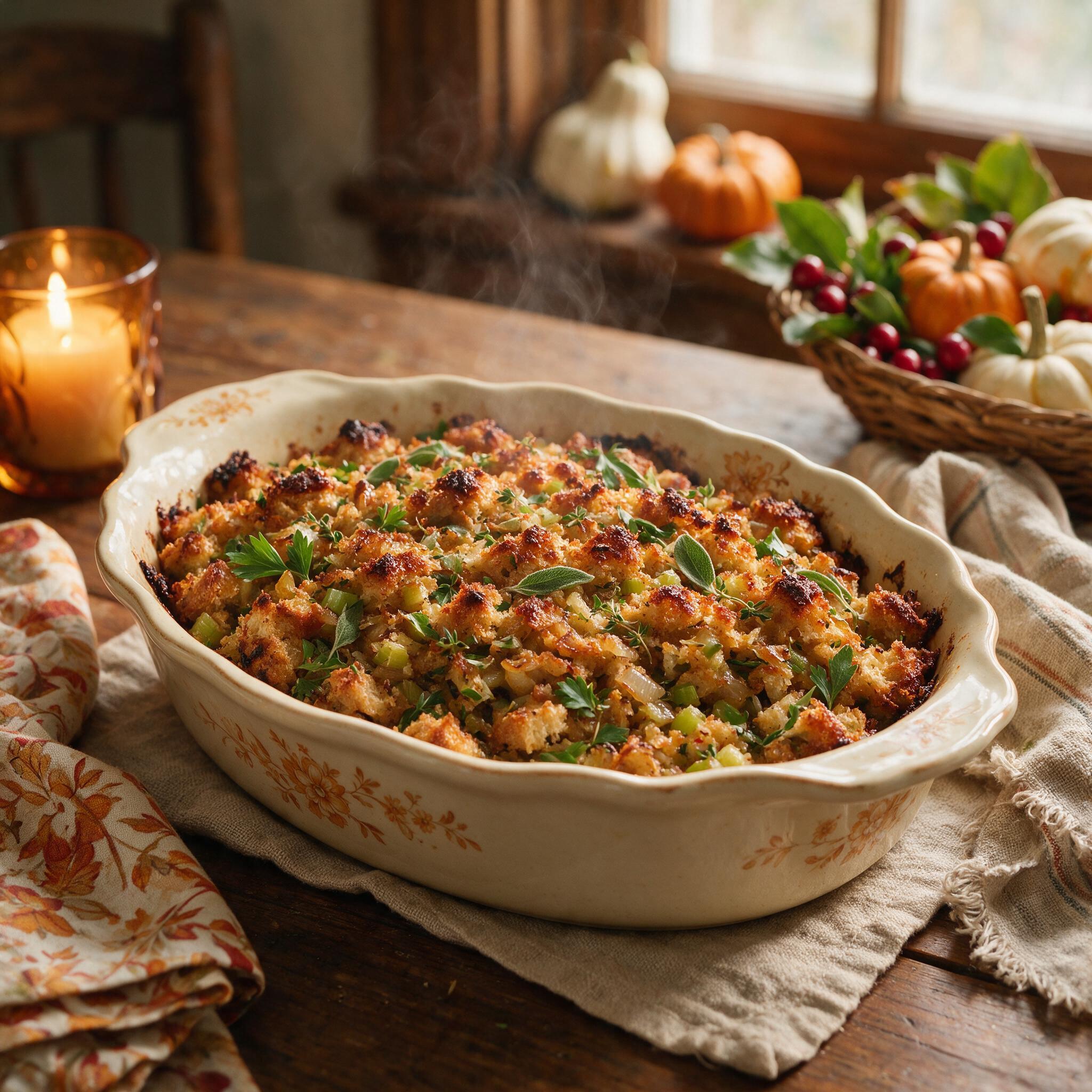
The case for making stuffing sourdough: stuffing is a great use for stale bread, and the flavor complexity of sourdough translates to stuffing in a way yeasted bread doesn't. The slight tang balances the rich gravy, the herbs, and the butter.
This recipe uses a 1-2 day old sourdough country loaf. The crumb should be fully set (not gummy), and the loaf should be cut into 1/2" cubes the day before you make the stuffing.
The Recipe
Ingredients:
- •1 lb sourdough country loaf, cut into 1/2" cubes (about 8 cups)
- •6 tbsp butter
- •1 large onion, diced
- •3 celery stalks, diced
- •4 cloves garlic, minced
- •2 tbsp fresh sage, chopped
- •1 tbsp fresh thyme leaves
- •1 tbsp fresh rosemary, chopped
- •1/2 cup dry white wine
- •2-3 cups turkey or chicken stock (warm)
- •2 large eggs, beaten
- •1 tsp salt
- •1/2 tsp black pepper
- •Optional: 1/2 cup dried cranberries, 1/2 cup toasted pecans
Instructions:
- Dry the bread. Spread the cubed sourdough on a sheet pan. Let sit at room temperature overnight, or toast in a 300°F oven for 15-20 minutes until dry but not browned. The bread should feel dry to the touch but not crunchy.
- Sauté the aromatics. Melt butter in a large skillet over medium heat. Add onion and celery. Cook 8-10 minutes until softened. Add garlic, sage, thyme, and rosemary. Cook 1 more minute until fragrant.
- Deglaze. Add white wine to the skillet. Cook 2-3 minutes until the wine is mostly absorbed.
- Combine. In a large bowl, toss the bread cubes with the vegetable mixture. Add warm stock gradually, tossing to combine. The bread should be moist but not soggy — about 2 cups of stock is usually right, but start with 1.5 and add more.
- Bind. Add beaten eggs, salt, pepper, and any optional add-ins (cranberries, pecans). Toss to combine.
- Bake. Transfer to a buttered 9x13 baking dish. Cover with foil and bake at 350°F for 30 minutes. Uncover and bake another 15-20 minutes until the top is golden and crispy.
- Rest. Let the stuffing rest 10 minutes before serving. The interior should be set but still moist.
The Critical Trick: Dry the Bread Properly
Stuffing fails when the bread is too fresh (it turns to mush) or too dry (it doesn't absorb the stock). The 1-2 day-old, properly dried bread is the sweet spot.
If you're short on time, the 300°F oven method works in 15-20 minutes. The cubes should be dry to the touch but still have some give when squeezed. They'll absorb the stock in step 4 and finish setting in step 6.
Variations
- •Oyster stuffing: Add 1 cup shucked oysters with their liquid in step 4. The brininess is classic with turkey.
- •Sausage stuffing: Brown 1 lb breakfast sausage before the aromatics. Use the sausage fat instead of butter.
- •Cranberry-pecan: Add 1/2 cup dried cranberries and 1/2 cup toasted pecans in step 5. The sweet-tart and crunch complement the rich stuffing.
- •Gluten-free: Substitute a gluten-free sourdough (or a sturdy gluten-free bread). Adjust stock as needed since gluten-free breads absorb differently.
This stuffing pairs well with the rest of the Thanksgiving spread because the sourdough tang cuts through rich gravy and creamy sides. It's also good the next day, refrigerated and reheated with a little extra stock to keep it moist.
Related Posts
Keep going with these related guides.